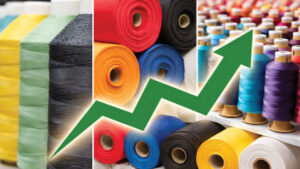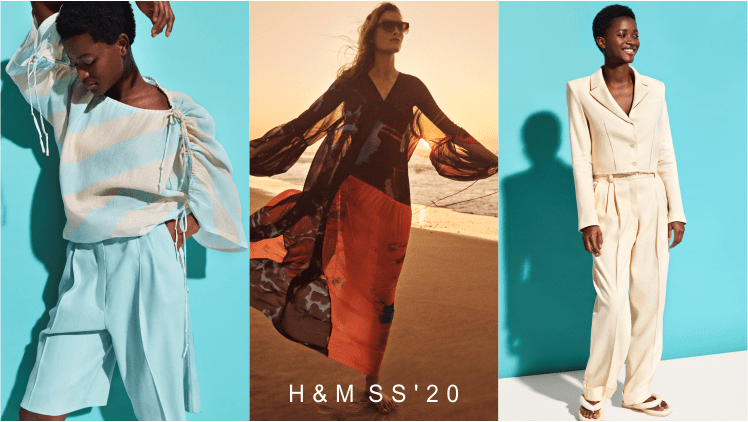
The Swedish fast fashion brand Hennes and Mauritz (H&M) has had a good run in India and has recorded 13 per cent growth in overall sales with expectations of a bigger number from this market. H&M Group has 51 online markets and more than 4,900 stores in 74 markets including franchise markets. In 2018, its net sales was SEK (Swedish Krona) 210 billion.
H&M has completed 4 years in India and has sales recorded up to Rs. 1,000 crore as on 31st January 2019. The brand is going an extra mile to set its foot in the Indian market. It recently launched an India-specific festive collection across its stores, which was its maiden attempt to localise its offerings for the Indian consumer base. The collection, put together, after local market research, is a combination of locally-inspired paisley prints, along with bright sequined jackets for women and shirts for men.
Furthermore, it has also announced its first Indian fashion collaboration with designer Sabyasachi Mukherjee and will launch the collaborative collection themed ‘Wanderlust’ on 16th April (the collection will present hand-crafted and eclectic travel pieces). H&M designs such country-specific collection in other markets as well; for instance, in China, it sells a new collection during the country’s annual Chinese New Year festivities. Hande Diltemiz, Regional Country Head – Production, H&M Group, in a candid conversation, discusses about the brand’s India focus and its strategies to scale.
What do you think about the potential of this market for a brand like H&M?
Hande Diltemiz (HD): India is historically a key production market in the textile and readymade garment industry. It’s also an important production country for H&M Group. Being the second largest cotton producer in the world and having worldwide influencing mills and manufacturers, India has a strong position in the industry globally. However, with changing customer behaviour, the textile industry is undergoing rapid change, requiring all production markets to transform. To adapt to future needs, the industry needs to focus on quality, technology investments, flexibility to a smaller but more niche quantities, as well as increased efficiency. Last but not the least, sustainability as a concept is a must to fulfil. It needs to be considered as a business opportunity instead of a cost – it makes clear business sense to invest in sustainability. However, even if investing in sustainability is of vital business importance, it is more important to have a positive impact on the world around us; it’s an investment for a better world and improved living conditions for people.

What are the brand’s sourcing strategies for Indian market?
HD: We have been sourcing from India since more than 30 years. We are proud of being part of the manufacturing industry in this country. India has a large capability of different product types and manufactures a wide range of products such as garments, home interior and accessories. Our sourcing strategy applies to all production markets and the main pillars of our business idea and thereby also our sourcing strategy are environmental and social sustainability, ethics, quality, as well as fashionable products at the best price. Our supply chain in India is matching with all these criteria. However, this doesn’t mean there isn’t room for improvement. As a company, we believe in constant improvement and it’s important to us to work closely with our suppliers to support them in their development.
How has India’s Government policies helped (or not helped) the brand?
HD: We have had a continuous dialogue with the Indian Government, in particular when it comes to sustainability. The Government is supportive and co-operative. Any country which adopts the latest developments connected to social and environmental sustainability will be the winner in this journey. Gender equations, renewable energy and inclusion and diversity are examples of areas where we collaborate. I would like to highlight the renewable energy level where India stands out. It is remarkable how the industrialists are investing and the Government policies are supporting clean energy.
H&M Group had pledged in 2018 to transition to 100 per cent sustainable cotton by 2020. What is the status of this pledge?
HD: Yes, by 2020, all our cotton will be sourced in more sustainable ways. Today this share is 96 per cent, according to our latest sustainability report. India is one of the biggest cotton producing countries in the world and has been one of the leading markets when it comes to transform to a more sustainable cotton production.
How many collections does the brand introduce annually? How does H&M incorporate consumers in the process of product launch?
HD: We always focus on customer demands and fashion trends when deciding on future collections. In addition, we are working hard to make sure all our production is sustainable. We have already announced that by 2030, our aim is for all our materials to be either recycled or sourced in a more sustainable way, as well as our goal is to become climate neutral in our supply chain by 2030 and climate positive by 2040.
What are your plans for India, going forward?
HD: India is one of our important production countries. We have been sourcing from here since more than 30 years. We look forward to an even stronger development when it comes to specific environmental and social sustainability policies, investments and innovations. This is important for India to be able to align with our sustainability goals and vision. The sustainable synthetics material investment will also support the consistent growth of the industry.