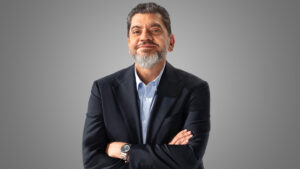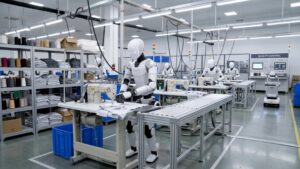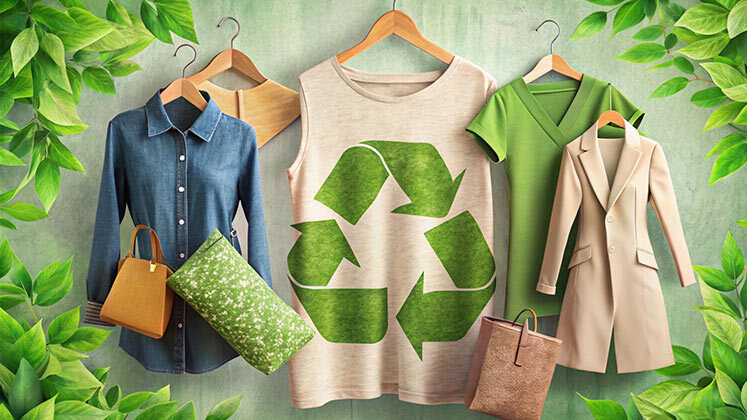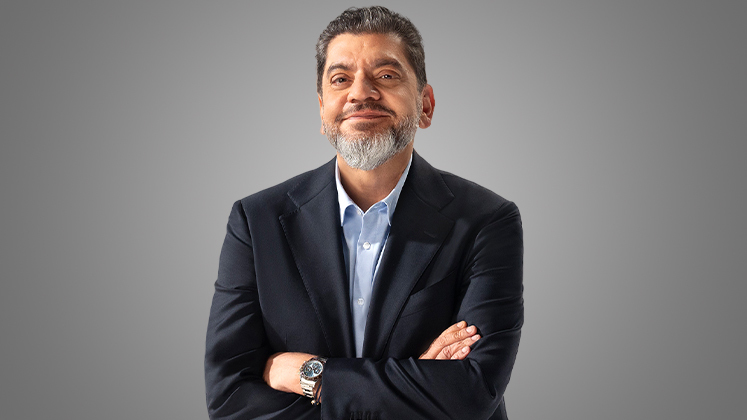
It took more than four decades for Ranjan Mahtani, Founder and Chairman of Epic Group, to meaningfully return to India, not as an observer of its growth, but as a participant in its next industrial phase. That return has now taken shape in Khurda, Odisha, where the company has set up its US $100 million Trimetro Manufacturing Campus, a 40-acre facility built for global-scale apparel production.
On paper, it is a large garment manufacturing campus designed to produce 20 million garments annually for international markets. But for Mahtani, who left India in 1984 and went on to build Epic’s manufacturing base across Bangladesh, Sri Lanka, Jordan, and Ethiopia, the more important story is what made India viable again.
His decision to return was shaped by a combination of policy shifts, improving infrastructure, a strengthening domestic market, and increasing pressure from global clients to bring India into diversified sourcing networks. Just as importantly, it reflects how manufacturing itself has changed, from isolated production units to integrated, full-service systems spanning design, development, and execution.
Inside Epic’s evolution, that shift is visible in a sharper focus on execution and capability building. Clients today expect far more than production alone. They look for partners who can handle design inputs, tech pack development, warehousing, replenishment planning,
and delivery as a continuous chain rather than fragmented steps. Within Epic, this has led to structured investments in systems like its product development platform, where tech packs are generated at scale and shared with clients as part of a broader service offering.
Seen in this context, Mahtani’s return to India is not symbolic. It is the outcome of decades of global experience being applied to a market that now aligns with how he believes manufacturing must function today.
Apparel Resources attended the inauguration of the Khurda facility and spoke to Ranjan in detail about Epic Group’s journey, strategy, and evolving approach to global manufacturing.
AR: You left India in 1984, so in many ways this must feel like a homecoming after more than four decades. India now seems to be at the heart of your expansion plans. What made you decide to invest here?
First of all, what Indian wouldn’t want to do business in India? But our journey didn’t begin here. We lived and worked across multiple countries over the years, including Bangladesh, Jordan, Sri Lanka, and Ethiopia, where we built our manufacturing base. For me, setting up a factory has always been about getting the fundamentals right such as people, attrition, absenteeism, and training. These are the real make-or-break factors in this business.
In the early years, India did worry us. High levels of absenteeism compared to other countries immediately created operational challenges. But over the last five to six years, especially just before COVID, we started seeing a clear shift. Government policy became more focused on job creation and industrial development, and the intent felt much more structured.
Infrastructure also began improving, and that was one of the first big triggers for us. Alongside that, we also saw a growing maturity in the Indian consumer market. Today, you can supply directly to Indian retailers, and that makes India a very strong long-term play for us.
There were also early conversations with Indian overseas ambassadors and cabinet ministers who encouraged companies like ours to return and invest, with a clear message that India wanted serious manufacturing players to come back and prove what is possible here.
At the same time, customers also played a major role. Our key client, Uniqlo, was very clear that they wanted India in their supply chain, but they wanted trusted, proven partners, not experimentation. That became another strong push for us.
On a personal level, it also feels like coming home. As you grow older, the pull towards your roots becomes stronger. Even small things change. I used to be a big fan of Western music, but now I find myself listening more to Indian music.
For us, this is just the beginning. The moment we committed to India, we also expanded through a joint venture called Spectra with the Creative Group, setting up a fully automated denim and bottoms manufacturing facility in Vapi, Gujarat, with a capacity of 700,000 pieces per month. It includes advanced washing and effluent treatment systems, and there are very few setups like this in India.
Phase two of this factory will begin construction in December. The design already allows for additional apparel blocks, so expansion is built in from the start.
Overall, this is not just a return to India, it is a structured, long-term expansion strategy driven by policy shift, customer demand, and a strong belief in India’s manufacturing future.
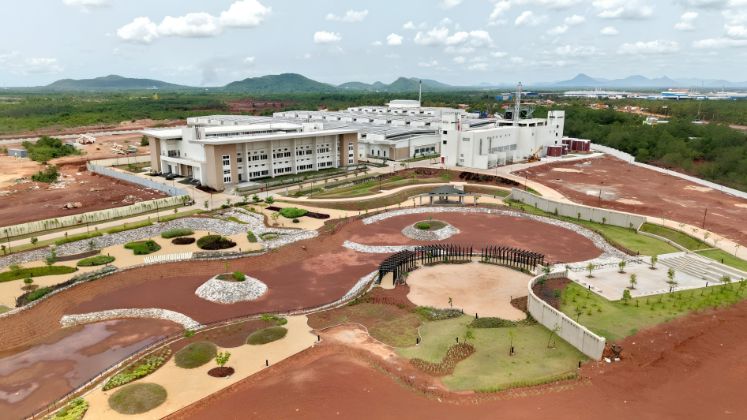
AR: Coming to Odisha, what made you choose the state for this facility? How important were factors like state incentives, infrastructure, and industry-friendly policies in that decision?
If there’s one answer, it is the people. Government impetus through incentives and policy support is important, yes. But without the right people, that support has limited value. What we have experienced here is something deeper.
The real turning point came when my partners and I visited Khurda in Odisha for just two days. We met people, visited villages, and observed the ecosystem closely. I sat with the panchayat, removed my shoes, and shared a meal with them. Despite the simplicity, the hospitality was exceptional.
Garment manufacturing is not easy. Working on a machine for 10 hours is one of the toughest jobs. It requires resilience and a certain cultural mindset to sustain that kind of work.
Of course, other regions like Africa may also try to build capabilities, but that does not automatically make them successful. For us, people are the real differentiator.
We then engaged with government officials, including Mr. Hemant Sharma, Additional Chief Secretary (Industries), who has been instrumental in driving industrial development in the state.
What still surprises me is how fast everything has moved. Our groundbreaking ceremony was just about 15 months ago, and so much has already happened.
AR: You mentioned that your Khurda facility is one of the most modern, especially from a sustainability standpoint. What does that actually mean on the ground?
Sustainability for us has always been part of our DNA. Even in Bangladesh, we were among the early companies to get LEED certification. Today that may be common, but at that time it was not. About five years ago, we also achieved one of the highest LEED ratings globally, which is Platinum. Therefore, this is not something new for us.
Even 15 years ago, we were installing solar panels when very few companies were doing it. We were also investing in advanced machinery, including Italian washing systems.
But if I am honest, all of this was happening in silos. Individual initiatives, not a fully integrated system. When we came to India, we made a conscious decision that we did not want sustainability to remain fragmented. We wanted a complete, end-to-end approach. The idea was simple. How do you truly become net zero? That requires looking at everything together, water, energy, carbon, and people.
Take the people aspect for example. Heat is a serious issue in manufacturing environments. I have seen it myself, many factories operate in very difficult conditions. I did not want that. Even when I step outside the factory, the heat is intense, but the moment I enter inside, it is a completely controlled and comfortable environment. That is by design, not by chance.
At the Trimetro campus, the entire design is built around net-zero carbon principles. We generate renewable energy through a combination of 6 MW rooftop solar and offsite renewable power through PPAs, supported by battery storage to ensure continuous clean energy usage. The buildings are designed with high-performance insulation that reduces heat gain significantly, along with daylighting systems that reduce dependence on artificial lighting.
We also use advanced HVAC systems, including high-efficiency chillers and HVLS fans, which reduce energy consumption while maintaining comfort levels. In addition, biomass boilers powered by agricultural waste such as rice husk provide carbon-neutral energy for key processes like garment drying.
On the water side, the philosophy is net positive. All wastewater is treated, with most of it reused within the factory and the remaining used for landscaping. Nothing is discharged outside the campus. We also harvest rainwater and have a central lake that helps recharge groundwater.
The campus is also designed for climate resilience. It is built to handle extreme heat, heavy rainfall, and even cyclonic conditions.
One of the most advanced elements in our approach is our heat pump technology. These operate at around 135 degrees Celsius, which is a first in the garment industry. Unlike conventional boilers that burn fuel, heat pumps transfer energy and run on electricity. They are around 40% more efficient than traditional electric boiler systems. The higher operating range of 135 degrees Celsius, compared to about 90 degrees Celsius in standard heat pumps, also makes them suitable for high-heat industrial processes like garment drying.
What makes the system particularly effective is its dual output. While producing hot water for industrial use, it simultaneously generates chilled water for air conditioning, delivering much higher value from the same energy input.
AR: With stricter sustainability and traceability regulations in Western markets, how important is end-to-end traceability from raw material to finished garment, and what role are you playing in building it across the supply chain?
We started taking traceability very seriously around the time of COVID. There were instances where companies got blacklisted due to lack of transparency in sourcing, especially at the yarn level. That was a turning point
for us. We initiated a system, initially quite simple, but fully electronic, where we began capturing proof of yarn purchases. For example, when sourcing US yarn through our Chinese mills, we ensured we had complete documentation including proof of purchase, bills of lading, transportation records, batch numbers, everything. All of this was digitised and systematically recorded.
Today, we have moved to even more advanced systems, and our team is continuously upgrading the process. The idea has always been to stay one step ahead.
I can share a real example. About two years after we implemented this, two of our shipments for VF were held due to suspected sourcing issues. The customer asked for proof of yarn origin, and we were able to submit complete documentation within 24 hours. The shipments were cleared immediately.
In contrast, another company, which I won’t name, could not provide the required proof of supply, and their shipment never got cleared.
Further strengthening our approach, about two years ago we voluntarily started using Oritain, a company that helps verify the origin of products and raw materials. It is a very advanced but expensive solution. Our first round of testing for Walmart alone cost around US $190,000 for just a few packs. Today, every garment we produce goes through Oritain testing.
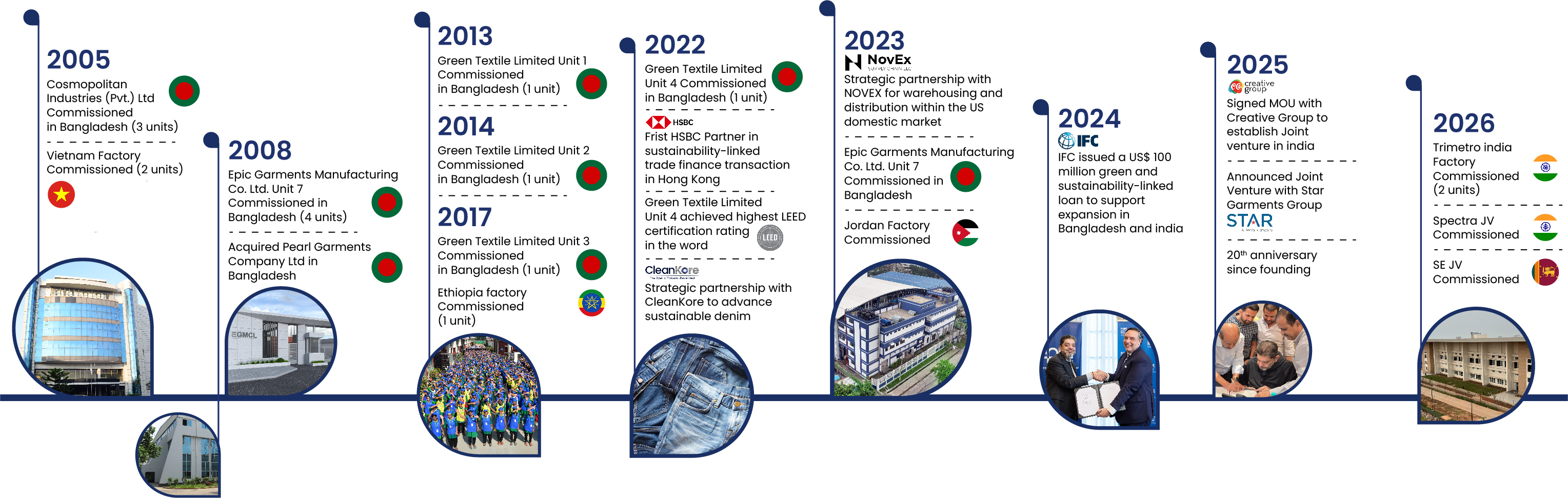
The Epic Rise
(Click to view the graph)
AR: You have deep experience across India, Bangladesh, and Sri Lanka. Today, Bangladesh is known for handling large-scale orders, while India and Sri Lanka have their own strengths. Over the next five to six years, do you see this changing?
I think each country is different, and each will find its own niche. Bangladesh is primarily a mass manufacturing hub. There are some very good companies there that have evolved and now work with better brands and higher quality, but the overall strength of the industry still lies in large-scale production.
India, however, may not naturally move in that direction. Costs in India will likely remain higher, so competing purely on mass manufacturing is not necessarily the best strategy. It doesn’t mean India cannot do it, but it is important to play to your own strengths rather than compete in someone else’s area of strength.
India’s real advantage lies in textiles, lead times, and its broader ecosystem. We are already seeing that shift, for example with partnerships like MAS and Toray setting up facilities in Odisha to produce high-performance fabrics. That clearly shows where the opportunity is emerging.
If India can deliver high-quality, hightech fabrics with fast turnaround times, it can create a completely different niche for itself, and that should be the focus.
Even within our own company, when people ask who our biggest competitor is, the answer is simple, it is ourselves. We focus on improving internally, reducing inefficiencies, and getting better every day rather than looking sideways.
AR: When you look at your global clients today, what major shifts are you seeing in their approach to sourcing, and how is that changing the way you operate as a manufacturing partner?
If you look at it from a broader perspective, how many customers really remain today compared to 20 years ago? If I had 100 customer names back then, today how many would you actually be able to list? Very few. A handful, and two or three dominate most of the global business.
You take Walmart and Amazon, and a large part of the American retail market is concentrated there. The rest is largely luxury or niche. Similarly, with brands like Uniqlo, Zara, and H&M, a big share of global business is already covered. So the question is, who is really left?
That is the biggest shift, with manufacturing now becoming a survival of the fittest. Also, the days of disposable clothing are changing. In Europe this shift is already very visible, and even in the US, the mindset is moving away from disposable fashion. Now the focus is on proper, durable, and sustainable clothing, garments that can go through a life cycle of one to two years.
Because of this, customer expectations around quality have completely changed. It is no longer about standard benchmarks like AQL 1.5 or 2.5. Those are just reference points now. Real quality expectations are much higher, and every company has to set and meet its own internal standards.
One simple way to define it today is zero defect. In one of my Uniqlolinked factories, we operate at around 0.03 AQL. The difference is not just technical, it is also mindset-driven, both from the factory side and the customer side.
A large part of the industry is still not ready for Uniqlo-level expectations. Even some large Sri Lankan groups stepped away because they could not sustain that level of discipline. When we started working with Uniqlo, we also saw internal changes, many experienced people used to traditional systems could not adapt and eventually moved out.
The industry has to move away from the idea of “acceptable defects.” The approach has to be zero defect. Companies like Uniqlo are leading this shift, and others will follow, because without quality, there is no value.
The second big shift is that manufacturing alone is no longer enough. A factory by itself does not create value anymore. The expectation has moved towards full-service capability. Brands now want partners who can offer end-to-end solutions, including design, warehousing, replenishment, tech pack development, and even execution models like FOB, DDP, or LDP. They are looking for one-stop partners who can manage everything from design to delivery.
To respond to this, we have built something called the ‘Brain Box’, a product development centre where customers can work virtually on design and development. We can also automatically generate tech packs for them. Even if they do not place the order with us, we still create the tech packs and offer them the first right of refusal. We currently have around 400 people working on this and handle about 1,000 tech packs a month, but that is still not enough, so we are scaling it further, especially in Sri Lanka.
AR: During the factory tour, it was mentioned that efficiency levels in your Bangladesh operations are around 85%, while in India they are closer to 50–60%. What explains this gap—people, machines, processes, or other factors?
Every place is different. China is different, Vietnam is different, and so is India and Bangladesh.
To put it simply, earlier generations worked with a very basic mindset, roti, kapda, makaan. But today, especially in India, the next generation is not necessarily driven by that same need. My son, for example, will not work only for roti, kapda, and makaan. The context has changed.
In Bangladesh, the willpower and urgency around work is much stronger. You don’t always find that same intensity in India because people here have more choices, across industries, across states, and across opportunities. So naturally, India and Bangladesh will always have some difference when it comes to workforce behaviour, and that does impact efficiency.
Another very practical reason is absenteeism. Even a 10% absenteeism level directly impacts efficiency. And 10% absenteeism is quite common across many factories, based on discussions I’ve had across the industry.
We have seen very different patterns across countries. For example, in Bangladesh, after Eid we open the factory following a nine-day holiday, and we see nearly 2–3% absenteeism when operations resume.
In India, the situation is different. During festivals, whether it is Holi, Pongal, or Diwali, people often step away for extended periods, sometimes even up to 20 days when you account for travel and return time.
So we have been trying to plan for this more strategically. In fact, we are now working on Plan A, B, and C specifically around festival cycles, so that production is not disrupted.
As a company, we are also building what we call ‘commando tailors’, a flexible, highly trained workforce that can step in immediately during such gaps.
The idea is simple: we run a very handson operation, so we need systems that can absorb these seasonal disruptions without impacting delivery timelines.
AR: How are you thinking about the group’s expansion and growth over the next few years, and what role do you see EPIC playing in shaping the future of the global apparel industry?
We are focussed on Vertical integration which has become more of a necessity now than a choice. We have reached a scale where, if we want to continue servicing the kind of customers we are working with today, the next logical step is to build deeper capabilities within the value chain.
We are looking for a technical partner who brings expertise. We are not necessarily insisting on large investment, but some level of skin in the game is important. At the same time, we do not want to directly run a textile mill ourselves. In terms of execution, we have already started preparing for it. We regularly acquire and hold land, so we are structurally ready.
We are currently in discussions with around three companies, and whichever one aligns best in terms of terms and capability will be the partner we move forward with. The direction is fairly clear, we are likely to focus more on synthetic and performance fabrics going ahead.
We are also in an expansion mode. For example, we entered into a joint venture with the Star Garments Group in Sri Lanka under SE Apparel, and that facility became operational about three months ago. That JV is now fully up and running. We are also expanding further in Sri Lanka. We are in the process of potentially acquiring two more facilities there, and I will be travelling soon with my team to evaluate and progress those discussions.
On the domestic side, phase two of the Khurda factory will begin construction in December. The infrastructure is already planned, with scope for additional apparel blocks, so expansion is built into the design itself. Overall, the organic growth roadmap for manufacturing is already in place for the next three years.