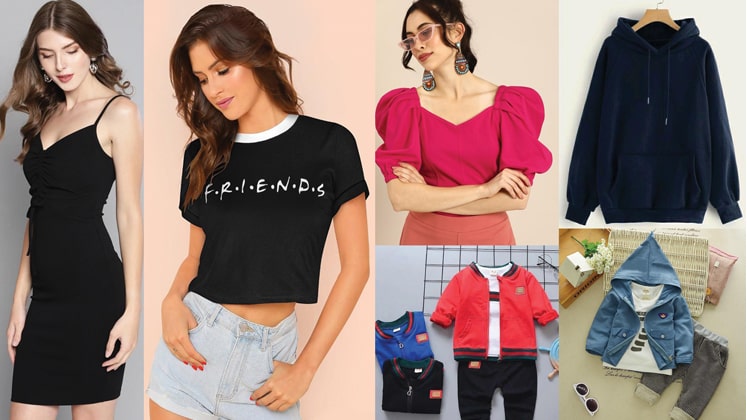
The growth of MSMEs is highly important as they are the drivers of India’s economic growth and contribute 30 per cent to India’s GDP, 33 per cent to manufactured output and 48 per cent to exports. Not only that, around 50 per cent of the total MSMEs operate in rural areas and provide 45 per cent of the total employment. At the same time, about 97 per cent of the total employment in the MSME sector comes from the micro-segment. Even in apparel manufacturing, more than 70 per cent units belong to MSMEs. MSMEs and challenges are just two sides of the same coin and these challenges pose even bigger threat in a complex industry like apparel and textile manufacturing. Limited knowhow; lack of resources, overheads; smaller teams; too much interference of top management in factory processes; centralised decision making; difficulties in availing advantages of Government’s schemes; and high cost due to small operations often become a barrier for MSME firms in their expansion plans.
However, the interesting thing is that, despite challenges, there are some courageous micro- and small-level factories recently gearing up to expand just because the market sentiments are bullish and overseas buyers are looking at India for their sourcing needs at a time when China’s status is dwindling. The timing for Indian MSMEs couldn’t have been better and, realising the same, some factories, being progressive MSMEs, don’t want to let go of the opportunities. Recently, four medium-scale apparel manufacturers started their new units in Ranchi sending a clear message to the industry that businesses can’t be conducted with traditional mindset in the new manufacturing landscape. Apart from these four units, Team Apparel Resources (AR) finds out about more such Indian companies, which are on right track in their expansion plans…
Expansions taking place across product segments…
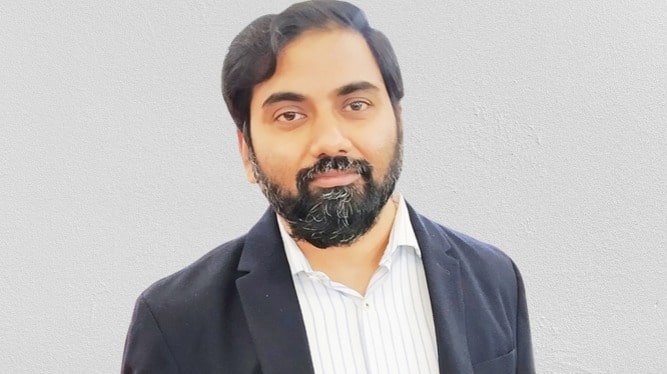
Currently producing 10,000 pieces per day (approximately 300,000 pieces/month), Inzex Fashion Retail, Noida is coming up with a new unit of denim products and the plan is to zoom its capacity to 15,000 pieces per day. The factory will have latest machines for denim production for which they are finalising deals with tech companies and are expected to start production in the next few months. Vikram Singh, Director, Inzex Fashion Retail told AR, “We are witnessing demand from every segment and are hopeful that this demand will be there for long.”
Denim is surely a growing segment worldwide and the same is luring factories… However, companies are also eyeing expansion in knitwear categories in all three segments – menswear, womenswear and kidswear. One such company is Surat-based Lee Tex that’s adding a new factory of 500 machines that will take the total number of machinery to 800 after expansion with a total investment of around Rs. 10 crore. The company informs AR that it is expecting to start operation by the end of 2022 or in the beginning of 2023.
Markedly, the above-mentioned companies are expecting at least 40 per cent growth once their operations start in new units! Major reasons for this are their openness for adding different products in their basket, flexible working model and a diversified client base. These reasons give more opportunities to these companies and they find ease of catering to specific clients at a certain time, while not having pressure to work simultaneously for all the clients.
For example, Lee Tex is working with B2B wholesalers, e-commerce platforms, catering to the Indian brands, exporting besides having its own store. “These strengths give us consistent business and help us to maintain balance as B2B wholesalers mostly work for festival season, online is a year-around business, overseas clients’ season is different. We are, therefore, always open to produce whatever products are needed and as per small or big order requirements,” says Parth Chalodiya, Director of the company.
Parth further states, “Challenges will always be there like there was a lot of hue and cry on the proposed hike on GST. Though it has been deferred, we were mentally prepared for this. Cost is always a pressure and as preventive measure, we are exploring where we can further reduce cost and as of now I can say that we will be able to reduce some costing by changing fabrics, which we are currently using.”
To control cost, MSME are trying to produce in-house whatever is possible with extra efforts. For growing and aggressively working MSMEs, the common issues don’t matter much as these problems exist for all and market gets used to such issues in some time. MSMEs avail the benefits of ATUF scheme as well as of other schemes specific for them though few of them are still struggling to get these advantages.
At the same time, many MSMEs are of the view that the liquidity crunch is going to dominate and firms just have to manage with their own resources.
Two years ago the definition of MSME was changed and as per this definition, the majority of the textile and apparel companies catering to export as well as domestic markets are into SME segment.
| Criteria | Micro | Small | Medium |
|---|---|---|---|
| Investment in plant and machinery or equipment (Not more than) | Rs.1 crore | Rs.10 crore | Rs.50 crore |
| Annual turnover (not more than) | Rs. 5 crore | Rs. 50 crore | Rs. 250 crore |
Source: msme.gov.in
New and small but strong entries in the market…
There are a few new players also in the market that have started their ventures recently and are now further geared up to grow. Plenty of experience and starting a business with proper planning are amongst the major reasons motivating them to grow.
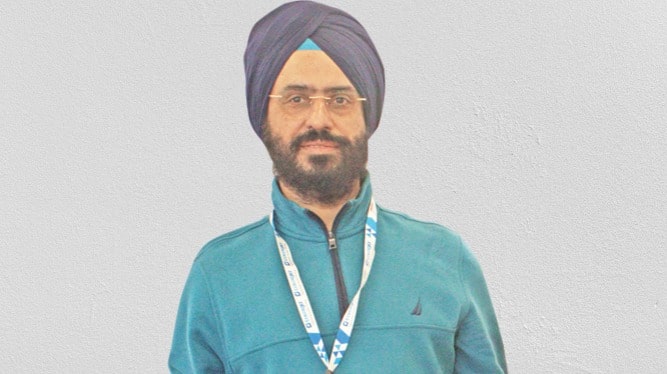
After working for almost two decades in various garment factories, Gurmeet Singh, three years ago, initiated his merchant export firm GS International, Ludhiana which is a 100 per cent export-oriented unit (EOU). “I was very much clear that starting as a merchant exporter will help me to keep cost under control and it proved right in last three years as we never faced any major challenge in our supply chain. Despite Covid, we achieved more than 30 per cent growth and in the next few years, we are hopeful of even more growth,” says Gurmeet.
The company is supplying tees, joggers etc., to mass retailers of Columbia, Argentina, Mexico and Costa Rica. Gurmeet strongly feels that there is enough potential in his existing clients, so serving them better and offering large variety will be a major growth path for his organisation.
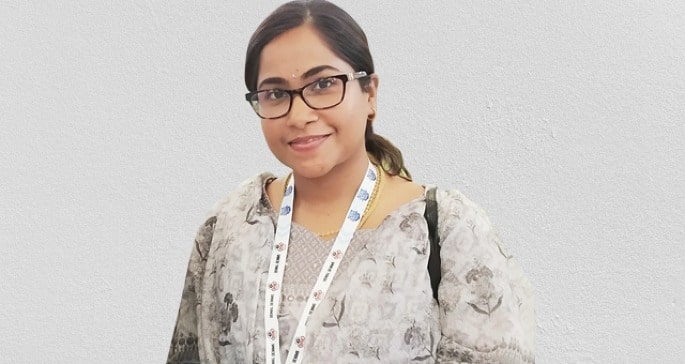
ENL Enterprises, Noida, is also an EOU unit that entered into garment business three years ago and has a turnover of Rs. 3 crore. Doing womenswear and kidswear for markets like US and New Zeeland, the firm is enthusiastic about its 100 per cent growth in the next one or two years. “Due to Covid, we were forced to wait for the market opening and now our future plans include participation in sourcing events, adding new products (sleepwear) and our garments will be more of sustainable fabrics as the demand for such garments is increasing,” says ENID Naomi Lall, MD of the company.
Apart from the above, few individual SMEs are doing well. Just a few days back, AR highlighted how new small enterprises recently emerged in Faridabad and are doing well also despite the challenges of Covid.
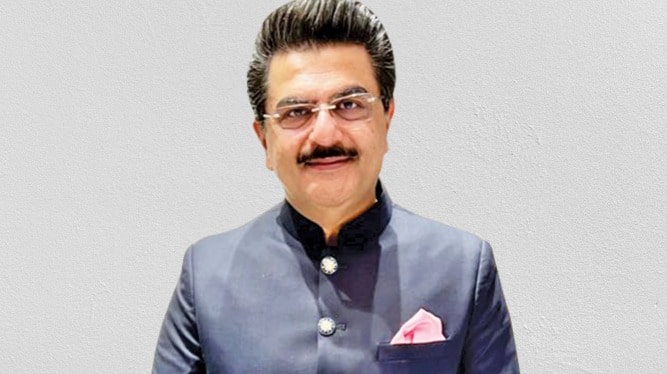
“The micro and small scale units have been doing well and are able to revive themselves and are geared up to take orders. And the majority of the firms that are performing well include those which get the support of loans from banks. Apart from a few exceptional sectors like hospitality, small firms of all the sectors are doing well,” says Rajiv Chawla, Chairman, Integrated Association of Micro Small and Medium Enterprises of India and CMD of Built Natural Sportswear, Faridabad.
In discussion with AR, all above-mentioned companies unanimously agreed that Omicron is a challenge and it will have a negative impact on their overall business operations but things will be almost common for all. Just as they successfully came out of COVID-19, similarly Omicron will also not have any long-term major impact. The good thing is that be it three companies dedicated to domestic market or two 100 per cent unit EOU, their buyers were supportive in Covid and have also assured that they will continue to support, wherever and whatever will be possible.
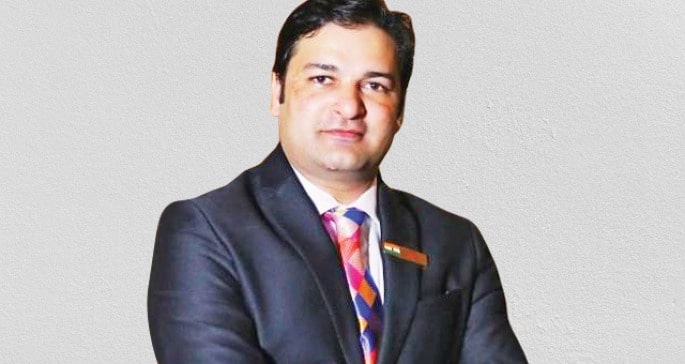
Gaurav Kumar Rai President, Association of Small, Progressive, Innovative and Rising Enterprises (ASPIRE), Noida concludes well, “The firm has improved mindset, developing first line of leadership, working with a vision and long-term planning, adopting latest technology as per the need, having awareness… there is a must-do-well attitude always irrespective of all challenges.”