
Global uncertainties, including tariffs, currency fluctuations, inflation, and ongoing conflicts, continue to test the textile industry. Yet, the Tamil Nadu textile sector remains resilient, with steady demand driving growth. Manufacturers are responding by staying closely aligned with customer needs, expanding their product portfolios, and investing in R&D, especially in innovative fibre blends and new applications. Many are also exploring home textiles as a promising new segment.
| Apparel Resources recently visited Tamil Nadu and interacted with textile manufacturers including Shroff Textiles, Salona Group, Purani Textiles, Shiva Texyarn, HRM Textiles, Imperial Indigo, Bharatiya Natural Fibres, Paradise Knitters, Cheran Spinner, Guru Karuna Textiles, Kumaragiri Spinners, and Aditya Exports. |
This momentum became evident during Apparel Resources’ visit to key textile hubs, where conversations with manufacturers in Coimbatore, Tirupur, and Erode highlighted the sector’s continued strength. Tamil Nadu dominates India’s spinning landscape, housing 1,861 of the country’s 3,376 spinning mills, including six cooperative units, and accounting for nearly 46% of total capacity. The state stands out for its strength in fine cotton and polyester blended yarns (40s to 100s), with several mills specialising in high quality combed and organic cotton yarns.
Regionally, Coimbatore continues to anchor the spinning sector. Karur has built a strong reputation in home textiles and fabric production, while Erode stands out as a leading weaving cluster and processing hub.
Sharing his perspective on the global market scenario,
Anup VK Shroff, Partner, Shroff Textiles, Coimbatore, said, “Disruptions earlier were shortterm, but in recent years, fluctuations have been continuous. Despite this, textiles remain an essential industry with steady long-term demand.”
The company, which is largely export oriented, has annual revenue of around ₹310 crore (US $32.88 million) and specialises in 100% cotton yarn, particularly TFO doubled yarns, with counts ranging from 20s to 240s. It produces around 250 tonnes of yarn per month, operating with about 20,000 spindles and 10 TFO machines.

Eyeing new growth segments, Raghav Agarwal, Director, Salona Group, Coimbatore, observed, “We are currently exploring home textiles as a new business segment. At the same time, we are working on innovative blends such as lab-grown cotton with virgin cotton, recycled cotton with organic cotton, and other alternative fibres.”
Salona Group, which operates around 100,000 spindles, caters to both domestic and international markets and produces a wide range of yarns such as ring spun, compact, open-end, blend, slub, organic, regenagri, and recycled cotton. The company also offers knitted fabrics like single jersey, interlock, rib, fleece, French terry, and jacquard.
Turning to value addition and efficiency to stay afloat
Across manufacturers, the focus is increasingly shifting towards value addition and diversification into new categories.
In line with this trend, N. Nithyanandan, Director, Purani Textiles, Coimbatore, said the company is focusing on adding value in the special MMF-blended yarn segment. Their main strength is in polyester and poly-viscose (PV) blends, along with very fine fibres like 0.5 and 0.6 denier, which give fabrics cotton-like properties, including good wicking and comfort.
“Our future investment will focus on differentiated, higher-end segments for better margins and sustainability,” said Nithyanandan.
The company operates around 6,000– 6,500 spindles, with a production capacity of about 2 tonnes per day, depending on yarn count. It produces 45s to finer 65s counts, focusing on specialty yarns using high-end synthetic fibres, including ultra-fine 0.5 denier fibres.
A similar focus on niche products is seen at Shiva Texyarn, which operates across five divisions: Spinning, Processing, Lamination, Coating, and Garments. The company focuses on speciality and technical textiles, a segment where only a few manufacturers operate. A significant part of its business comes from the Indian military. The company is among the largest suppliers of coldweather clothing and also produces chemical and biological protective garments, a highly specialised segment with limited global competition.
“We are also expanding into signature management textiles, designed to minimise thermal, infrared, and visual detection,” explained Sundararaman KS, MD, Shiva Texyarn, Coimbatore.
The company produces a range of cotton yarns including combed, carded, compact, slub, and fancy yarns. Its coating division has a capacity of about 900,000 metres per month and produces PU and acrylic coated fabrics, along with art and digital canvas products.
The company is also entering new B2C categories such as customised wallpaper murals, which it is currently scaling in India.

In a similar vein, KR Rajmohan, CEO, HRM Textiles, Coimbatore, pointed out, “We focus on developing unique fabrics rather than standard products and also collaborate with design studios for new developments.”
The company produces grey woven fabrics for garment and home textile segments, focusing on cotton, blends, and specialty fabrics. It supplies across India, including Delhi NCR, Bengaluru, Kolkata, Mumbai, and Jaipur. Its in-house production is about 300,000 metres per month, rising to 400,000-500,000 metres with outsourcing.
Even smaller and emerging players are adopting similar strategies to stay competitive.
“Going forward, we plan to expand our value-added capabilities, add in-house mercerizing, reduce dependence on job work, and enter sewing thread– related yarns. We are also exploring a domestic brand in value-added garments such as sarees, dhotis, and mercerized shirts, initially using outsourced stitching and focusing on product development and branding,” said K Suresh Kumar, Director, Imperial Indigo, Coimbatore.
The company, with an annual turnover of ₹3–4 crore (US $318,000-424,000), operates mainly as a post-spinning and value-added yarn processing unit rather than a traditional spinning mill. It sources high-quality yarn from ‘reputed’ mills and carries out in-house processes like gassing and twisting, while outsourcing processes such as dyeing and mercerizing.
Similarly, Bharatiya Natural Fibres, with an annual turnover of ₹5 crore (US $ 530,000), focuses on value-added yarns such as gassed, mercerized, and dyed yarns. Its strength lies in supplying these yarns to handloom saree manufacturers in India as well as markets like Sri Lanka and Myanmar. It operates through buy-back arrangements or source yarns with strict quality checks, without directly engaging in spinning.

“We also aim to expand further into apparel value chains, working with manufacturers who supply brands such as FabIndia, by offering them a broader bouquet of yarn solutions,” noted Jinesh G. Shah, CEO, Bharatiya Natural Fibres, Coimbatore.
The company is also exploring alternative fibres like hemp and banana fibre through R&D.
Steady sentiment holds in Tirupur and Erode
In Tirupur and Erode as well, sentiment remains steady despite external pressures.
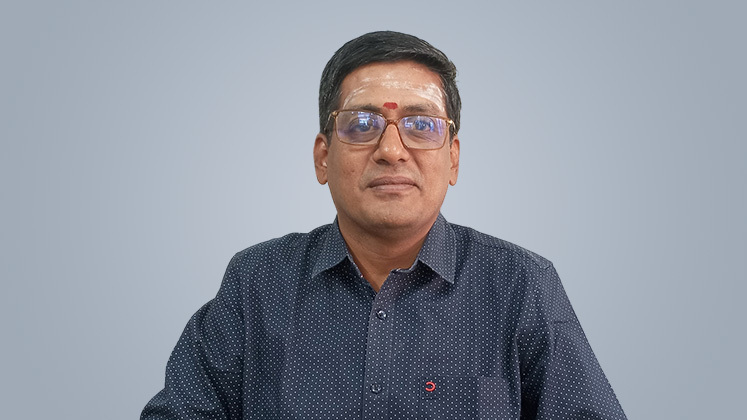
T Meenakshisundram, Proprietor, Paradise Knitters, Tirupur, mentioned, “With easing of US tariffs, demand is picking up again. However, markets like Dubai are expected to be slow for the next three to six months.”
He added that the company’s strength lies in its body-size machines, which produce tubular fabrics without side seams, enabling seamless garment construction. The company operates around 100 circular knitting machines with a production capacity of about 12 tonnes per day. It also runs finer
gauge machines, particularly 32-gauge, which are relatively limited in Tirupur, allowing it to supply finer and higher quality fabrics.
The company is also increasing its focus on polyester knitted fabrics, aiming to raise its share from about 10% to 30–40% of production. However, he noted that a key constraint is the limited polyester processing capacity in Tirupur’s dyeing units, with only a few large players equipped for it.
Alongside improving demand, structural shifts in order patterns are beginning to redefine production models.
“We are seeing shorter product cycles, with customers demanding frequent new developments and fewer repeat orders, so we now largely work on an order basis rather than stocking products,” pointed out Thangavel Palanisamy, Director, Cheran Spinner, Erode.
The company has a production capacity of around 1,500 tonnes of yarn per month and about 1.5 million metres of fabric per month, with both spinning and weaving operations focused on grey production.
It supplies traders and exporters across hubs including Delhi and Salem. The company’s turnover is around ₹220 crore (US $23.33 million), with about ₹180 crore (US $19.09 million) from yarn and ₹60 crore (US $6.36
million) from fabric. At the same time, companies are also moving towards deeper value chain integration to strengthen margins and control.
“We are planning to invest in processing facilities, including yarn dyeing, fabric dyeing, and digital printing. We are also planning to install two sizing machines as part of our expansion,” said K Rajkumar, Director, Guru Karuna Textiles, Erode.
With a turnover of ₹100 crore (US $10.61 million), the company operates around 120 looms and has a fabric production capacity of over 1 million metres per month. Its primary focus is grey fabric production, mainly in rayon and cotton segments.
The company is also looking to enter technical textiles, including surgical fabrics, and is exploring geotextiles for future growth.
Meanwhile, Vishnu Prasad, Executive Director, Kumaragiri Spinners, Erode, mentioned, “Going forward, the company’s focus will remain on cost reduction through automation, product innovation, and strengthening its garment business. This is also driven by the growing preference of global brands for vertically integrated suppliers, which helps build stronger and more reliable partnerships across the value chain.” The company’s turnover is about ₹400 crore (US $42.43 million), with nearly 80% from yarn and the remaining 20% from fabric and garments. It primarily produces blended yarns such as polyester and viscose (dispersed yarns), while 100% cotton yarn production is limited and mostly used for internal consumption.
Experts reiterated that survival is now about differentiation, not scale alone.
“Recently, we have been increasing our focus on linen and linen-blend fabrics. With improved yarn availability and growing global demand, this segment has performed strongly over the past couple of years. To support this, we are expanding our capabilities by adding advanced looms with dobbies and specialised attachments to create niche and differentiated fabrics,” said K.S.Lakshmikanth, Managing Partner, Aditya Exports, Erode. The company has a monthly production capacity of around 2.2 million metres of yarn-dyed and grey fabrics.
He added, “We currently have 230 looms and plan to scale up to 500 in the next two years, with an investment of around ₹100 crore (US $10.61 million). Despite global uncertainties, we see India as well-positioned due to FTAs, and aim to scale up ahead of market recovery.”
(With exclusive inputs from Dheeraj Tagra)
THE NEW GROWTH STRATEGY
|






 Bharat Tex Special Report 2026