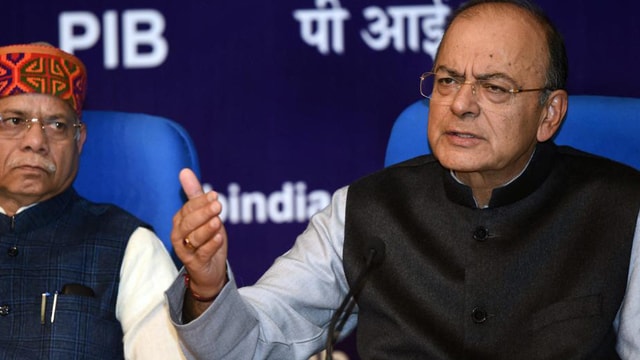
India’s Union Budget 2018 was presented by Union Finance Minister Arun Jaitley in the Parliament on February 1, 2018. The budget paid significant attention to the textile industry, as it was the first major announcement post-implementation of Goods and Services Tax (GST) in July last year.
It is pertinent to note that the new tax regime hit the textile industry hard. Thus, the textile and apparel industry had high hopes from the Union Budget and wanted it to address the needs of the time. The sector is presently grappling with severe financial crunch due to the refund backlog, be it in terms of GST or RoSL. The extension of the textile package has provided some relief to the manufacturing industry.
Ujwal Lahoti, Chairman of The Cotton Textiles Export Promotion Council (TEXPROCIL) termed the Budget as pragmatic, growth-oriented and all-inclusive. He also hailed the Government’s move on increasing the outlay to Rs. 7,148 crore for the textile sector. Lahoti hopes the increased funds allocated for the textile sector will also cover fabrics under the RoSL scheme.
On the similar tune, Southern India Mills’ Association (SIMA) also welcomed the increased allocation, which includes Rs. 2,300 crores for Amended Technology Upgradation Fund Scheme and the balance for other schemes as against Rs. 6,251 crores allocated in 2017.
Further, Apparel Export Promotion Council Chairman, HKL Magu, feels that the reduction announced in Corporate Tax for SMEs with turnover upto Rs. 250 crore will bolster growth for SMEs. He also underlined that the apparel industry is a women-oriented sector and the reduction in women’s contribution to EPF to 8 per cent from the present 12 per cent will encourage their participation further.
Understanding the importance of healthcare, a provision was made in the Budget 2018. Raja M. Shanmugham, Tirupur Exporters Association (TEA) President stated that the launch of flagship National Health Protection Scheme is a welcome move for employees. It has a provision of coverage up to Rs. 5 lakh per family for secondary and tertiary care hospitalisation.
It remains to be seen how the policies are executed in the months to come.