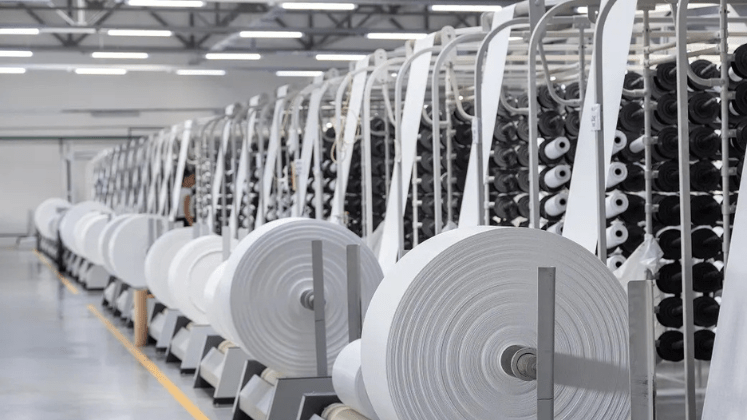
The Confederation of Indian Textile Industry (CITI) has said that the revocation of multiple Quality Control Orders (QCOs) on key raw materials for the textile and apparel sector is already delivering tangible benefits, with domestic prices showing a downward trend since the measure was announced in November 2025.
According to inputs received from industry members, the price of polyester staple fibre (PSF) has declined by Rs. 4 per kg, while lyocell fibre prices have fallen by around 3%. Yarn prices have also corrected in line with the reduction in raw material costs.
Commenting on the development, CITI Chairman Ashwin Chandran said the organisation had consistently maintained that withdrawing the QCOs would have a significant positive impact on the textile and apparel industry and enhance the global competitiveness of India’s textile value chain. He added that the domestic price corrections witnessed within a short period of the revocation reinforced this long-held view.
One of the most significant outcomes of the QCO rollback, according to the industry body, is the increased freedom now available to domestic spinning mills to source speciality and value-added fibres from global markets. Mills can diversify their product portfolios by importing fibres such as angelic and other exotic fibres, cationic polyester fibres, as well as speciality viscose and blended fibres.
CITI noted that this flexibility would enable Indian textile and apparel manufacturers to move beyond commodity products and enter high-value, niche and performance textile segments, which are seeing growing demand in international markets.
Chandran further stated that, against the backdrop of opportunities created by free trade agreements already signed by India and those currently under negotiation, the revocation of QCOs was expected to improve price realisation for exporters, increase order conversions from global buyers and lead to better capacity utilisation across the industry. He added that, in turn, this move would proactively support national efforts to achieve textile and apparel exports worth US $ 100 billion by 2030.
India has stepped up its trade engagement in recent months, signing the Comprehensive Economic Partnership Agreement (CEPA) with Oman and concluding free trade agreement negotiations with New Zealand in December 2025. Earlier, in July, India signed the Comprehensive Economic and Trade Agreement (CETA) with the United Kingdom. Negotiations are also at an advanced stage with the European Union, while talks on a bilateral trade agreement with the United States are ongoing.