The ‘Propah Lady’ wave broke the internet in India towards the end of 2019, emblematic of how the German-owned multinational sports apparel brand, Puma, is now becoming one of the biggest sportswear names in India as well, after conquering the global market. The brand is known for introducing cutting-edge technology in dynamic sports and activewear industry since its inception in 1948. The numbers also sing the same tunes, as the company’s financial report for Q3 of 2019 projected one of the best sales figures that the brand has recorded in a while, with increase in the worldwide sales by 17 per cent adjusted to US $ 1,647 million (+19.0 per cent reported). Further, there has been continued growth in all regions and product divisions and a gross profit margin improvement up to 49.7 per cent.
Bjorn Gulden, Chief Executive Officer of PUMA SE, rejoicing on these numbers, said, “The third quarter developed very positively for us and ended as the best quarter that Puma has ever achieved – both in terms of revenue and EBIT. Double-digit sales growth in all divisions and almost in all regions (with EMEA at only 9.7 per cent) underlines the favourable development of our brand. Especially positive for me was the 17 per cent growth in footwear, which shows the strong performance of the new styles, and EMEA’s growth of almost 10 per cent, proving a good recovery in Europe. The fourth quarter will be the first quarter where the US tariffs on China will have an impact. Currently, without price increase, this is putting pressure on EBIT, at least in the short-term.”
This success is owed to the two-way game plan the brand employs, offering a range with the latest technology and top aesthetic language, with the addition of strong marketing strategies. The brand has sponsored top athletes over the years including former number one golfer, Greg Norman; tennis greats – Boris Becker and Martina Navratilova; and most notably, soccer legend Pele. Puma has accomplished its long-term mission of becoming the most desirable sport lifestyle company on the global radar, and has been striving to incorporate edgier, more creative and unique designs which is evident through its collaborations with designer fashion names such as Sergio Rossi and Alexander McQueen.
Resonating the same success at the domestic level, it was established that India is the only market where the sports lifestyle brand has surged ahead of sportswear giants such as Nike and Adidas, meeting the expectations of Bjorn Gulden, who had earlier stated that India is expected to become one of the company’s top five markets by 2020 from being the eight largest in 2016. The brand’s success in India is amplified by the wave of athleisure taking over the market, and a strong sourcing and buying team that works hard to meet the demands of the Puma enthusiasts. Apparel Resources India converses with Shirish Srivastava, Head – Apparel Sourcing, Puma India to gain an insight into the buying and sourcing operations of the leading sportswear company in India.
Product says it all
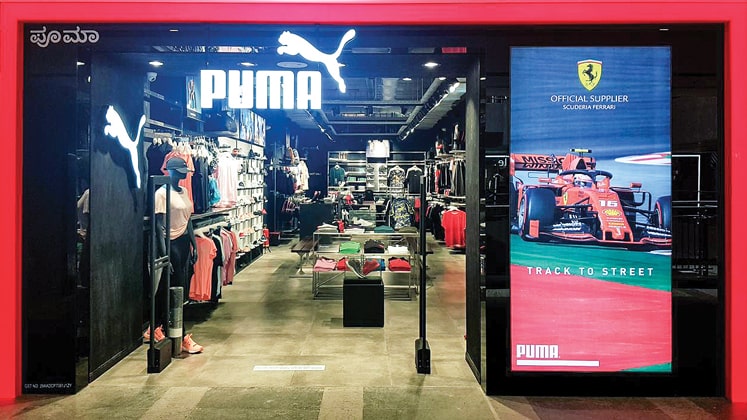
The Puma brand thrives on the design and technology-led offering consisting of three primary product segments: footwear, apparel and accessories. Footwear constitutes the biggest category, contributing to about 50 per cent of the company’s consolidated sales, generating a sales revenue of around US $ 2.2 billion in 2018, while apparel forms about the remaining 45 per cent, with accessories contributing to the balance.
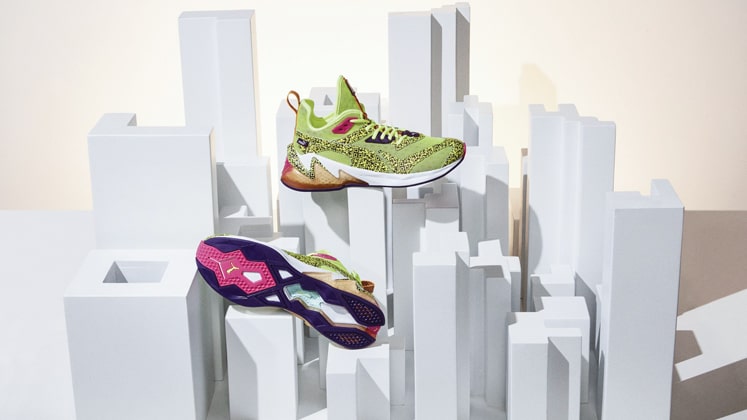
“We work on seasons and have two seasons a year. We plan the collection keeping a fine balance between core and fashion. It is curated to satisfy the requirements of the target consumer,” shares Shirish. Puma imbibes cutting-edge technology in skin-friendly knits such as various counts of single jerseys, fleece, terry and jacquards. The technological footwear innovation being constantly delivered by the brand is equally exciting, the biggest and latest instance being the recently launched LQD CELL Origin AR, the first silhouette in Puma’s new technology platform LQD CELL that also offers Augmented Reality feature allowing the wearer to play interactive games with the shoe, scan it and add fun effects to pictures and videos. LQD CELL exhibits a fresh take on foam cushioning, acting as the evolutionary counterpart of Puma’s CELL technology which uses blowmoulded polyurethane elastomer (TPU) configured in a pattern of hexagonal cells. The soft yet sturdy hexagonal cells compress and work together with PROFOAM, Puma’s energy-return foam, making each step a comfortable experience for the wearer.
“Puma India sources a diversified assortment of apparel right from tees, polo T-shirts, outerwear and hoodies to track suits, jackets, bottoms, shorts, from countries such as China, Vietnam, Cambodia, Bangladesh, and, of course, India.” – Shirish Srivastava
The Puma India team works in synergy with the international team, with a global outlook directing all the processes right from concept to stores. The design process happens via Germany, where India-specific collections are also operating to make specific collections for the Indian consumer base. The Puma India team sheds light upon the domestic market trends and the design team based out of the headquarters, then amalgamates the global design language into the collection specifically made for the Indian consumer.
Say synergy for sourcing

Puma, just like many in the industry, identifies South East Asian countries as one of the biggest sourcing hubs, as they source a variety of products from these regions. “Puma India sources a diversified assortment of apparel right from tees, polo T-shirts, outerwear and hoodies to track suits, jackets, bottoms, shorts, from countries such as China, Vietnam, Cambodia, Bangladesh and, of course, India,” Shirish avers.
Being a global name, the brand operates via a systematic global sourcing strategy that boasts of having a chain of centralised factories spread the world over, responsible for manufacturing the products for all Puma countries. All of its products are outsourced, as Puma does not own any manufacturing unit globally. It works in a collaborative nature with these units, and overlooks the design development, commercialisation of these designs and then smooth transition to the production lines. Working closely as partners, the brand directs the vendors to ensure that the products are made as per the Puma conceptualisation. As Shirish briefs, “Despite being an international organisation, local offices have complete independence to take decisions that meet the brand’s goals on the global level. Global team is there to share company-wide practices and support the local offices with market intelligence.”
Puma firmly believes that today the Indian consumer is more inclined towards adapting global trends due to the rise of globalisation, which is why the assortment offered in India is offered to the global market as well. Only a select percentage of products that revolve around demographic and geographical demarcations such as flip flops and sandals suited for a tropical country like India are exemptions. Sourcing decision starts with identifying what’s going to be produced in India and what is to be sourced across borders, and it completely depends on which country is offering the best quality. If the product is manufactured domestically, it has to be at par with Puma’s global standards. Indian manufacturing units supply for the global inventory, for both the categories of footwear and apparel.
The company is concentrating on adopting an active approach to strengthen its growth trajectory in India, to maintain its position as the leader in the sportswear lifestyle space. Puma’s global brand ambassadors include names such as Usain Bolt, Serena Willams and singer Rihanna, and to commemorate its legacy with India and Indian football, in December 2019, it roped in Sunil Chhetri, the captain of the Indian National Football team and Bengaluru FC, for a three-year deal with Puma, bringing him onboard the brand’s roster of global football players like Antoine Griezmann, Romelu Lukaku, Luis Suárez and Sergio Aguero among others. Shirish identifies the Indian market as a budding retail hub, and Puma believes that India is the best market to invest in when it comes to the sportswear industry.