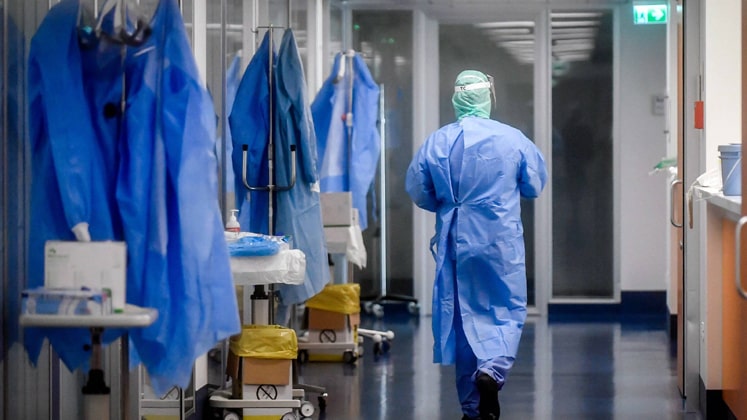
Few leading Indian manufacturers have stopped producing coveralls, while the majority are utilising only a small capacity for the same. Major reasons for the same are no export demand and the mandatory BIS certification which takes at least 2 months. At the same time, demand from the domestic market has also reduced. Now some companies are either getting orders for their routine products or focusing on the marketing of the same, rather than concentrating on the export of PPE. The important question here is – are Indian companies following the right parameters to produce quality PPE and coveralls as per international standards? This becomes all the more relevant, as just after allowing the export of coveralls with a quota limit, the DGFT found all applications ineligible and shared no reason for the same. All in all, it was a good opportunity to add a new product category which is now lost.
Shahi Exports, India’s largest apparel exporter, is one among them. Raghavan, CEO, Shahi Exports, confirmed this to Apparel Resources, “We started manufacturing PPE mainly to support the Government, and looking at the dynamics of business, I can’t say whether we will start manufacturing the same again or not.” As far as the licence for export is concerned, he said he had no idea.
Rainwear manufacturer NiceG, Ahmedabad, and apparel exporter Shivalik Exports, Faridabad, also confirmed that they are neither exporting PPE nor even focusing on the manufacturing of the same for local consumption, as it was just a temporary initiative for them.
Matrix Clothing, Gurugram, an eminent name in the Indian apparel manufacturing industry, is in the process of getting quota for the export of PPE. Gautam Nair, MD of the company told Apparel Resources, “Yes, India has missed the opportunity, as we are almost 2-3 months late in the entire process of export; still, there are some opportunities and India has capabilities to grab them.” The company has also applied for the BIS certificate recently.
He further added that while every new product involves some initial challenges, India has handled the situation pretty well. In fact, given that the country is already leading in pharma exports, it managed to manufacture PPE quite effortlessly.
On the other hand, Nailesh Joshi, Strategic Business Unit Head, Vardhman Nisshinbo Garments Company, Ludhiana, said, “Yes, now is there no major opportunity for India in export of coverall. Several other countries have already shipped huge quantities of the same, and now buyers are continuing business with them. Even if, in the future, Indian players complete all certifications as per government instructions, costing will still not match.”
However, the grapevine also has it that quality is a major concern for the Government in the present day, so as to safeguard India’s image at the international level.
Though the US sentiments are against China, it’s Bangladesh which is gaining ground. Apart from that, the congressional pressure is mounting for legislation to mandate that PPE be made in the US.
The industry is also of the view that unorganised players or a small chunk of PPE manufacturers spoiled the market by offering low-cost products, which doesn’t adhere to the right quality but is a compromise. And it created fear that if such companies get the export opportunity, they will spoil India’s image.
Headquartered in Mumbai, Sonal Apparel Private Limited (SAPL Industries), Bangalore, has reduced its coverall manufacturing capacity by 60 per cent compared to what it was 2 months ago. The company is exporting isolation gowns and claims to produce premium quality products. Vishwanath, DMM of the company, said, “We are following all quality and compliance standards at every stage, be it using SSMMS premium fabric or proper hygiene in the factory premises. We also completed the first audit for CE certification for coveralls which is not common. Our coveralls are even better than the US standards, but despite that, we can’t export coveralls just because of delay in the BIS certification.”
He also agreed with the fact that there is less demand now even from the domestic market. The company was catering mainly to hospitals and corporate clients.
It is pertinent to mention here that if an exporter has got clearance from international bodies, they still need to take certificates from BIS and NABCB in India.
While discussing with Apparel Resources, many companies’ senior officials were of the opinion that there are no issues with the quality of PPE manufactured in India. In fact, the major problems lie at the Government level, be it the HSN code of specific products or the unpredictable quota limit. Some companies shared that apart from coveralls, products like isolation gowns also need clarity from the DGFT, as the Government body is doubtful about the raw material used in the final products. If manufacturers book orders and send a shipment, there is no guarantee that customs officials will clear it, as things depend on their interpretation of Government notifications.
On the other hand, the US Embassy in Hanoi, Vietnam, and the Vietnam Government worked together to facilitate the logistics and approvals necessary to expedite the delivery of personal protective equipment to the US. It worked well for the two initial shipments of 450,000 DuPont protective suits made in Vietnam, and the US President Donald Trump expressed his gratitude to Vietnam for the same.
Similarly, in the last week of May, when Dhaka-based Beximco Group sent its first shipment of 6.5 million PPE gowns to Hanes (US-based brand), the US Ambassador to Bangladesh Earl R Miller was also present at the airport.
All the above-mentioned developments regarding the export of PPE have hugely impacted the SMEs, as they invested in seam sealing machines, expecting that PPE will be a new and long-term product category for them. But now they are quite hopeless.
India has around 700 manufacturers of PPE, and no doubt that the market is flooded with a number of unauthorised certification agencies also. But as right from the day one, various ministries, top players of the industry and agencies like DRDO were involved in this exercise, it is really sad to see that India could not gain from the opportunity of coverall export, especially in these critical times.