The ongoing COVID-19 pandemic has changed the world, perhaps for ever and the consensus is that companies and people have to be very innovative, multitasking, tech-savvy, flexible, and manage expectations to survive in this tough phase. And it is no different for the apparel industry.
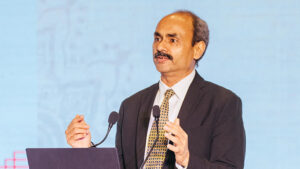
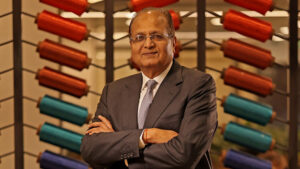
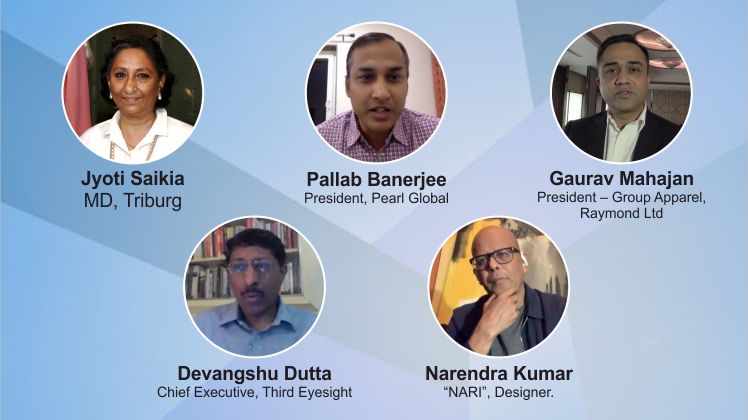
Such facts along with many more points emerged during the discussion between industry experts in a webinar organised by NIFTA, the Association of National Institute of Fashion Technology (NIFT) Alumni. The session was chaired by Devangshu Dutta, Chief Executive, Third Eyesight, and sharing their thoughts were Jyoti Saikia, MD, Triburg; Pallab Banerjee, President, Pearl Global; Gaurav Mahajan, President – Group Apparel, Raymond Ltd; and Narendra Kumar “NARI”, a well-known designer. Hundreds of professionals, top management of apparel companies and young students ready to join the profession attended the webinar.
It was stressed upon that along with the market challenges of cash and revenue crunch, which every business is facing, it is also critical to keep in mind that COVID-19 has also resulted in an emotional challenge for all. So, along with tangible lows, the virus situation has also resulted in low sentiments which is again a big challenge for apparel retail industry and will lead to changes in how business is being done today.
Jyoti highlighted that this is the best time for start-ups as the world is looking for innovation and out-of-the-box thinking. “India should take advantage of its local market and manufacturing within the market,” she said and added that there is a strong need for a cohesive approach to meet the challenges across the textile value chain.
Pallab shared that some of the global retailers have delayed payment of shipments made in February for as long as five months, while planned shipments for March onwards have been stopped. “Post COVID-19, not only is customer behaviour going to change, but it will also change the process, even at the workplace. Technology now has to be part of everyone’s DNA. Digital approval is now going to be a must for all. Companies have already started looking at how they can integrate technology which was not done so far,” he highlighted.
Gaurav was of the view that all this is going to have an impact for at least 8-9 months, post the calamity, and the Government support will be very critical for the industry. He stressed that while other countries were looking at an average of 6-9 per cent of GDP as support packages in India, the amount declared so far was only to the tune of around 1 per cent of GDP, which is too small an amount, though he added that the Government was very proactive and was spending generously on health and safety issues, besides feeding the large number of underprivileged people in our country.
Narendra shared that there will be good opportunities in the market once the world is opened again for business, but one has to be prepared accordingly. Especially those new to the industry have to think how they can add more value to their organisations. He pointed out that product innovation, localisation of business even for basics, and new market segment in the shape of the young Tik-Tok generation are going to create challenges and opportunities.
Taking the discussion forward, Gaurav underlined four trends that he believes will drive the apparel industry in the future. First and foremost, since businesses will downsize to survive and run profitably, it will become very important to be more innovative to differentiate; secondly, technology will be critical for both personal and company sustenance; thirdly, consumption will be frugal and value based, which could mean more local manufacturing to save on inventory; and last but not the least, ethical fashion will get a great leap forward, moving away from fast fashion.
The panellists also stressed that there will be a ‘new normal’ post COVID-19 and one has to adopt and adapt to it. The underline message was that businesses will no longer be about expansions and big plans, but survival and then revival in a new market defined by new thinking, new concerns and new directions, including focus on health and safety issues and products.