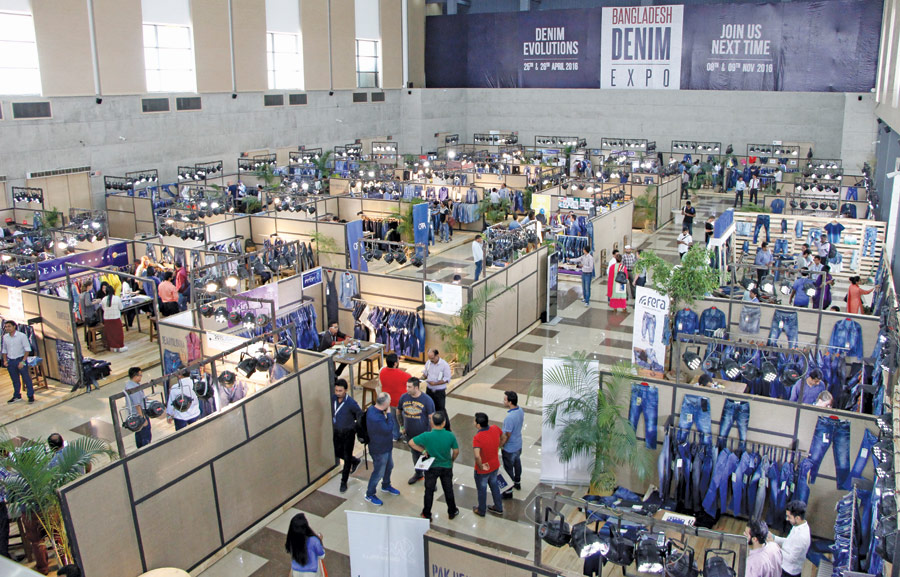
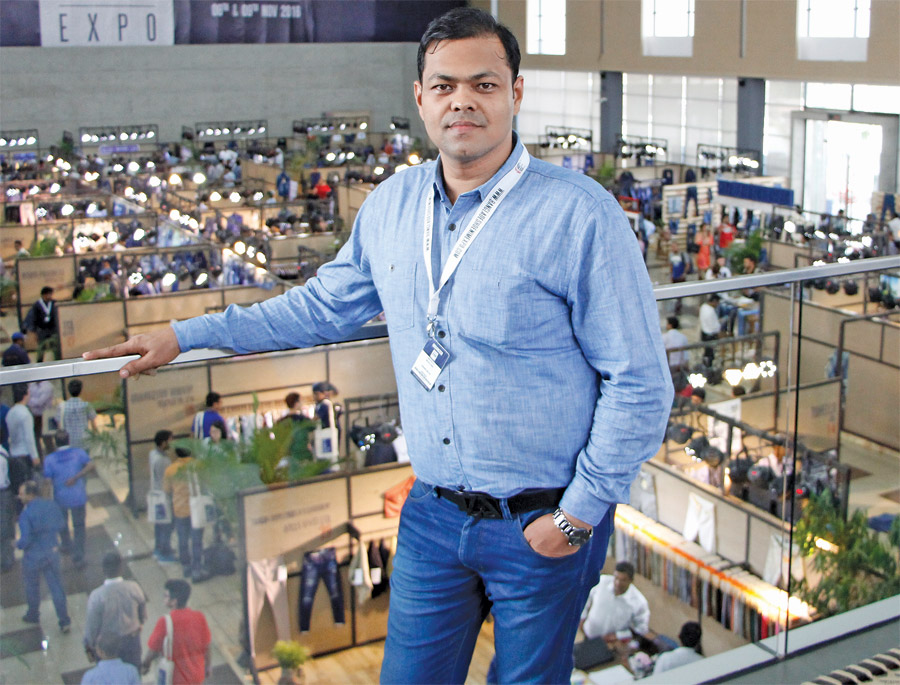
 The denim story for Bangladesh is only getting bigger, a reality that was endorsed by the attention that the recently concluded Denim Expo received from diverse stakeholders of the industry. With 49 exhibitors from 13 countries, including Bangladesh, Brazil, China, Germany, India, Italy, Japan, Pakistan, Singapore, Spain, Turkey to mention some, showcasing their latest offerings in denim fabric, denim accessories, chemicals and eco-friendly technology, the exporters and buyers who visited the fair were served with enough innovations to make the visit worth their time. The two-day event also hosted well-attended seminars where international experts like Amy Leverton, Jeanologia and Tonello highlighted future denim trends and technologies, and also addressed issues of industry importance.

The effort of most companies was to differentiate, and as denim moves beyond being a commodity product, differentiation is getting more challenging by the day. While the Bangladeshi mills stressed on the importance of product development and the ability to respond quickly to demand, mills from other countries felt that visibility in a market like Bangladesh was important to grow, as buyers were looking to increase sourcing from the region. The fact was endorsed by buyers at the event, who expressed confidence on the capability of jean manufacturers in the country, though they did stress the importance of being more sustainable. “The country has grabbed the attention of denim brands from around the world, but will they retain it in the long run depends to a large extent on how sustainably they take the industry forward,” said Martin Schaefer of Denim Madhouse, Sourcing Production Consulting.
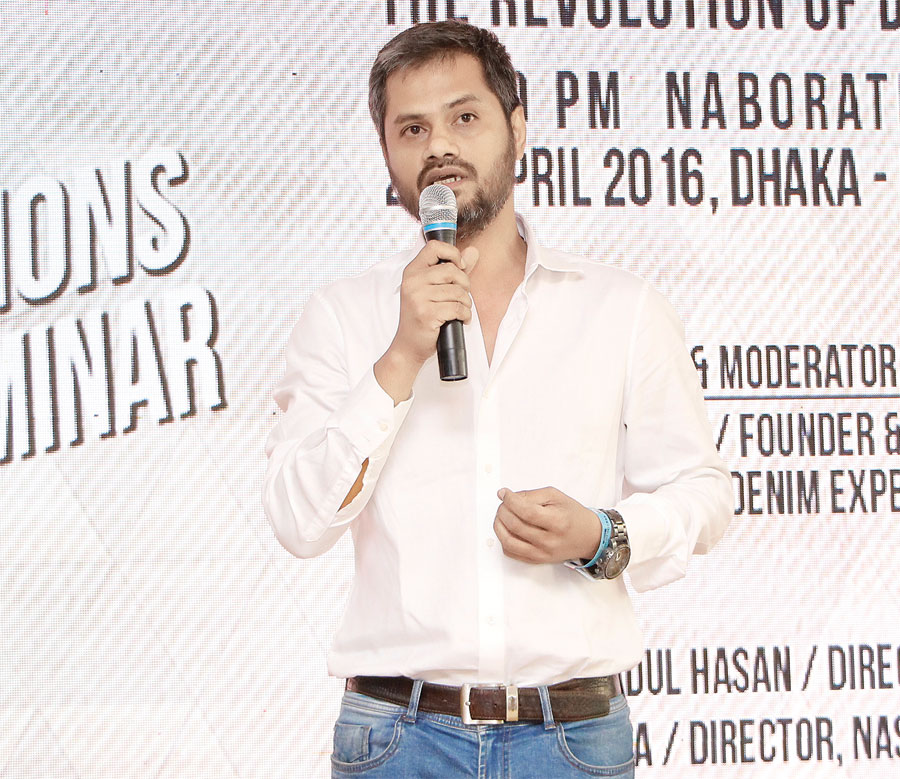
Essentials: The seminar on future of denim had stalwarts like M Shahidul Hasan, Director, Amber Group; Md. Sohel Rana, Director, Nassa Group; and Md. Jamal Abdun Naser, Director, Shasha Denim answering to queries from the audience. Though each company was of a different view with regard to individual growth strategies, the one thing that came out strongly was the common belief in the future of the denim industry and the fact that sustainability was the only way forward for long term growth.
The success of denim has encouraged many new players to enter the arena in the last few years, among them Thailand-based Absolute Denim, a 7-year-old company that is integrated from spinning to finishing,is producing 2 million yards per month, of which 80 per cent of fabric is for men. Servicing mostly the European market for customers like G-Star, Next, M&S, Bangladesh is an important market for the company, as most of them manufacture their jeans in the country. “We make more compact and masculine fabrics, with greater focus on construction rather than stretchability. We develop the fabric based on what our customers want, and as of today the demand is for more mercerized fabrics,” shared Atthaphon Sirikajornkij, Creative Director, Absolute Denim. The company supplying jeans to manufacturers like M&J, Columbia, Pacific Denim, feels that there has been a shift to more competitive price and the biggest challenge is to make innovation in a given price bracket. “Our facility is certified by BCI and for other sustainable practices like organic cotton. The focus in innovation maybe anything, like in UK and France it is cleaner while Spain and Germany are asking for more crazy washes, but sustainability is a direction that we cannot run away from,” added Sirikajornkij.
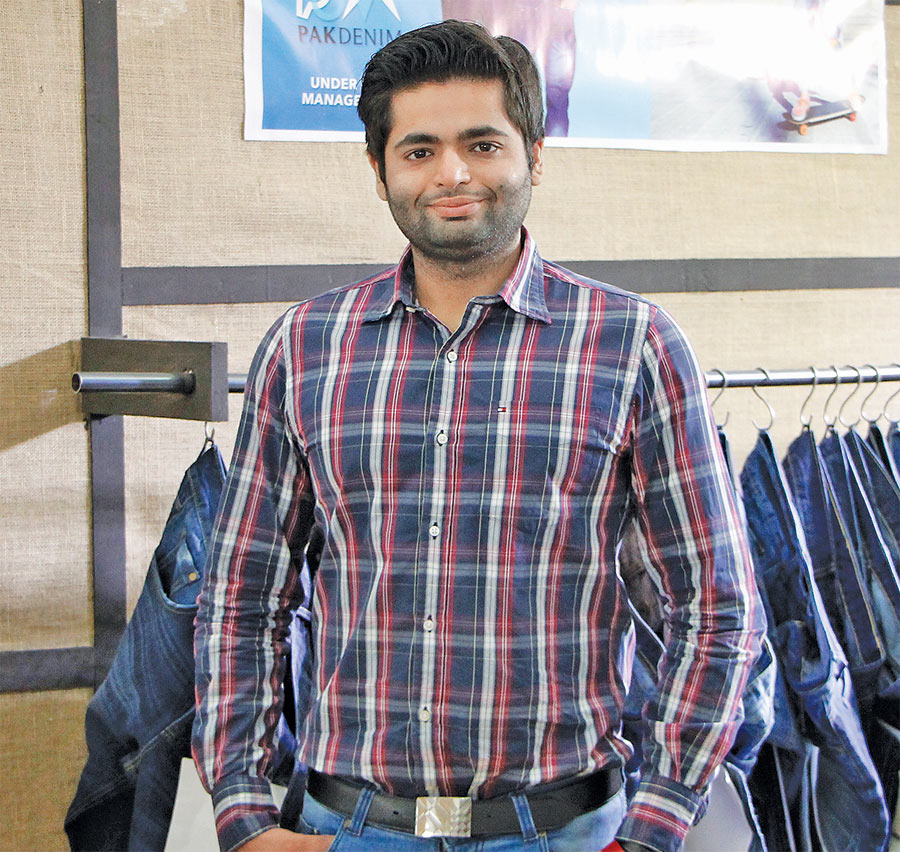
Another new entrant Pak Denim Mills, which was taken over last year by a new management, for whom denim is a new segment, the upfront attitude of the CEO Bilal Zubair, has already brought the company into the eyes of buyers. “Our USP is quick response service; quality and price are not negotiable anymore and buyers need partnerships. We have to support our buyers in all circumstances, for urgent deliveries and even lower prices sometimes,” says Zubair. The company manufactures 1.2 million yards per month and the product strength is comfort stretch. “We do a lot of R&D in Pakistan, what we developed last year has already fetched us orders. I travel intensively and take personal interest in developments, this really helps,” adds Zubair. Working with brands like M&S and Mango as nominated suppliers and also directly with garment companies, Pak Denim produces both standard products and specialized innovative products in a ratio of 80:20 to ensure steady business. “This is my second visit to Dhaka and it is better coming here than going to Texworld, as it gives us visibility in a market which is the fastest growing in this segment,” he admits.
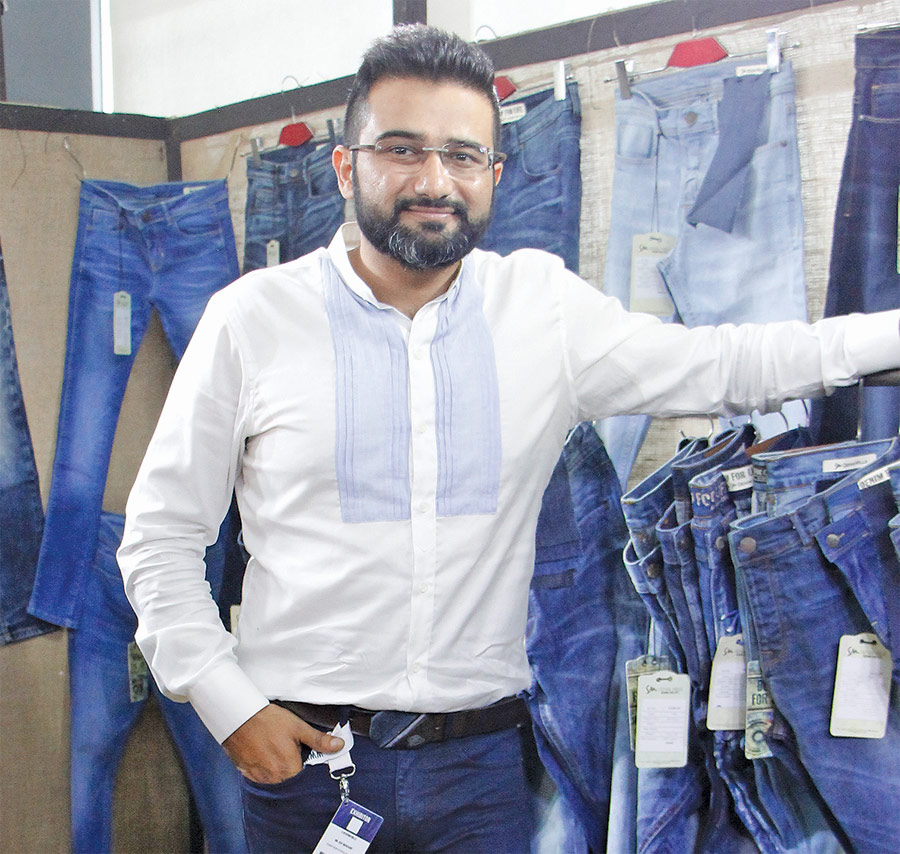
Pakistan has some very well established mills and though rope dyeing is the standard procedure of dyeing, SM Denim, claims to be the only mill to have facility for slasher dyeing. While rope is an American technique widely used because of the high production output, slasher is a single process with less running cost, though the technology is expensive. “Fabric from slasher work out about 3 cents to 7 cents cheaper, also light weight fabrics for leisurewear is much easier,” shares Asif Merchant, CEO (Denim Division), SM Denim Mills, who also admits that the fabric type that they are producing is 95 per cent same as what the rope dyeing manufacturers are doing. “Today 99 per cent of production is in stretch and brands are taking the concept to new heights; Replay, Italy has recently introduced hyper stretch…, it’s all about stretch. When I set up the plant in 2001 it was only basic fabric, change has come after 2003, now a company cannot survive if they do not innovate by keeping track of what top brands are doing,” avers Merchant.
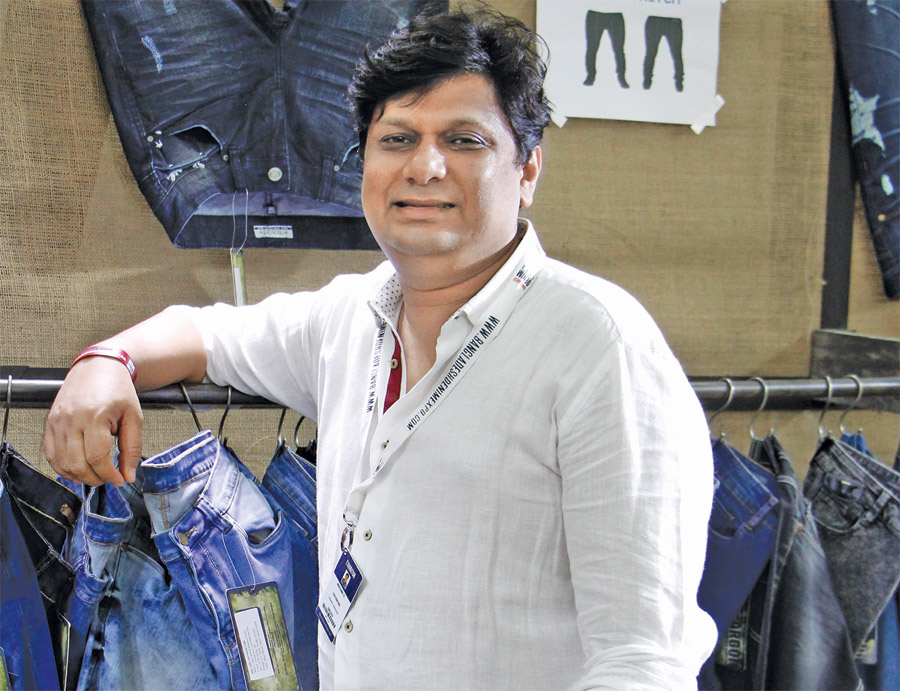
A China-based company, WinWin Textiles claimed to have better quality and even more competitive priced fabric than other exhibitors. “The capacities that we have and the type of investments in R&D that is being made, is difficult for newer countries and companies to duplicate,” reasoned Vance from the company. Almost every type of denim fabric was showcased, including multi-colour denims, which the company claimed was making a comeback. The company is directly supplying to manufacturers through a local agent.
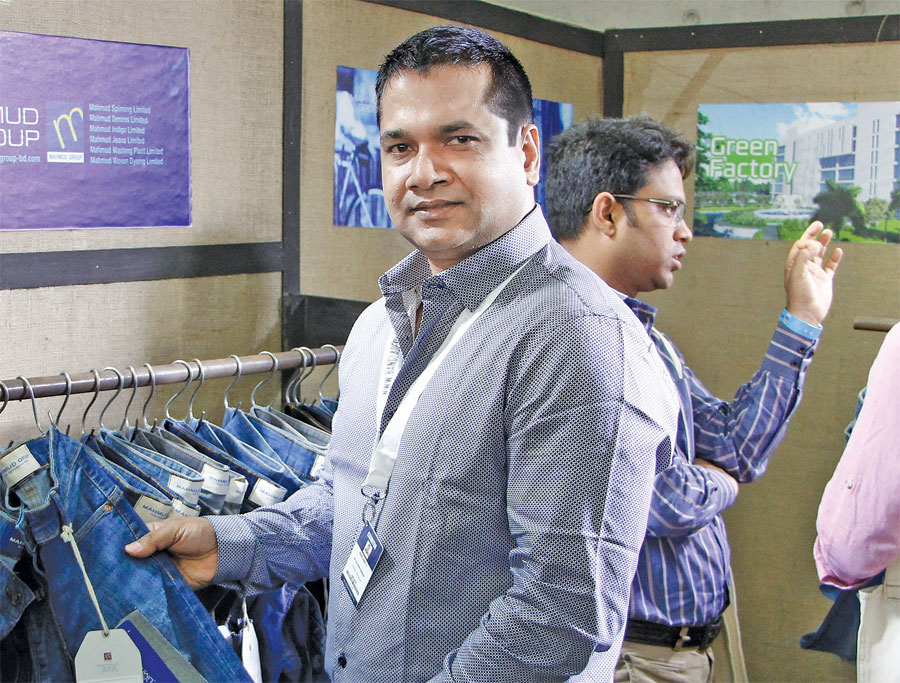
Major Bangladeshi companies had displayed their latest collections which received much appreciation. At Mahmud Denim, the emphasis was on viscose and dual blends, bright colours and comfort stretch. “Our R&D facility is big on washes and based on standards given by buyers, we innovate quite a lot in this area. The biggest strength however is being fully vertical so we are very competitive and since we have always invested in new technology this keeps us ahead,” said Md. Jalaluddin Chowdhury, General Manager, Mahmud Group.
The strategy at Nassa is to continually upgrade products with something new every second month.
“When a buyer comes to Bangladesh, his first thought is to buy at a low cost; we want to change that perception. No doubt Turkey is the leader in innovation, but the way the industry is growing and entrepreneurs are investing with a mindset towards sustainability (as it is not about few companies, but the industry at large), Bangladesh is now a serious contender for innovation in denim,” says Md. Sohel Rana, Director Marketing, Nassa Group.
This fully integrated company is giving options of innovation at every stage. In garments they are going for sustainable washes, while in fabric the investments are in improving quality of fabric. “We are not focusing on expansion in numbers, but in quality,” adds Rana.
Md. Jamal Abdun Naser, Director, Shasha Denims Ltd. was very happy with the visitation at the event.
“Bangladesh is now the hub of denim and buyers are coming with greater expectations. Visitors at the fair were very knowledgeable and asked a lot of questions, which is good. Only with interactions we can grow, because exchange of ideas is the only way to grow,” said Naser.
Tencil blends, recycled yarn and BCI certified cotton were some of the interesting variations in denim that was on display at the Shasha booth.
However, not every Bangladeshi company is looking at innovation and Argon Denims believes that the USP for most Bangladeshi jeans manufacturers is working for the medium range brands and fabric manufacturers must look at this segment.“For an average jeans worth FOB US $ 6, the fabric should not cost more than US $ 2.5 per kg and there is enough orders from this buyer segment in Bangladesh,” opines Tazib Uddin Khan, GM, Sales & Marketing, Argon Denims. He adds that the Rana Plaza incident was a blessing in disguise, as it helped the industry to mature.
“About 5 years back all customers had specific designs, but now they expect the mills to develop. Brands are moving to the mills and collaborating to create new designs, which is a good trend and reflects a change,” says Khan.

Mostafiz Uddin, Organiser of the event and Managing Director of Denim Expert Ltd., Chittagong was very happy with the way the fair rolled out. As a manufacturer of denim garments, Mustafiz wanted to expose the industry and its directions to buyers, which gave birth to the Denim Expo. “We are a new country in the segment with a young history of denim manufacturing and there is still much to be done, but the movement is in the positive direction,” says Mustafiz. As a jeans producer, Mustafiz feels that his company is growing as they are very responsive to trends and quick to incorporate new ideas.
Interestingly he is not advocating further investments in denim fabrics. “Companies have to see how they want to take the advantage of their setup. People think denim is a good investment because there have been some success stories…, but I feel that setting up a denim mill will work only if the new mill can produce that product which is currently being imported, otherwise it is only going to create more competition among the existing players. Feasibility needs to be seen,” argues Mustafiz.
Recognizing sustainability as the next big challenge, Mustafiz announced a ‘sustainable textile’ fair in February 2017. “I feel this is the future, but not everyone even understands what is sustainable…; how do I find technology…; how do I go about setting up a sustainable unit, which are common questions. I want to address this rising interest. With such a good concept, support has come in from all directions – be it the buyers, the Government, the associations and the European Union,” concludes Mustafiz.