Fresh off their stunt on the Parisian Haute Couture runways, Rahul Mishra’s eponymous label is not just the talk of the town, but the talk of the world too!
To put things in perspective, 2020 started on a very high note for Rahul, in being the first Indian designer to have been invited at the Paris Couture Week to showcase his Spring/Summer and Fall/Winter couture collections. Within a week of his first show at the Parisian runways, Rahul was flooded with at least 15 red carpet appearance requests and reportage across global media.
This year also marks the 6th year of Rahul’s association with Woolmark; he is the first Indian designer who won the coveted International Woolmark Prize in 2014 – the platform which played a huge role in kick-starting the label’s international career. “The journey with Woolmark has been wonderful. Post our first collaboration, we have done 12 ready-to-wear shows in Paris and three couture weeks – including shows on the official calendar as well as presentations.” Rahul told Apparel Resources.
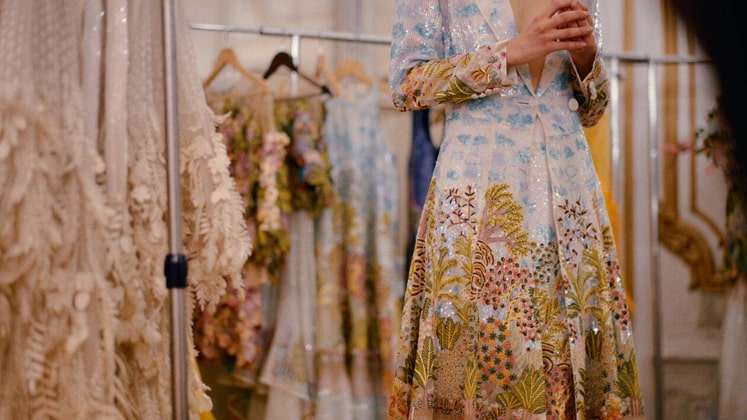
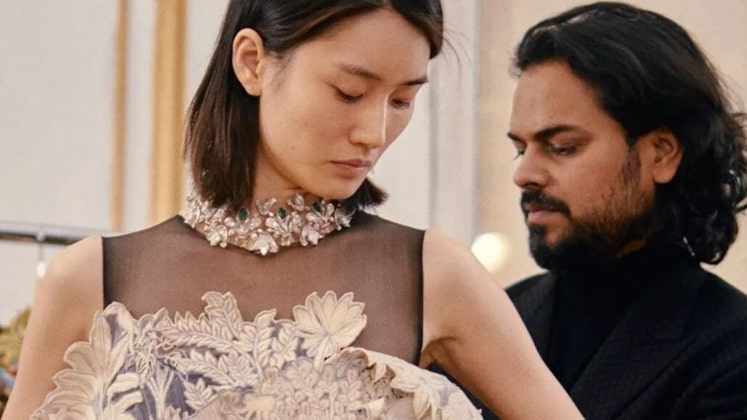
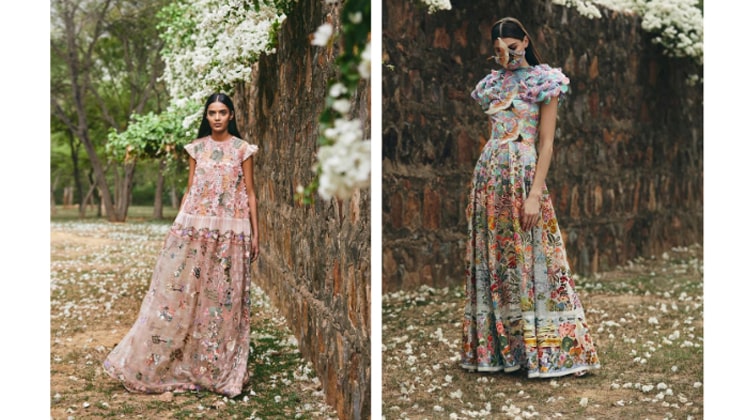
Known for his highly detailed, elaborate embroideries usually inspired by scenic nature, flora and fauna, Rahul Mishra paints an exceedingly engaging and artistic image via his deigns.
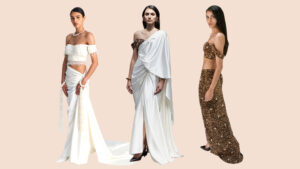
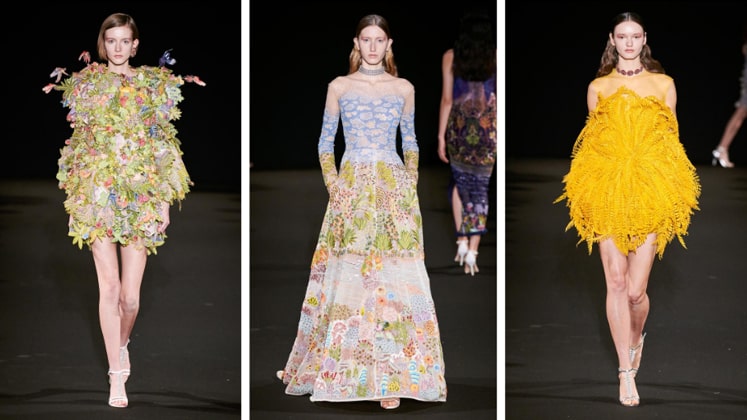
For his Spring/Summer 2020 collection at Paris Couture Week, Rahul cited inspiration to his 4-year old daughter’s awareness of the changing environment around her – come alive through Henri Rousseau’s jungle scenes. The result was an artistically put together tactile version of detailing founded on traditional crafting techniques that mimic ferns, foliage, coral reefs. All-over sequined bodices feature landscapes that showcase all of nature in one frame – varying shades of the sky dotted with soft clouds, spread out over wildlife strolling on the foothills of the Himalayas… going on to depict the magical underwater life – all coming alive in 3D embroidery over fluid silhouettes that incorporate voluminous organza and tulle. A standout outfit features architectural structures, through which the designer has explored the ‘shapeshifting’ technique. Whichever way you sit, the dress shapes accordingly – it is the embroideries that shape the garment.
The coronavirus pandemic certainly hit the fashion and textile industry hard – sending plans, stock and manpower into turmoil. A direct impact of this was witnessed among India’s rich pool of artisans and craftsmen, which saw a massive exodus of these migrant workers from cities to the confines of their villages as the nationwide lockdown was announced.
Also Read: Fashion industry’s reset plan to cater to changing consumer demands during COVID-19
Furthering the ideas presented in his Spring/Summer 2020 Haute Couture collection, Rahul presented his Fall/Winter 2020 Couture collection, in an effort to support his craftsmen, and to also keep the business wheels of the fashion industry oiled and in motion.
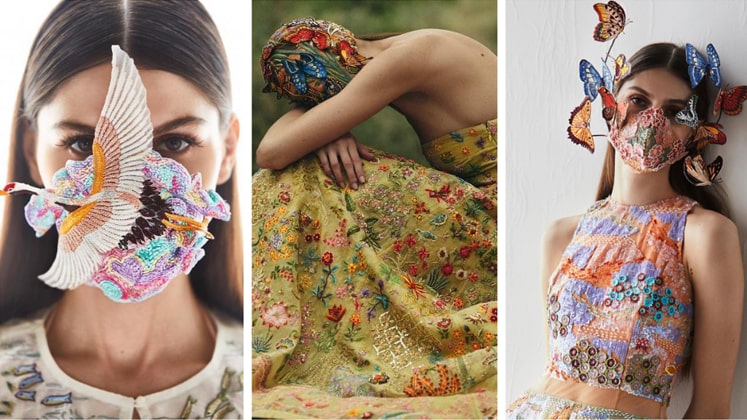
Titled ‘Butterfly People’, the 13-piece collection taps on intricate embroideries inspired by the underwater life, exotic birds, and butterflies et al, as well as the migratory existence of the fashion workforce. What under normal circumstance would have taken 6 months to come together came to fruition within 6 weeks owing to the lockdown, which put an impetus on the karigars working from home.
Growing up in a sleepy village 53 miles off Kanpur, Milhausi in India, Rahul always aspired to become an artist. After graduating in Physics from Kanpur University, Rahul joined the prestigious National Institute of Design, Ahmedabad, where he worked closely with textiles and found clothes to give him an outlet to create something he felt strongly about. “Crafts and techniques help us to express ourselves. When I started out, we had a very small team, but today, we have grown by almost five times” Rahul explained.
Rahul Mishra’s couture pieces are created in nearly 5,000 man hours of meticulous hand work, whilst his ready-to-wear pieces require about 1,500 man hours – both of which are faultlessly designed and stunningly intricate.
The entire design and sampling for the label happens in-house at Rahul’s factory located in Noida, but as a brand, Rahul Mishra believes in the process of decentralising and creating an opportunity for diverse minorities. As a brand, he is known for its intricate hand embroidery techniques and exquisite, one-of-a-kind handloom pieces – these are created in tandem with a lot of clusters across the Indian subcontinent. ‘Let craft lead the way’ is the motto of the label. Commenting on the same, Rahul said, “We are a very craft-oriented brand. If we are 100 of us put together in-house, we work with around 10 times more number or artisans who are probably weaving in some part of India or practicing certain craft’s in some region.”
Also Read: Amaare: Rethinking Indian menswear with a focus on ethical fashion
Starting from South of India, some clusters in Kerela, Banaras, Chandheri and Maheshwari, Rahul has been employing countless clusters every year. “We believe in the concept of decentralising the process of making things – certain things, which can be made from hand and don’t require a lot of infrastructure, can be made from home. We also look at the process of slowing down the process of creating fashion.” Rahul said.
In the fast-paced fashion world of today, trends change in the blink of an eye, and the digital savvy consumers of today want things as soon as they see it online. In such a scenario, it is important more than ever now for a brand to have a unique voice along with constant engagement to keep its consumer hooked. How Rahul keeps reinventing his designs season after season and delivering blockbuster designs is something that amuses not only us, but his loyal customer-base as well.
The very grounded designer brushed off this form of praise with a soft giggle and remarked, “We are still a fairly new label. Having spent 10-11 years in the industry, it still feels like we started yesterday – the freshness and newness is still intact. Some Parisian people from the fraternity still refer to me as a ‘young guy’, which is a nice thing to hear! I am very happy and know that there is a lot expected out of us in terms of young energy and creativity – it often gets pressurizing, but that’s the fun part of being in the fashion business and we are happy that we as a team are able to bring something new to the table every season, every year. What excites us the most is the process of making things, and till the time we keep enjoying the process, things are going to keep happening for us.”
Reckoned among the top designers championing sustainable and slow fashion in India, Rahul believes that fashion itself is what is not allowing us to be sustainable. He stresses on calling his brand a sustainable brand rather than a fashion brand – since they do not subscribe to the idea of fashion and trends. According to Rahul, fashion and trends are often only a trick to drive more consumption. More and more consumption translates to an increased demand in the market which in reality is not a great thing for the planet because fashion is the second most pollutant industry in the world.
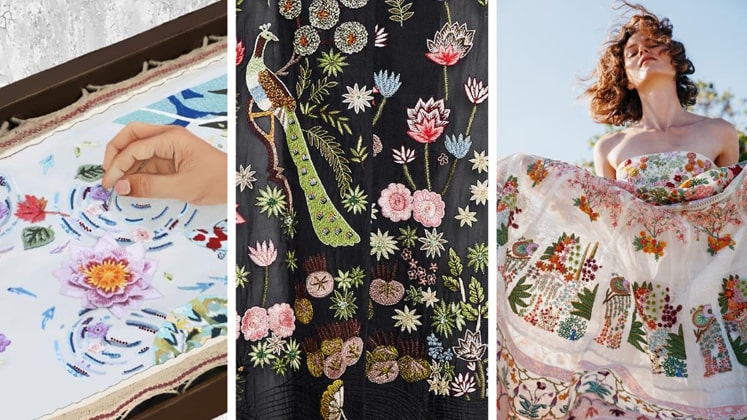
“For me, sustainability comes when you don’t have to change too much unnecessarily. I don’t care about trends, I don’t care about growth – I just try to make classic pieces that can last in somebody’s wardrobe for really long. I make clothes that are reasonably strong so that they can stand repeated washes, and have a post-sale experience that is beautiful. I also try and create clothes which embody slow fashion – slow fibres, slow embroideries in a way that they don’t allow us to change with trends,” Rahul corroborated.
“We cannot afford to keep making clothes especially at the current mechanised pace, so we have to go back to our roots. Even the best of the most organic yarn which may look sustainable, by definition, would prove to be unsustainable if millions of T-shirts are made using that.”
There is too much of a hue and cry surrounding the saving of craft today. People have suddenly woken up to realise the importance of ancestral techniques and craftsmanship citing immense importance to uphold these sections of society. But had the section been empowered since the very beginning, such a situation would not have arisen. Rahul’s practice serves a greater purpose and has been championing Indian crafts since the label’s inception. This has left numerous craftsmen gratified and empowered.
Commenting on the same, Rahul said, “Look at the craftsmen… if they are getting paid well, there won’t be a dearth in the industry. But if delve deeper into the reason why craft is still popular in India, it’s because people are very poor and they don’t have many opportunities to earn a livelihood. That’s the ugly side of being a craft-strong country where people are still living that sort of life where they don’t have any other means to earn their living. So for me, till the time certain crafts keep paying people, till the time they can take care of craftsmen, and till the time crafts can take care of a craftsman’s dream, it is useful, it is beautiful. But after that if the craftsman wants to become a computer engineer tomorrow and wants to earn more money for himself, then he should be free to do so. But if a certain section of society does want to practice craft, then we should have enough opportunities to engage and empower them, otherwise the craft is going to stay in museums.”
“My objective is to create jobs which help people in their own villages; I take work to them rather than calling them to work for me. If villages are stronger, you will have a stronger country, a stronger nation, and a stronger world. My entire philosophy revolves around that. The product will go through evolution… it will change, improve, but the philosophy is constant.”
Rahul’s latest collaborations include one with the Royalty of Monaco, Zendaya, and an upcoming partnership with a sustainable luxury resort based in Maldives. He is also in touch with stylists from across the globe including Selfridges and Net-a-Porter.
In terms of distribution channels, Mishra now has a strong network which enables his collections to be available in almost all countries across the globe. With two retail stores in India, and a third one in the pipeline, the endowed designer is working on launching his first retail store in Paris.
Creating a big brand requires a lot of innovation in terms of creating iconic looks and constantly coming out with something which is very original. Pre-industrialised production and a sense of participation are at the heart of Rahul’s designs. “The jacket I am wearing right now was brought by me years ago when I was in college. I aim to follow the same philosophy with my designs; the idea is to be less volume-centric while taking care of people.”
What the world needs is not more creatives, but creatives like Rahul, who with their creativity can help in refashioning our planet.
Also Read: Keeping the hopes high amidst COVID-19: Yash Dongre