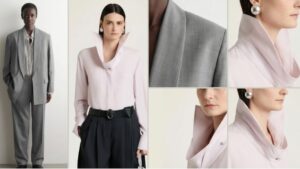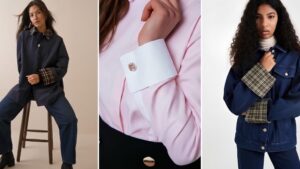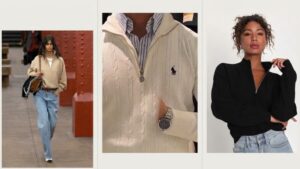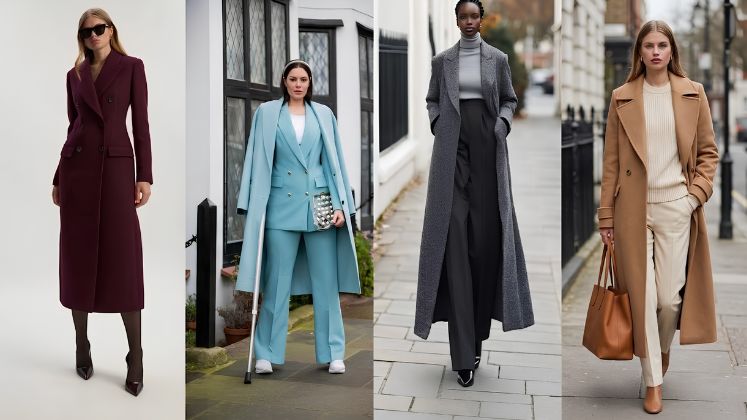
Monochrome is often shorthand for black and white, but the term properly means dressing in a single colour from head to toe. It’s this broader reading of monochrome that’s driving one of the season’s most consistent styling trends, offering a way for minimalist dressers to add personality without abandoning a pared-back aesthetic.
The appeal is structural as much as aesthetic. A single colour worn top to bottom creates an unbroken visual line, which reads as elongating and deliberate rather than the flatter effect that comes from contrasting separates. It’s a technique that photographs cleanly and translates easily across silhouettes, which partly explains why it keeps resurfacing on runways season after season rather than fading as a one-off trend.
The common misstep with monochrome dressing is treating “one colour” as “one shade”; a single flat tone from top to bottom tends to read as costume-like rather than considered. The more successful execution plays with tonal variation within the same colour family: a deeper shade on outerwear, a lighter shade beneath, texture doing the work that contrast normally would. Mixing fabric finishes adds the visual interest that colour alone isn’t providing, while fit discipline matters more than usual, since monochrome has nowhere to hide a poor silhouette. The current runway iteration also leans into proportion play: an oversized coat balanced against a slim high-rise skirt or trouser, keeping the outfit from reading as shapeless despite the head-to-toe colour continuity.
Monochrome was one of the defining threads of the Fall/Winter 2026–2027 shows, with single-colour dressing appearing strongly at Michael Kors, Max Mara, Hermès, Ermanno Scervino, Tom Ford, Fendi, Zimmermann, Tod’s, Carolina Herrera, Mugler, Celine, Gucci, Ferragamo, and Giorgio Armani, with Hermès in particular using controlled colour and quilting to sharpen its narrow, aerodynamic silhouette.
Earlier in the year, the same instinct carried through New York’s spring/summer 2026 shows, where monochrome looks dominated the runways, with Veronica Leoni’s Calvin Klein Collection debut opening on an off-white mini dress and matching headscarf, and Toteme presenting a full black-and-white collection that stylists singled out as owning the trend that season.
Colour choice has also been expanding beyond the expected greyscale palette; Armani Privé showed a monochrome mint set pairing a strapless dress over trousers with mint kitten heels, while deep eggplant and jewel tones turned up as monochrome alternatives to black at Diotima, Proenza Schouler, and Cult Gaia. Most recently, coverage of the fall-winter 2026–2027 season under the new creative regimes at Dior under Jonathan Anderson, Loewe under Jack McCollough and Lazaro Hernandez, and Chanel under Matthieu Blazy flagged monochrome dressing as a banner statement of the season, swinging between vibrant, energising tones and softer pastel nuances.
The trend has a distinct and arguably more established parallel in Indian fashion, where several designers have built tonal, single-colour dressing into their signature language rather than treating it as a passing runway note. Anamika Khanna is known for blending fluid draped ensembles, asymmetrical cuts, and structured layering, often working with muted colour palettes like ivory, beige, pastels, and monochromes, occasionally introducing bold hues in statement pieces.
Anavila’s soft linen saris in grey and white feel effortless, while Abu Jani-Sandeep Khosla’s tonal ivory drapes add richness to minimalism; both frequently cited as reference points for wearable, everyday monochrome in Indian ethnic wear. Sabyasachi remains a strong presence in this space too, with entire capsules built around black and ivory.
On the more minimalist, contemporary end, Payal Khandwala works in sharp, clean, often colour-blocked single tones, alongside a cluster of women-led minimalist labels like Bodice, Eka, and 431-88, that share the same restrained, monochrome-leaning design language, while Rajesh Pratap Singh’s menswear-influenced tailoring has long favoured a similarly pared-back palette.
At the retail and stylist-commentary level, tonal, one-colour-multiple-textures dressing has been flagged as the biggest trend in Indian fashion this year, with looks like a deep blue kurta paired with a slightly different blue pant, or a pink saree with a tonal pink blouse, prized for reading as effortlessly sophisticated. Labels such as Rashika Mittal have built entire capsules around the idea that all-black is no longer unconventional in Indian fashion and has become one of the most striking choices for evening events, with texture (matte silk against sheer organza, dense embroidery against a smooth base) doing the work that colour contrast usually would. Ivory, black, pink, blue, and earth tones have all emerged as strong monochrome families in Indian ethnic wear this season.
For the Indian market, monochrome’s cross-category relevance makes it a more durable trend note than most seasonal colour stories. It also aligns well with the broader move toward quiet luxury and considered dressing that Indian retail has been tracking through 2026: monochrome doesn’t require logo-driven signalling to read as intentional, which suits both premium D2C positioning and increasingly discerning occasion-wear buyers. For brands, it’s also a practical merchandising opportunity; tonal capsules across separates or ethnic sets encourage full-outfit purchasing rather than single-item buys, since the styling logic depends on matching pieces within a colour family rather than mixing across them.