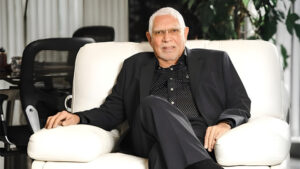
 During the initial stages of 1982, when most international brands were unaware of Bangladesh as a competitive sourcing destination, Syed Abu Ali, Managing Director of A&Y Services, started his career as a buyer with a Finnish brand called ‘Seppälä’, placing an order of 10,000 pieces, comparatively huge for a country like Finland in those times. From there on, Syed has not looked back as the orders kept flowing in with A&Y Services continuously adding buyers from countries such as Spain, Germany, Denmark and the Netherlands followed by Ukraine and Russia. In conversation with Team Apparel Online, Syed talks about the company seeing a surge in business and also how the recent industrial accidents have impacted the garment industry of the country…
hile industry experts had predicted a shift in business from Bangladesh to other low-cost manufacturing countries as an after-effect of the factory accidents that rocked the country in the past year, it seems ironical that the country is actually seeing a surge in business. According to insiders Bangladesh may have lost some business on one hand, but it has gained much more from shifting of orders from China where spiralling cost of production is making it difficult to retain garment manufacturing in the country. Capitalizing on this shift, some buying offices including A&Y Services are brimming with orders. “Due to rising labour costs and China’s growing interest towards high-end businesses like IT, we are getting a lot of business from China,” informs Syed. The company is in talks with a UK-based client dealing in workwear who is sourcing from China and is planning to shift orders to Bangladesh, as it is 35 per cent cheaper.
[bleft] According to insiders, Bangladesh may have lost some business on one hand, but it has gained much more from shifting of orders from China where spiralling cost of production is making it difficult to retain garment manufacturing in the country. [/bleft]
Although the increasing number of orders from China is helping the garment industry in Bangladesh to grow business, but the recent accidents have brought the country under microscopic scrutiny from both national and international organizations. The poor working conditions and the commonly discussed topic of minimum wages have taken centre stage. “We are expecting that the wage rise between Tk. 5000-8000 would be effective from December or maybe November, so we are already quoting prices accordingly,” maintains Syed.
 However, the expected rise in wages is a matter of debate, as buyers have always looked upon Bangladesh as a ‘cheap sourcing’ destination and brands though supporting the cause are still bargaining on, though it is not as rigorous as what it used to be earlier. Apart from the debate on increase in wages, buyers are increasingly stressing for compliant factories and focusing on proper exits, fire safety requirements and natural light for the workers. “The future of non-compliant units looks bleak and the factories should at least be semi-compliant, if not 100 per cent compliant in order to stay in business,” declares Syed.
In this fast changing scenario, Syed blames the buyers too for the fiasco. “They are either neglecting the working conditions in factories they are already working with, as they are in a hurry to get their work done and then move on or they are increasingly rejecting factories that are semi-compliant, as they no longer want to be associated with any more factory mishaps,” says Syed. This had put tremendous pressure on all Bangladeshi factories which are in the process of becoming compliant; and recently one factory was blacklisted from Tesco operations for not adhering to the compliance code and conduct. That happened because the appointed consultant’s observations differed from that of the management on safety issues. This led to the factory having a workforce of 5000 people to lose huge orders which were already in the pipeline. “I know the owner of this unit which has good working conditions including room for children with attendants, for mothers working there. The consultant reviewed the factory without going into details and reported it as non-compliant,” states Syed.
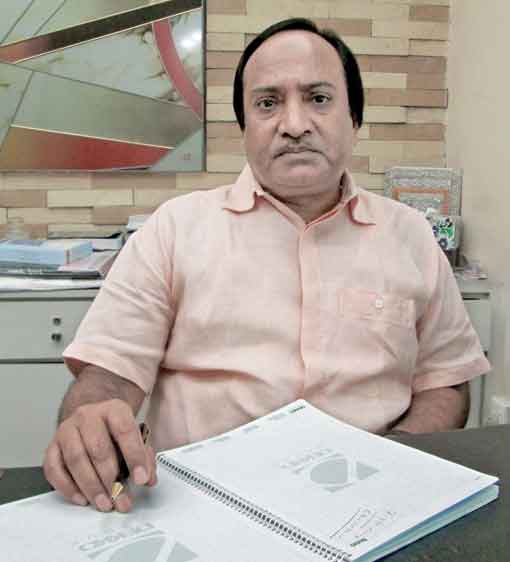
The last year was very slow for the industry and A&Y Services could garner an annual turnover of only US $ 5.5 million, below expectation of US $ 7.5 million. In order to keep the orders flowing, the buying office started exporting raw jute and jute yarn to new markets such as Russia and Ukraine. Mainly catering to the European market in woven garments, the company is now aggressively trying to penetrate into the Russian market for garments too. In addition, the company plans to venture into stock lots also as two or three Russian buyers have showed eagerness.
Meanwhile, the company plans to setup a factory unit in Myanmar (under joint venture, subject to Govt. approval) which is most likely to benefit from the various challenges that the US $ 20 billion Bangladesh garment industry is facing. It is also in negotiation to enter the Korean market. In spite of the various avenues that the buying house is exploring, it always stands by its policy of offering quality products to its buyers and building relationships. “It takes around 2-3 years to develop a relationship with a buyer and only seconds to destroy it. Buyers can find many ‘Syeds’ like me in Bangladesh but for me to find a new buyer will take another 2-3 years, so the only way is to service the buyer honestly,” concludes Syed.