The entire supply chain of textile industry, facing the severe impact of COVID-19, is struggling to overcome plenty of challenges caused by the global pandemic including countrywide lockdown, low consumer sentiment, etc.
Amid such a grave situation, if there is one industry that is likely to have comparatively less impact of the coronavirus outbreak – is intimatewear, owing to the fact that these products cater to the basic consumer needs. Stakeholders of intimate industry across India feel that in their particular product category, the overall consumption will be affected by only around 15 per cent and that too for the time being.
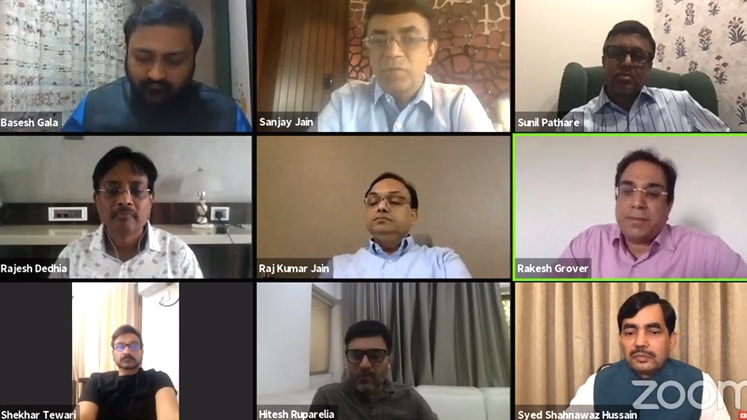
In a webinar organised by the Intimate Apparel Association of India (IAAI) today (10 April), various such topics were discussed. The webinar’s theme was ‘Milkar Karenge Kaam… Todenge COVID Ka Makaam’ (we will work collectively to fight against COVID-19).
While Basesh Gala, Founder, 39 Solutions, moderated the event, its key panellists were Rakesh Grover, MD, Groversons Paris Beauty; Raj Kumar Jain, MD, Bonjour Group; Sanjay Jain, MD, TT Ltd; Rajesh Dedhia, MD, Lady Care Innerwear; Hitesh Ruparelia, MD, Sweet Dreams Sleepwear; Sandeep Seksaria, MD, Amul Innerwear; Shekhar Tewari, CEO, Enamor (Gokaldas Images); Sunil Pathare, MD, VIP Frenchie & Feelings.
Raj Kumar underlined that as compared to sectors like tourism, aviation and even textile, innerwear market has less chances of getting affected since these products are of natural utility. “But we have to gear up strongly, and for that, one has to see how health issues can be focused during product development – be it yoga-related items, socks or any textile product that can help diabetic patients, etc., as health issues are of primary concern at the moment the world over,” he pointed out, further insisting to eliminate all kinds of wastage in production.
Rakesh commented, “We have to be positive at any cost, as it is the first condition for survival. Velocity is must at this crucial time and one should not fear how things will move. All focus should be on planning and execution.”
Shekhar also felt strongly that after two-three quarters, there will be good growth in branded lingerie segment.
Sandeep, at the same time, raised an interesting issue of smooth supply once things start to come back to the track, “While manufacturing facilities are dependent on migrant workers, none will come back to any apparel manufacturing hub across the nation for at least 2-3 months. So, we have to keep this in mind and work accordingly.” He also added that dealers should make sure to work with reliable suppliers in this scenario.
So how will the market look like post COVID-19? First, neighbourhood stores will be in demand since sellers have personal relations with customers. This will be followed by online platforms that will pick up after this. And shopping malls and EBOs will witness footfalls in the end, as consumers will follow social distancing even after the lockdown is over.
Stock corrections and ensuring there’s no dead stock should be one of the top priorities for all retailers. “Whatever new or old stock one has, there should be complete and up-to-date information of the same on computers, rather than being maintained manually,” insisted Raj Kumar.
Sanjay Jain suggested that to overcome the liquidity issue, the industry must push their banks for mudra loan and to increase bank limit. It was also stressed that everyone – from big manufacturers to small retailers – should plan their budgets keeping the expected sale in mind.
Rajesh shared an interesting idea of the collective and nationwide sale of lingerie in which manufacturers and retailers can bear the burden of discount. Indeed, it will benefit both in a good way.
Shahnawaz Hussain, National Spokesperson of Bharatiya Janata Party and ex-Union Textile Minister of India, also joined the webinar as a guest and discussed various issues of the industry. On the demands raised by the panellists, he assured, “Government will definitely support industry and I will personally request the Finance Minister for the textile industry.”
Highlighting the issue of employee engagement at this critical time, Shekhar shared interesting initiatives of his company and benefits from such steps. “Our employees have suggested us few very good steps to cut cost,” he added. Raj Kumar also said that this is the best time to give online training to the staff, explore various departments of a company where coordination is missing, and look for ways to bridge that gap.
All stakeholders unanimously agreed with the fact that everyone must come together and opt for whichever way of working – modern or traditional – that serves the purpose of a business. They all believed this is the time for a change, and one must change to survive.