
In a turn of events that has brought the world to its knees, India is grappling with the effects of COVID-19 on a diverse population of 1.3 billion. Not only has almost every industry come to a crushing halt with no sight as to when they will be able to return to normalcy, but the resurgence of the virus in pockets of China is instilling fear as to the longevity of this catastrophe.
The Indian start-up ecosystem is one of the strongest in the world. Many have achieved unicorn status and the growing rate of international and domestic investment is testament to the success of these ventures. According to research firm Tracxn, the start-up community raised about US $ 14.5 billion in funding in 2019, a significant jump from US $ 10.6 billion in 2018. Data from Tracxn further reveals that 1,894 start-ups were founded last year, out of which nearly 50 per cent (887) received funding.
However, start-up funding for March 2020 dropped by half as compared to the previous month, reveals data from Venture Intelligence. The start-up data tracker reported that Indian start-ups managed to raise only US $ 354 million across 34 deals, down from US $ 714 million secured in February across 46 deals. At US $ 1.74 billion (across 126 deals), start-ups also saw a 22 per cent year-on-year decline in investments for the first quarter of 2020. The numbers reflect a significant slowdown in funding activities, primarily caused by a sluggish economy coupled with the ongoing national lockdown.

Although the news bears grim implications for the future of start-ups, opportunities tend to arise out of every unprecedented event. The fashion world, despite being one of the worst hit, can take a lot away by adapting to the ‘new normal’. The investment in fashion start-ups will also see a significant shift with investors looking for ideas and implementations that can stand brutal market conditions as such and evolve to cater to the topical needs of consumers.
Also Read: Fashion retail industry strategises to move from survival to revival post COVID-19
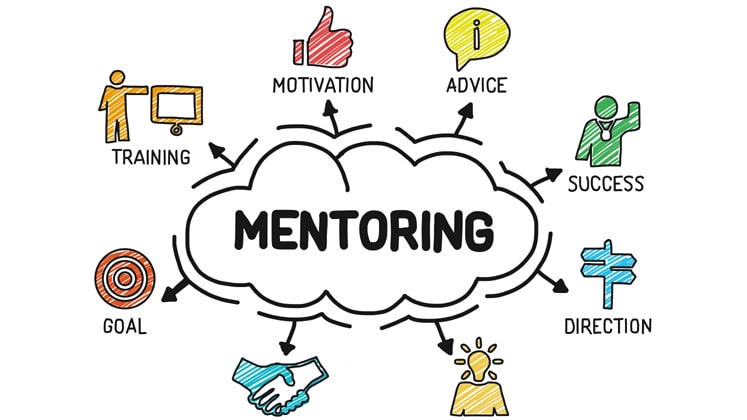
Mentoring start-ups into the ‘new normal’
The overall economic slowdown, the scare of layoffs, and the possibility of start-ups shutting down has put ventures in survival mode. The situation might differ for every entrepreneur in essence but the strategies to cope with the stress of coronavirus remain pretty much the same. Despite there being quite a lull in the business in April, ventures found that there wasn’t a dearth of orders. Being on lockdown meant they couldn’t meet the deliveries leading to cancellations across the board but many investors have been actively involved in helping start-ups figure a way out of this period.
Vikram Gupta, Founder and Managing Partner, IvyCap Ventures Advisors Private Limited, has invested in popular start-ups like Clovia, eShakti and Bluestone. Although the market may be in doldrums, he has been mentoring the start-ups under his wing to weather the crisis. “The first thing is to make sure you have enough capital which will last you through this entire period in coming back to normal. Variable costs such as packaging material, contract labour and logistics can be taken care of, but rental costs, offices, fixed labour and overheads are such expenses that cannot be avoided. If the market is not going to return to normalcy, you may have to take salary cuts of high ranking employees and that is typically done through a pyramid structure. That was our advice so that the lower level employees were not affected. The company may have to do away with some high ranking posts altogether to reserve cash,” Vikram explained his advice to his mentees.
“However, cost cutting is just one aspect. Looking for short-term, immediate opportunities around corporate social responsibility or looking at the government as a mass buyer, the company can utilise the situation to make ends meet,” he added.
Another approach to the crisis was taken by Prajakt Raut, Co-founder of Applyifi. The company helps start-ups build a strong business plan and investor pitch deck, and his suggestions to start-ups were for them to put themselves in either of three buckets. “First, the ones that are going to be impacted in the short-term and things are likely to return to near normal; second, categories that will have long-term or permanent impact. Those companies will have to reassess their product offerings and reconsider whether it is prudent to stay in the same category. And third, the ones that have experienced growth due to current situation. However, to be able to grow significantly, they need to be prepared to handle the inflow of orders and the substantial growth of the business.” It is in accordance with their current state that Raut is asking companies to take a call.
Also Read: Start-ups strategising to embrace the ‘new normal’
Opportunities arising from the ashes
While it has become pivotal for start-ups to keep their customers engaged at this time and to build brand image by showing their contributions to the society, it is also important to note that the pandemic has accelerated the advent of opportunities that were already gaining ground and some that were altogether unforeseen.

There had been growing applications for artificial intelligence (AI), robotics and Internet of Things (IoT) not only in the form of virtual shopping, try-and-buy platforms and virtual sizing, but also in the manufacturing and allied industries of fashion. AI is helping with demand forecasting, while robotics is playing a vital role in the segregation of packages, better efficiency, warehouse management and making sure delivery happens faster. With the restrictions of current times and growth in volumes for online platforms, these technologies can go far in revamping the manufacturing sector.
According to Debasis Chakraborty, Co-founder and COO, Mainstage Incubator, there are a number of opportunities that are expected to arise, “Manufacturing hubs will start growing up near the living places of the workers, and exports will start getting distributed beyond the metros leading to the rise of gated globalisation. Another opportunity can arise from the fall of China which means India can tighten its grasp on manufacturing.” He also feels that sustainability will go a long way, as more and more people will look for brands to be conscious of the environment and adhere to health and safety standards.
One major change can be in the form of shift in the market base. According to Raut, “Before this, the markets were largely urban. Now a lot of people have moved back to rural areas, so where the markets actually lie will probably need a reassessment. If you were focused on Tier 2 and Tier 3 cities earlier or your market was urban poor, you will have to reassess the base of your market and people who move to adapt to this shift fast will benefit greatly.”
Shift in investment strategies
Start-ups that had plans to scale up or to look for funding have had to put their plans on hold. It is essential to realise that with the current times, the paradigm of investment and the criteria for investors is bound to change.
While fashion is not considered a venture capitalist-friendly stream, it has not seen a dearth of investments in the past either. Investors have backed both traditional and innovative businesses to help them reach new heights. The situation now demands creating products and value propositions according to the market that needs to be catered. The ideas have to be need-oriented rather than product-oriented in order to stimulate demand.
“I think we may have to be careful in terms of assessing the nature of the product and the nature of the operations. If the start-up is nimble and has an innovation-driven team that can change with the requirement of the operations, those are the ventures that are always preferred. And, rather than going after start-ups that are offline-oriented or which are based on push strategy, where you have a product and you find the market for it, we would like to invest in start-ups that have a pull based strategy where you’re catering to the demands with as little inventory as possible,” averred Vikram Gupta.
Also Read: Inventory glut due to COVID-19: Apparel retail industry looks for the best way out