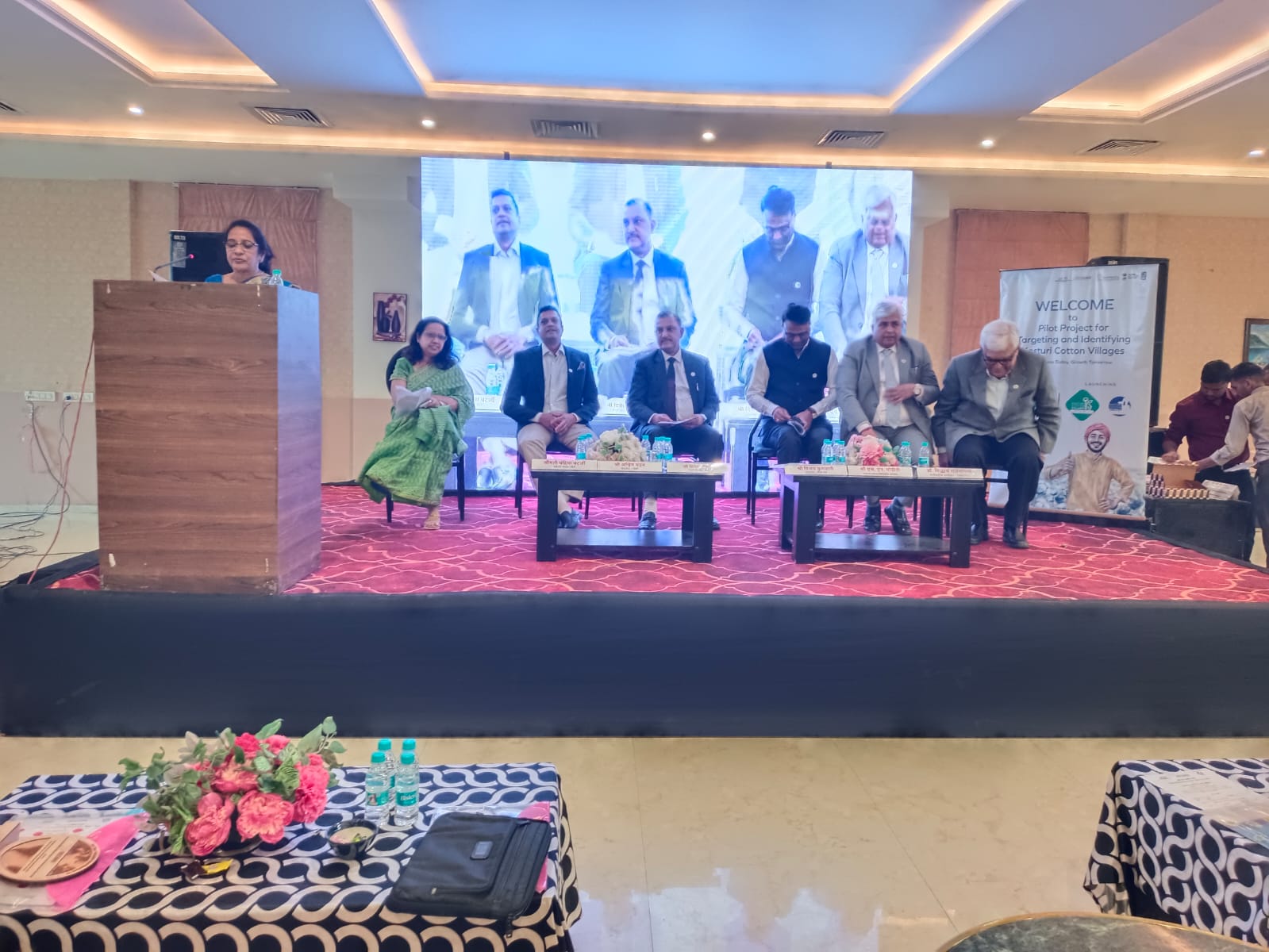
The Confederation of Indian Textile Industry (CITI) and the CITI-Cotton Development and Research Association (CITI-CDRA) convened ‘Bharat CotNet 2026’ in Bhilwara, Rajasthan, on 17th February, bringing together stakeholders across the cotton value chain to deliberate on building a resilient and sustainable cotton ecosystem in India.
The conference was organised in partnership with TEXPROCIL and Kasturi Cotton, with support from the Union Ministry of Textiles, the Government of Rajasthan and the Cotton Corporation of India. The event marked the launch of two flagship initiatives aimed at enhancing premium cotton production, particularly Extra Long Staple (ELS) varieties: Kasturi Cotton Villages and Kasturi Cotton Mitras.
Speakers, including Rajasthan Chief Secretary V. Srinivas and Union Textiles Ministry Joint Secretary (Fibre) Padmini Singla, observed that sustainable growth of the cotton value chain would directly benefit farmers, manufacturers and exporters, thereby strengthening India’s global standing in textiles and apparel.
Under the Kasturi Cotton Villages programme, select cotton-growing hubs will be developed as model villages aligned with the Kasturi Cotton Bharat standards, India’s premium cotton brand framework. The initiative will focus on certified seed adoption, improved agronomic and harvesting practices, and full traceability. The organisers indicated that the objective is to establish three to five such model villages per district across India’s cotton belt.
The Kasturi Cotton Mitras initiative will deploy trained field facilitators to provide real-time, science-based support to farmers, including guidance on soil regeneration through biochar use, water management and optimal fertiliser application, with the aim of ensuring that each harvest meets global quality benchmarks.
CITI and CITI-CDRA Chairman Ashwin Chandran stated that the long-term strength of India’s textile industry was intrinsically linked to farmer prosperity. He noted that empowering farmers with scientific agronomy, clean picking and contamination-free handling practices would transform Kasturi Cotton from a certification framework into an integrated ecosystem.
CITI Deputy Chairman Dinesh Nolkha said collaboration between government institutions and industry bodies such as CITI-CDRA would be essential to ensure that the benefits of the new initiatives reached cotton-growing villages nationwide. He added that Rajasthan, with its integrated cotton-to-textile ecosystem, offered a suitable starting point for implementation, with potential replication across other cotton-producing states.
Chief Secretary V. Srinivas emphasised the need to improve productivity in India’s cotton sector and indicated that the Rajasthan government would extend full support to the Kasturi Cotton Villages and Kasturi Cotton Mitras programmes.
Industry representatives, including S. N. Modani, Vice Chairman of Sangam (India), and Siddhartha Rajagopal, Executive Director of TEXPROCIL, underscored the strategic importance of the initiatives in strengthening the national cotton ecosystem.
CITI Secretary General Chandrima Chatterjee stated that the programmes were designed to ensure that quality standards are embedded at the farm level.