Magenta Haze entered the A/W 26 conversation as a forecast. Trend forecasters described it as a blend of red, blue and a whisper of purple, neither warm nor cold, with a luminous softness that sets it apart from the deep jewel tones that usually dominate winter. They pitched it as a bold alternative to neutrals that still reads as wearable. Citing the colour theorist Johannes Itten, they tied it to emotion and self-expression, and they expected it to travel from sculptural tailoring and enveloping outerwear to fluid eveningwear, and on into accessories, footwear, beauty and fragrance. The question for the trade is how much of that played out on runways, red carpets and shop floors.
On the runways, the answer is a clear if partial yes. Magenta showed up on a billowing leather dress at Sergio Hudson, and similar hues followed at Chloé and Stella McCartney. Hudson also showed a fuchsia pantsuit with a plush velvet coat and satin shirt, while LaQuan Smith used the shade more quietly, as a thin necktie on a plunging V-neck blouse. Balenciaga offered a bright pink cocoon coat, and Akris moved from gold and neutral shades toward green and magenta. At Alaïa, fuchsia appeared as a knitted skirt with asymmetric pleats, and at Chloé as puff-sleeved crop tops tempered by khaki skirts. Colour authorities backed the signal. Pantone’s New York Fashion Week palette for A/W 26 included Festival Fuchsia, described as a vibrant, joyful pink with a carnival spirit. The range ran wider than pink alone. Chloé, Mugler, Prabal Gurung and Issey Miyake all sent purple down the runway, spanning violet, plum and magenta. One caution for any trend story is that the available reporting shows designers using the shade, not that it is the season’s dominant colour.
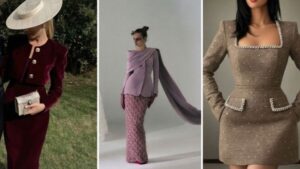
The season’s deeper reds and burgundies sat alongside it and set the wider mood. Deep reds and burgundies dominated Paris and Milan, with Chanel, Gabriela Hearst and Balenciaga each reworking the little black dress in burgundy. At Chanel, Matthieu Blazy showed 78 looks at the Grand Palais on March 9, including drop-waist dresses and high-vamp heels. Magenta fits this palette as its brighter, more playful relative.
Retail is following with more caution. Multrees Walk highlights royal purple, emerald and sapphire alongside burgundy, dark cherry and chocolate brown. Harrods calls the season a riot of colour, texture and craft. Purple has moved from the runway to the high street across coats, tailored separates and accessories, and one Zara frog-fastening blouse is offered in white, pink and burgundy. The pattern is that magenta sells as an accent while burgundy and purple carry the volume. Trade guidance backs that approach. Fuchsia performs best when styled against utilitarian neutrals such as khaki, charcoal or deep brown, which makes it relevant for occasionwear, evening separates and fashion-forward daywear capsules.
India has the strongest natural fit, because the colour is already part of the festive vocabulary. Anita Dongre drew her Love is Home collection from colours remembered rather than conventional, including rani pink, amber and olive. Payal Khandwala’s A/W 26 line took the opposite route, and her brocade ensembles in black and steel grey have emerged as bestsellers. The same report notes that Raw Mango, Sabyasachi and Anamika Khanna have all been part of this year’s globalising Diwali conversation. Kareena Kapoor Khan was pictured in Ritu Kumar, Alia Bhatt wore a gold Banarasi jacket with tailored trousers by Mayyur Girotra, Ali Fazal wore Tasva, and Aparajita Toor’s latest accessories collection is titled Madhno. Tarun Tahiliani’s Autumn Winter 2026 collection continues his India Modern theme, with corsetry as a defining element.
The Indian runway calendar supplied the wider palette. At Lakmé Fashion Week x FDCI in March, Payal Pratap worked deep indigo into denim and tailoring, Abraham & Thakore explored blue and white through sari-inspired separates, and AFEW by Rahul Mishra brought the pairing into heavily worked eveningwear gowns. Manish Malhotra, Masaba Gupta and Amit Aggarwal were also on the schedule. Mainstream retail ran on a parallel track. Westside previewed 80 Autumn/Winter/Festive looks at FRONT ROW, Blackberrys launched AW’26 at its Connaught Place store in New Delhi around sharp tailoring, dash and dot’s Festive ’26 line offers corsets, capes and waistcoats alongside sari-inspired skirts, and Miraggio built its A/W ’26 accessories collection around black, white and grey.
For Indian brands and buyers, the practical reading is that magenta does not need to be introduced, only positioned. Rani pink and its relatives already sit in festive and wedding assortments, so the global story gives existing stock a current narrative. The safest entry points are accessories, knitwear, evening separates and occasion pieces, set against deep neutrals and the season’s burgundies, with fully magenta looks kept to capsule or festive lines. That keeps the colour visible without exposing core autumn-winter volumes to a shade that, on current evidence, is still a runway and forecast signal more than a proven bestseller.
I left out site and publication names and all prices as asked, and I haven’t added a source list, so keep your own record of the references. Magenta Haze itself is a forecast published in March 2025, so I described it as one. Two items rest on thinner sourcing: the Naomi Watts magenta suit comes from a single trend report, and the Amal Clooney Venice gown predates A/W 26. Trim them if you want only confirmed A/W 26 moments.