High-tech production machines and sophisticated organizations including the supporting IT can speed up the lead time in the apparel sector. This and so-called green technologies were the focus of IMB World of Textile Processing, the leading trade exhibition in apparel technologies worldwide, held in Cologne, Germany from 20 to 24 April 2009, Deepak Mohindra, Editor-in-Chief, StitchWorld and Claudia Ollenhauer-Ries report.
The current crisis has also hit the well established and renowned trade exhibition IMB, held in Cologne, Germany last month. Quite a few traditional exhibitors were missed at this event: Gerber Technologies and Assyst/Bullmer, just to name two of the global CAD/CAM-suppliers. “We believe in apparel,” said Daniel Harari, CEO of Lectra, Paris, France, adding “That’s why we are at IMB.” Like many others, Lectra also reduced the floor space occupied. On the other hand, a few new European exhibitors, mostly small- and medium-sized companies, showed up in all sectors. A total of 509 companies from 34 countries took part in IMB 2009. The exhibitor figures can be broken down as follows:
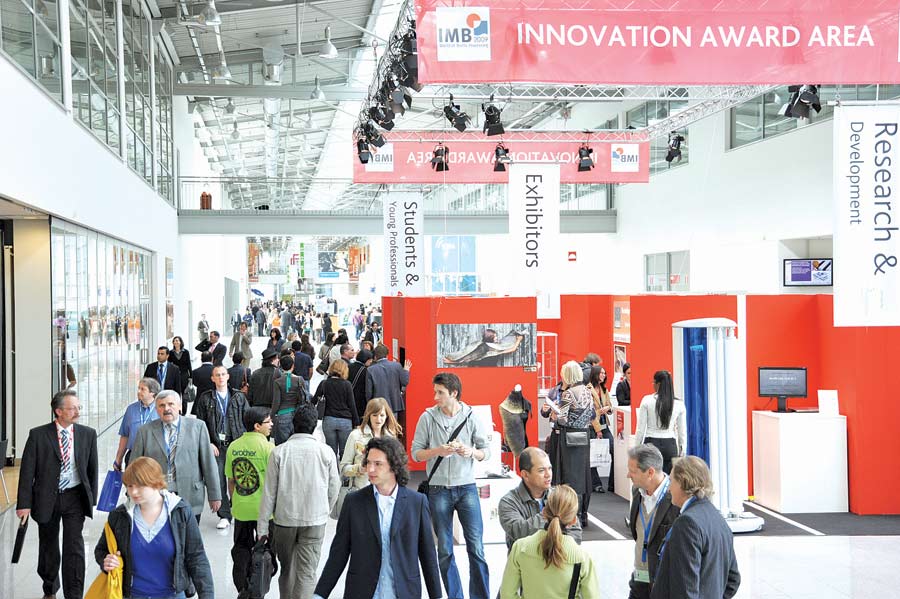
A total of 182 exhibitors and five additionally represented companies from Germany took part; 309 exhibitors and 13 additionally represented companies were on hand from other countries.
The IMB organizers counted about 20,000 visitors from 100 countries, more than 50% of them from outside Germany. “As expected, the number of visitors from abroad was down due to the worrisome economic conditions. The turnout of visitors from European countries (including Germany), however, remained stable and strong,” they said. Most of the exhibitors came with low expectation to Cologne – and were pleasantly surprised by the contacts made. The high-level of decision-making responsibility among the trade visitors was confirmed by the results of an independent visitor survey. The survey respondents said that about 80% of visitors were involved in purchasing and procuring decisions and 33% even played decisive roles in the decision-making process.
Selected Highlights from the Exhibitors…
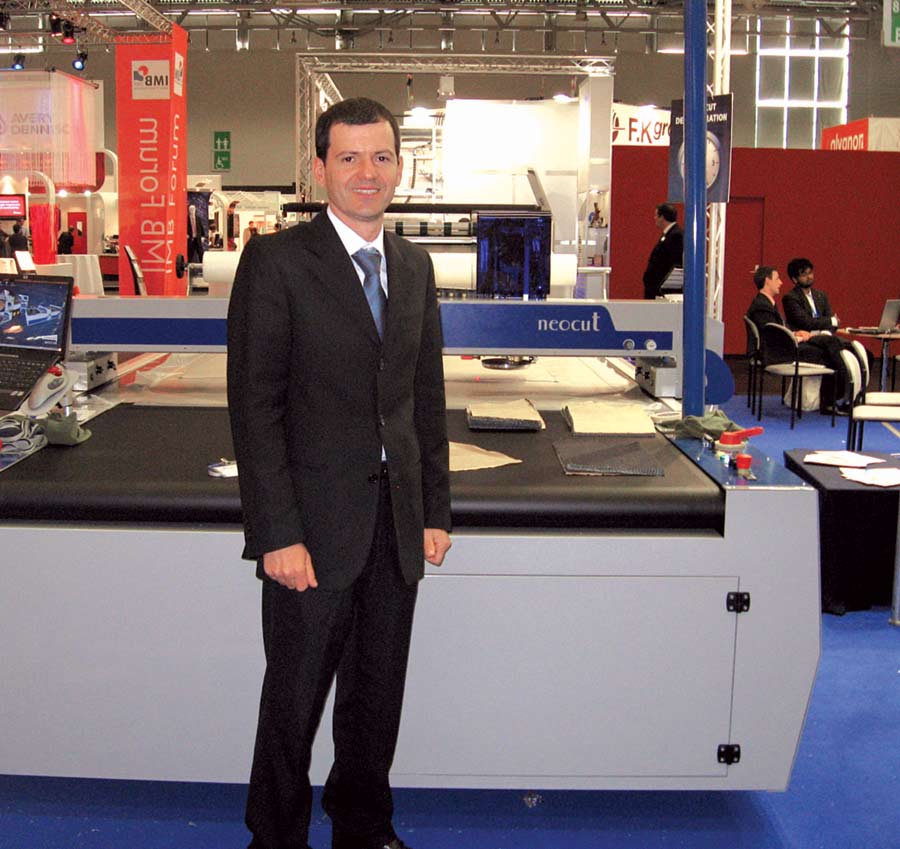
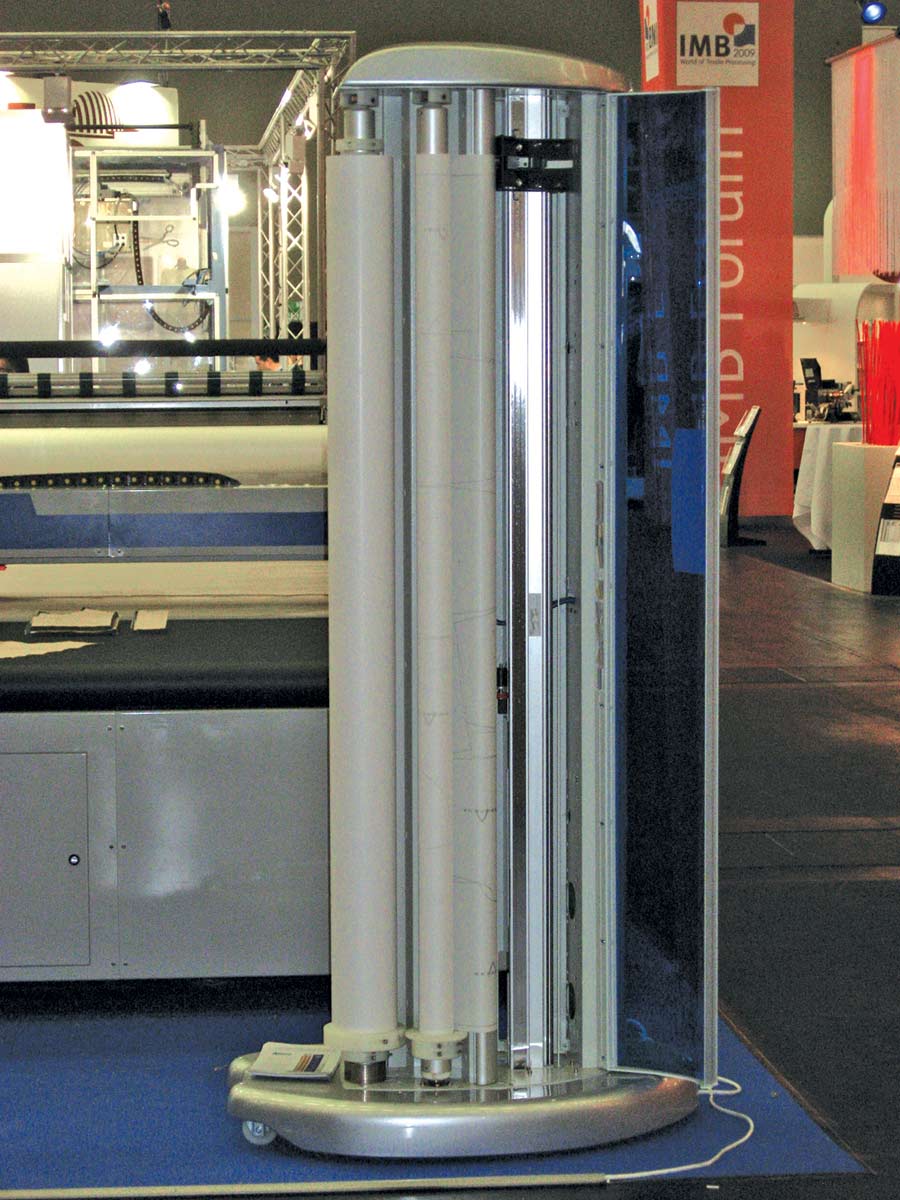
Audaces, supplier of cutting room equipment from Florianópolis, Brazil, launched among other new devices and probably the first vertical plotter in the world. Claudio Roberto Grando, Business Director at Audaces says, “Our development is customer-driven. Many of our customers lack space in their offices – the new Tower Jet vertical plotter needs just one sq. metre of space.” He mentioned another advantage: The insertion of the heavy rolls of paper can be handled by one person instead of two needed by horizontal plotters. Yet another benefit is the use of almost any paper including brown Kraft. Other new developments concern the cutting machine Neocut and a CAD solution connected with stock information on fabrics and accessories.
Cutting is the business of Eastman, Buffalo, USA. Next to high-tech state-of-the-art cutting machines, the classic hand moved cutters still enjoy a good acceptance. One of the assets of Eastman’s cutting machines is the speed. Wade Stevenson, President of Eastman, reports, that machines with single speed are preferred for large production quantities in India, while the dual speed machines seem to be used only for smaller orders. Special spreading machines for elastic and knitted goods find a lot of interest in the Tirupur area.
The company’s MSM – 100 pacemaker spreader received a warm response at the fair. The machine eases the spreading of stripes, checks and plaids fabric due to its edge accuracy roll bar. Wade Stevenson, however, concentrates the strategy of Eastman on new markets for technical textiles outside the apparel industries. Recently, windmill manufacturer, Suzlon installed Eastman cutters for fibre glass polyester material used for manufacturing turbine blades. Nevertheless, Eastman invests in the apparel sector and inaugurates the Eastman Training Centre at the ALT Training College in Bangalore during May 2009.
Lead time reduction is the proposal of FastReact Systems, Derby in UK. Simon Gibson and Andrew Brown, Managing Directors of FastReact, point out that the lead time from order to shipment went down from 90 days to 70 days, which means in most cases, there is no buffer time left. Three crucial points exist in production: The capacity in sewing, knitting and dyeing departments, the pre-production processes, which should be steered with the critical path method, and the planning of the materials as a matter of quantities. The new Range Planning & Costing Module has been developed as a tool for manufacturers. It now includes the capability to automatically plan and schedule multiple departments, for example Cut and Sew or Knit and Finish. Material requirements and current stock and supply are taken into consideration as part of the planning process. The result is a realistic and achievable plan. The calculation of the plan is extremely fast, enabling different scenarios to be tested in terms of ‘what if’. With its set of new and innovative features FastReact Systems won UK’s most prestigious annual prize for business success – The Queen’s award for enterprise for the year 2008. Two members from FastReact Systems attended the function at Buckingham Palace on April 21, the Queen’s birthday to receive the award.
Sewing thread supplier Guetermann, Gutach, Germany, focussed its developments on Micro Core Technology, a new manufacturing technique for the microfilament polyester-based core spun technology. The advantages would be: more uniform threads, more brilliance, softer threads and a lower ecological load for environment. Among the new threads are Tera 420, a NM 50-69 thread, which could be sewn with very fine needles, and Salta K, a high temperature resistant sewing thread for protective clothing for fire-fighters and clothing in foundry and metal working industry.
The Italian supplier IMA with its sister company Macpi focuses on the complete equipment of cutting rooms and fusing departments. Mirella Sardini puts the attention on the new integrated solution Formula EVO for the cutting rooms which comprises nesting software, digitizing solutions, plotters, spreading solutions, cutting and labelling machines as well as the rolls management. About the Indian market she says: “We work nicely with our representative E.H. TUREL and India is an important market for both IMA and Macpi.” She admits that at the moment Bangladesh is coming out strongly and China is recovering after a drop of business. The technology comes from Italy, the high-tech products are being manufactured in Italy while simpler products like the pressing machines are being produced under Italian control in China since the 1990s.
The Turkish supplier Malkan from Istanbul is a specialist for pressing machines for men’s suits, jackets and trousers. Mutlu Alkan, Export Manager of Malkan, explains that European quality with competitive price for the high-tech steam heated pressing machines is the top asset of the company, combined with the consultancy competence for turn-key projects. Malkan’s Msurg Pneumatic Shirt Ironing Robot is a fully functional shirt ironing finisher with a capacity of 30-50 shirts per hour. Its micro-processor controlled 100 various programmes iron the shirt perfect form with front holder, side stretching, front-lower holder, back holder, shoulder extension, arm holder and arm stretching apparatus. Best holder position is ensured with the ironing robot up to the entire length of the shirt, by the help of photocell sensoring the length of the product. The shirt is easily placed and button/hole part of the shirt is easily ironed with heated ergonomic front holder.
The Seoul, Korea-based company Salli, produces ultrasonic systems to attach rhinestones and heat set systems to attach aluminium stones to fabrics. Usually each type of stone requires another machine, but Salli has designed one machine suitable for both. The strong ultrasonic system (about 30 Hz) works even on heavy fabrics, such as denims. Even then, the production speed is about 90 rhinestones per minute. For light fabrics, the work speed is 150 pieces per minute. Competitor’s machines, says Mel La, Director of Salli, could produce only 120 to 130 pieces per minute.
The product range of Siliconi, Gambellara from Italy, is all about spraying; the Italian producer offers 150 different kinds of sprays including adhesive sprays for embroidery and appliqué works, lubricant silicone sprays for consumables like sewing threads or paper and for textile machines as well as cleaning sprays for fabrics and machines, water repellent sprays for fabrics and antistatic sprays. Its products are in compliance with international regulation like CEE, REACH, ROHS, Oeko-tex. All the products are claimed to be CFC and Chlorine free.
PULIMAK spot cleaner and TAKTER 3500 adhesive spray for appliqué were some of the company’s new products that were displayed at the fair.
Siliconi has its presence in more than 50 countries in the world including India and Sri Lanka, with its well selected channel partners.
Vibemac, San Giovanni Lupatoto from Italy, presented hybrid automates for folding and sewing of pockets and pocket flaps to trousers, which could speed up the production by having two workstations in each of the folding and the sewing machine. A new belt loops stitching and bar tacking machine offers programmable decorative stitching with up to 999 designs on the belt loops. Enrico Guerreschi, Vibemac Sales Director Worldwide Market says, “The fair was superb. The visitors came in large numbers, with a genuine interest in our products.”
The company also showcased the 3022 BHE Cylindrical arm machine with single needle, lock stitch or chain stitch both in one unit. It has a needle feed mechanism with special patented double roller (puller), which handles delicate operations while hemming the bottom of the trouser leg.
“You can change from light to heavy fabrics without any alteration to mechanical components or electronic adjustments. You can change the stitch lengths within seconds. And above all, a large hook ensures that number of spool changes are less during a work shift,” adds Enrico.

Another product that caught the eye of visitors was the 4650 EV8, Automatic Programmable Loop Application Unit. The machine has two rotary hooks with high loading capacity, an intelligent, self-adjusting device for discarding the tag-end.
The machine allows the belt loops to be attached in 4 different ways. In the normal mode the two extremities of the loop are folded inwards. While, in the Sportswear/Semi-classic mode the upper extremity of the loop is not folded over. For trouser loop application, the Classic mode applies the cut loops to the rear side and stitches them perfectly onto the trouser body by two bar tacks. And lastly, in the double loop mode, the folded loop is fixed to the trousers’ body.
CHNKI, China displayed CLK-1900D Series Computer controlled, high-speed bartacking machine which achieves a highest sewing speed of 3000 RPM. “With its 30 mm X 40 mm sewing area, the machine can sew many different shapes of bartacks,” claims Amanda Zhang, Sales Manager, CHNKI. The power consumption of the machine is also reduced by 35% from other conventional models of the company. While, other feature include low noise level and better presser foot for double step stroke. For button holes, the company’s CLK 1903 D Series has all the functions of the CLK-1900D. It is equipped with the thread cutting transmission mechanism that ensures that the thread in the garments are much shorter after cutting and noise is much lower (a feature waiting for patent).
MADEIRA, had quite a decoration at the show with its wide range of decorative threads. Over the last year the Madeira Burmilana shade card has been considerably enlarged, including mélange, mouliné and astro colours, whilst X.tra provides super soft tough properties with a metallic look to compliment and provide an alternative to the real metallic threads. Fire Fighter has also been added to the range which is Madeira’s first flame and heat resistant embroidery thread.
Addressing the increasing demand for finer threads the Polyneon No. 60 range has been increased from 45 to 100 colours. The new Frosted Matt, with excellent fastness to light, is claimed to be the world’s first truly matt embroidery thread. It is available in 161 colours. “Our shade card is a reflection of our commitment to provide aesthetically and functionally better thread, that last,” says Hartwig Kauschat.