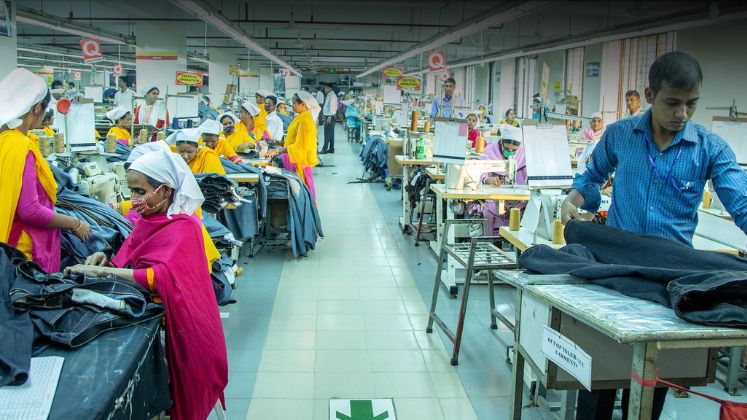
Armana Group, boasting an impressive annual turnover of US $ 250 million, is celebrating its three-decade milestone since its inception. Over the years, the group has not only sustained itself but has also emerged as a leader of ethical and sustainable practices in Bangladesh’s RMG manufacturing industry. With a primary focus on woven apparel production, the Dhaka-based group is experiencing a surge in orders, indicating a demand in the global apparel market for its products. With ambitions for continued growth, the apparel giant is actively diversifying its product offerings and expanding its client base. Strategically, the group is intensifying its commitment to sustainability, aligning itself with the evolving trends in ethical and eco-friendly fashion.
In a recent conversation with Team Apparel Resources, Sandeep Golam, Director of Operations at Armana Group, having total comprehension of the present business terrain positions, discusses the group’s ongoing success and innovation within the evolving fashion industry.
Despite encountering a range of challenges both locally and internationally, Sandeep expresses satisfaction on the current status of order booking and anticipates this positive trend to continue in the upcoming seasons. Despite having to face wage hikes locally and global conflicts and wars bringing disruptions and leading to intensified market competition, there has been a continuous sharpening of strategies by the group to stay competitive. One such strategy includes keeping a close watch on how the recent wage hike in the country plays out for which the group’s think tank continuously visits the drawing board and throws intelligent options to sail through this crisis.

Growing denim demand benefits Armana Group
Armana Group is best known for its denim products, making up about 60 per cent – 65 per cent of the business. “The business has its ups and downs throughout the year, but when you look at the overall picture, it’s steady. Though consumers nowadays prefer more comfortable options,” says Sandeep.
Bangladesh has been the largest denim apparel exporter to both EU and USA with collective export values of US $ 2.50 billion in FY ’23, beating China and Mexico. Armana seeks to capitalise on this growing demand for ‘Made in Bangladesh’ denim apparel.
Along with denim, the group offers a wide variety of products, including cargo pants, twill pants, shirts, chinos, shorts and dresses made from a blend of linen. Armana has recently added items like trucker jackets, sherpa-lined jackets and athleisurewear to bring in more value to its collections.
To reach different types of buyers at different price points, the group has a strategy. It offers products for both entry-level and premium customers. This approach helps it sell a lot of products at the entry level and earn more revenue from the mid to premium levels.
| To reach different types of buyers at different price points, the group has a strategy. It offers products for both entry-level and premium customers. This approach helps it sell a lot of products at the entry level and earn more revenue from the mid to premium levels. |
Marginal slowdown in the US and EEC is balanced out by emerging markets
Benetton, Levi’s, Next, GAP are few of the key clients of Armana Group and with these, it has consciously moved towards emerging markets and is strategising to further its growth in that direction. “Indian market is pretty deep-rooted, Japan, Korea, Dubai and Australia are some of the other markets we cater to. The marginal slowdown in the US and European Economic Community (EEC) is balanced out by the numbers from the emerging markets,” claims Sandeep.
He further adds that as an industry like fashion is ever evolving, if they come across customers with a sense of commitment and direction, they start slow and grow with them because they abstain from transactional relationships. As per Sandeep, on the basis of the meaningful interactions that have taken place recently, they are sure to lock in 1 or 2 new clients soon.
Focus of sustainable manufacturer: reducing carbon footprint in a conscious way
Armana Group has an in-house laundry with a biological ETP, focusing on garments made of organic cotton. Its laundry is approved for ‘JOIN LIFE’ by Zara/Inditex.
There are many more options which the management has signed off as Sandeep thinks that sustainability in some cases comes in at a cost. Despite that, Armana has proved itself in reducing carbon footprint consciously and honestly by adding new technologies.
With gen-next coming onboard, the group is excited and sure that this legacy will continue and be in sync with the intrinsic values of the group.
| Retail presence: Denim brand Rookies upbeat about growth in India
It is pertinent to mention here that the Group has its retail presence in India through Rookies. It is till now a product but Armana intends to make it a brand, which entails a robust marketing plan, with the network ready and the product positioned across the states. The time is right to kick-start in that direction and the team is excited. Rookies’ growth has been slow but steady but Sandeep believes that the biggest deterrent for its growth in the Indian market is the open credit system which puts pressure on the brand. If the entire system factors in the interest cost from 90-120 days and respects and pays the channel partners across the chain, each player will stand a chance to benefit and grow. “If and when that happens, the true potential of the huge market size in India will be realised and it will be second to none in the real sense. For Rookies, we look to play across various MRPs’ entry points to a super-premium. These will wrap up the mid-premium positioning we enjoy currently and will help level out the bottom line by driving growth,” affirms Sandeep. |