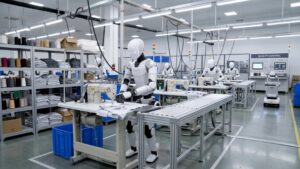
 One thing that has been puzzling the Apparel Industry consistently for over two decades is why Lean Implementation rarely lasts the entire course in spite of it offering the potential to reduce waste, improve productivity, reduce cost, and increase profitability. Paul F. Bowes, Managing Project Director of Performance for Business Productivity Services Ltd., a manufacturing consultancy firm operating in the UK and Asia, supporting the Apparel Industry shares his experience with Team StitchWorld and tries to find out explanations as to why Lean Implementations cannot sustain themselves and what can be done differently.
Lean philosophy is a customer-focused way of thinking and working. Lean can help companies move to a more secure financial, cost-effective, customer-based situation, but only if it is committed to the long-term programme implementation. There are few areas which give problem, the more people are aware of these, plan their progress, take action, and measure key results, the chances of success are greatly increased.
Senior management commitment
It is absolutely critical that senior management understands that this is not just some short-term cost reduction initiative. The results may come in the short-term, but it is the continuous improvement and focus on waste reduction year after year through a strategic plan, that really secures the future of the business.
It’s been observed that the senior management is not there for a longer term. So, the results seen are also for a shorter term only. Many a times, the senior management believes that the implementation belongs to someone else and that they have delegated the responsibility to local management, so they don’t have to do anything except wait for the results.
If the success of the programme is desired, then be committed to a long-term initiative. Support a stable management; don’t keep changing them. Set up a team of 3-5 people who are dedicated to managing the Lean Implementation process; not doing it, but managing the management team to achieve. It is worth the investment. Also, these people become internal experts for your company, helping to make future change possible. It may take some time before results start coming in. Many a times, the management won’t release people from their daily operational roles to work on improvement projects (Kaizen) because of short-term pressures.
When results do not come within the first 3-6 months, or are not up to the expected levels, the, senior management loses commitment and stop the programme, moving allocated personnel to other/direct operational roles. The belief that management should be solving all these problems as part of their normal work, so why put more resource to additional projects?
One of the most effective implementations I have seen was where the key co-ordinating team was with the business for 5 years, from start of training to present day. The problem factories were where new people were constantly brought in to “kick-start” the implementation.
Proper preparation and planning prevents poor performance
The first step in Lean Implementation is to know where you are now. This involves looking at processes and value stream mapping. It provides a baseline for people to identify what needs to change, and what the most important is.
In one company, we identified 50 projects that needed to be undertaken after value stream mapping had been completed. These projects were then ranked in order of importance by the senior management team, and planned into a 1 year improvement plan for both Kaizen activities and longer term projects with specific teams. This gave the factory a clear view of where it was going and what needed to be tackled to get there.
There are some companies which focus just on cost improvement in the production areas. This was less successful due to the impact of many other issues on the production process, including purchasing decisions, supplier deliveries and internal flow problems.
Factory management don’t have time to change
The pressures on factory management are great – quality of product; delivery to schedule or cost of air shipments; low efficiency; many production changes; social compliance issues; customer demands for information; and in the midst of all this, introducing changes to the way of working, even if they are improvements, can just seem too much for time available.
Senior management can clearly demonstrate their commitment to improvement by adding resource to help management to have the time to work on changes.
Not enough time spent in training, education and understanding
Many times, when agreed improvements have been implemented, they are reverted to the earlier system. This is because “something” went wrong, and instead of trying to understand what went wrong and how to correct it, the management went back to the ineffective ways they used to work.
Factories that have trained employees implemented changes a lot faster and the changes stuck in place.
No physical change happens
The easiest way to make people change is to change something physically. This is why one of the first things to do is to change the layout of a production team, the flow of work, handling between operators, and presentation of work to the line for easy management. Once a physical change is made, and people understand and buy into that change, it is almost impossible to go back. A new habit is formed.
One company wanted to improve the communication flow in its merchandising office, but they didn’t want to put the merchandisers and purchasing team together as office space was tight. When they finally tried it with one team, the space was reduced, the paperwork was reduced, the communication improved and people could move easily and ask if there was a problem.
Trying to do too much too soon
Some companies want to do a “Big Bang” approach, where all lines were changed at the same time – a rapid implementation to generate cost savings quickly. But soon problems arise and the implementation proves a failure.
To avoid getting into such messy situation, do a pilot run of any change to be implemented. Sort out the problems that were not foreseen during the planning phase. When the pilot run is working, then do a planned roll out. It may take more time, but it is better to do things right the first time, than do them again and again.
Training of employees
The cost of training sewing employees properly is an investment, not a cost. It is important to spend time to train employees on methods, knowledge of machinery, knowledge of company practices, Lean knowledge, skill of handling and speed of working, to a high level.
This means that when the employees go on to a sewing line they could perform straightaway at the line performance level, and contribute improvement ideas to the company. Additionally, when improvement changes were to be made, for example, U-shaped teams, because operators had been trained in Lean concepts, the changes were implemented and accepted more quickly.
A company trained employees for a couple of weeks, then put them on the line to “learn by doing”, causing quality problems, hold-ups in production flow, machine breakdown increase, and overall waiting time increases.
We know best
Management attitude can be one of “We know best”, “We’ve tried that before”, “This company is different”, “Our product is more complicated”, etc. It’s been heard often.
No one likes to be told that the way they have been working is not efficient or effective. It needs to be made clear that this is not an exercise in criticism; it is a future-focused, continuous improvement drive to ensure the long-term security of the company.
I worked with one company where I suggested machinery improvement for eliminating manual trimming after hemming. The production team took that as a challenge, and, using the same machinery with some new guides, eliminated the trimming without the expenditure I was suggesting.
It’s not about who knows best, it’s about how to improve everything. We will never achieve the optimum method – improvements can always be made.
It is not in our control
One of the biggest issues that I have faced with management teams is when they cannot control the problems that cause production issues. One of main problems is fabric, either late delivery or poor quality. This is an immediate efficiency killer, especially if fabric does not arrive on time. The management time lost on dealing with these problems, and the negative effect on attitudes, has to be dealt with. “What is the point of improving productivity, if the materials are always late and we have waiting time?” Even though it may not be in our control, but it is in our control to measure the problem, and report it back!
Internal politics
Senior management must be aware of any internal politics that is causing conflict between management or personnel.
I worked with one company that had an excellent Director driving the improvement programme, but there was some conflict with the Factory Manager. This person took every opportunity to undermine the way the Director was driving the programme, until eventually the Director left due to pressure from his superiors. The programme failed and the factory performance dropped.
Deal with these situations firmly. Lean Implementation is about problem solving. If anyone starts to be critical of what is happening and won’t switch to a problem solving stance, then review their position in the company.
Deal with any business problems first
While Lean will help you to improve situations, there are fundamental problems, which should be tackled first.
One company was paying more in overtime than in normal wages. While this is socially a irresponsible behaviour, it is also a cost problem, and Lean Implementation may not help you to deal with this quickly enough. This company went out of business.
If there are not enough sales to support production, then improving productivity is going to mean a reduction in employees. If you are okay with this, then do it before your Lean Implementation. Lean is about redeploying people after unnecessary tasks are eliminated, not retrenching people.
Learning from others
The attitude of “It is different here”, “Our products are different”, can slow or stop a Lean Implementation. It is not relevant to have these conversations as the Lean Implementation will be product focused so will concentrate on the way a company works now, and how it can be improved.
In one company I worked with, the operators in the country refused to believe that the production time allotted to make the garment was possible. When the owner showed them the video of workers in another country making the product in half the time, there was a very fast learning curve, and change was achieved within a couple of months.
It amazes me that companies do not share best practices across all their factories. These days a cheap digital camera is all that is needed to capture best practice and share it across all parts of your business.
And if at all possible, visit other companies in the same industry that are non-competitors, to learn what they are doing and gain new ideas for improvement by seeing what is actually achievable.
Measure what you want to know about
Many companies try and measure everything during a Lean Implementation, which means a lot of time is spent collecting data, and then collating it into other formats. Better to find the easiest manual format for collection and analysis and act on it.
Visit any company and just know a few things to see if a company is working well or not like – product quality information; line output information per operator; and quantity and date of delivery against customer order. These three facts will tell the ‘inside’ story of any company.
Lean Implementation may not be successful always. Many jobs have got stuck because much time was spent measuring everything. Only measure what you want to improve, and when you have made and demonstrated the improvement, stop measuring (unless it is one of the few core KPIs).
Good luck on your Lean journey!