Government is supposed to support the industry but there are enough examples when Government’s decisions have hurt the industry and that too totally in such areas where the industry is already facing challenges and is helpless.
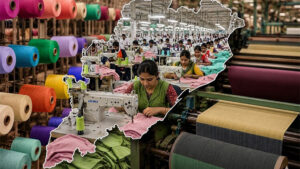
Haryana, having apparel manufacturing hubs like Gurugram, Faridabad, Sonipat and home furnishing hubs like Panipat, recently came up with the New Haryana State Employment of Local Candidates Act, 2020, which stipulates 75 per cent reservation for locals in private sector jobs, with a monthly salary of up to Rs. 50,000.
The Act extends to the whole of the state and it will be in effect for ten years and applies to ‘all the Companies, Societies, Trusts, Limited Liability Partnership firms, Partnership firms and any person employing ten or more persons and an entity, as may be notified by the Government, from time to time’.
One of the significant negative points of the new concept of‘local reservation’ is that it is not only limited to Haryana, but many other states are also following the similar path.
Two years ago, Andhra Pradesh also passed a similar law, which was challenged in the Andhra Pradesh High Court and the court had made a prima facie observation that the move might be unconstitutional, but the challenge is yet to be heard on merits.
Similarly, the Jharkhand Government has announced 75 per cent reservation in private sector jobs with a salary of up to Rs. 30,000 for locals.
Karnataka Government’s new industrial policy has also envisaged a 70 per cent job quota for Kannadigas.
And there is a strong demand coming in from other states, like Uttar Pradesh (UP), Gujarat, Rajasthan, Maharashtra, Uttarakhand, Madhya Pradesh, for such legislation.
Karnataka, Gujarat, UP, Maharashtra and Rajasthan are leading hubs for the textile and apparel industry. However, there is not even a single state which can manage without migratory workers.
Presently there is a lot of buzz around the decision of the Haryana Government. It is not only about hiring local people but there are many other challenges also like one of the clauses of this Act is that companies cannot hire more than 10 per cent of their staff from a single district of the state.
Industry is in panic
Apparel Resources discussed on this issue with a few of the apparel manufacturers of Haryana and all of them are strongly against this move of the Government and have reacted very strongly to this.
“I am not going against whatever Haryana State Government thinks or is doing in this regard but there should be logic. This decision is almost contravention of Article 14 of the Constitution, which pertains to equality before the law, and Article 19 (1) (g), which provides for the protection of certain rights to practise any profession or to carry out any occupation,” said a Gurugram-based exporter who doesn’t wish to be quoted.
Various exporters are discussing the issue with the legal experts and have strong planning to challenge this decision as they strongly believe that this Act is very weak and the court should give a favourable decision in their favour. At the time of writing this piece, Gurugram-based Garment Exporters and Manufacturers Association (GEMA) and Okhla Garment & Textile Cluster (OGTC) were in touch with experts and were supposed to submit their representation to the State Government against this move.
“This is a disastrous step for the garment manufacturing industry. All manufacturers are in a panic due to this. 90 per cent of our workforce is migratory. Faridabad and Gurugram together export around US $ 3 billion and around one million workers are working in the factories of both cities. On the other hand, the website of Haryana Skill Development Mission has only 3,414 trained persons available across all the 33 job roles of apparel sector like tailors, cutters and supervisors, etc.We will strongly put our side to the Government and request to exempt the apparel manufacturing industry from this act,” said Animesh Saxena, Honorary General Secretary of GEMA and MD, Neetee Clothing, Gurgaon.
Industry can shift to Noida!
This decision is totally politically motivated and if the industry doesn’t get any solution, there is only one option for the industry and that is to shift to Noida and Greater Noida
HKL Magu, MD, Jyoti Apparels, Gurgaon and Ex-Chairman, Apparel Export Promotion Council (AEPC) told, “We are hopeful that this move will not be executed. As far as the impact of this move is concerned, the major impact will be on expansion only as this decision is applicable only to new hiring. But the major challenge is still there as due to the seasonal nature and frequent change of jobs, it is a big issue.”
Animesh also backs this thought that if the industry doesn’t find any solution in the long run, factories from Gurugram and Faridabad will go definitely to Noida as there is no other option for them.
It is worth mentioning here that there are few players having factories in Noida as well as in Gurugram and Faridabad. And such companies are also mulling over the fact that if things don’t take place as per their plan, they will shift their maximum production to Noida in long run.
“In our Gurugram’s unit, there is just 25 per cent overall staff (workers and other employees) and this is despite that we prefer to hire local workers and mid-level professionals so that they take fewer leaves, and if required, they can easily work on the weekend. I don’t see any way to have 75 per cent locals in the new hiring scheme, so the only option is to shift more work to our Noida units,” said an HR Head of the export house having factories in Gurugram and Noida.
Skills to enough locals… not possible!
A major concern regarding this Act is to find locally skilled workforce and that too not only for the shopfloor, but for almost all departments of a garment manufacturing unit be it merchandising, accounting, documentation or administration/compliance, etc.
There is a major skill gap in Haryana where salaries are less than Rs. 50,000 per month.
Though the Haryana Government has assured industries that the State Government will skill the workforce for their requirements, efforts so far regarding skills have not given many positive results.
Red tapism again!
The industry is strongly of the view that this new system is going to give unrequired powers to Government officials as the Haryana legislation provides for the appointment of a ‘designated officer’ who will act as a representative of the Government. In case, companies invoke exemption clauses by citing lack of availability of suitable candidates, the officer will have the power to overrule such moves and direct them to ‘train local candidates to achieve the desired skill, qualification or proficiency’.
It is also pertinent to mention here that the contravention of the law can invite fine between Rs. 50,000 and Rs. 2,00,000.
Ministry of Textile (MoT) doesn’t see any challenge
In discussion with Apparel Resources, Upendra Prasad Singh, Secretary, MoT said that currently, the MoT doesn’t see this issue as a big challenge,especially as none of the associations have raised a strong voice in this regard. At the same time, he assured that if in future it becomes a challenge, MoT will surely oversee this.
It can spoil the eco-system of developed hubs
Local reservation in private jobs is not only going to affect the labour-based apparel industry, but will also have a serious impact on retail as well as software sectors and ultimately spoil a hub that has a good ecosystem and infrastructure and overall conducive working environment. Gurugram and Faridabad are the best examples in this regard.
Retail to software – Trade associations reacting strongly
Though this issue of reservation is not limited to Haryana, there is no strong opposition or voices raised at all India level.
GEMA has also written a letter to V S Kundu, Additional Chief Secretary (Labour), Haryana on this matter and raised 17 points and also stated that this Act is the most ill-advised and ill-timed legislation for the industry. The letter also reads that power given to officers under Section 7 (3) and 8 (1) are simply unbridled and sweeping. We all know what ‘one day notice’ means for the industry and this leaves the industry to the whims and fancies of the officers and some of them would not be very scrupulous for sure. Government needs to realise that human resources compliance cannot be equated to offences like tax evasion and should not be subjected to equally harsh treatment.
The association is also coming up with an industry-based survey on this issue.
Retailers Association of India (RAI) has made a submission to the State Government requested for seeking withdrawal of this bill. The move is ‘unreasonable, unsubstantiated and unprecedented’ and unfavourable to the industry as per RAI.
“The notification will severely impact the retail industry in the state, which has recently started showing signs of recovery after being significantly impacted by the COVID-19 pandemic and the subsequent lockdown. This move may force many retailers to shift their businesses from Haryana to neighbouring states,” said Kumar Rajagopalan, CEO, RAI. RAI members have at no point in time been averse to providing jobs to locals.
As the apparel retail industry is also labour-intensive, a proposal reserving jobs for locals will impact productivity and industry competitiveness.
The National Association of Software and Service Companies (Nasscom)conducted a survey in this regard and around 80 per cent of the companies surveyed feel that this law would ‘negatively impact’ their future business operations and investment plans. This step would impact nearly 1.5 lakh current jobs in IT-ITES sector, and given the industry’s high attrition rate, could have a ‘severe’ implication in the next 1-2 years.
The implementation of such laws is surely going to hurt the industries for sure.