Industry experts feel that digital printing will ultimately be quite successful with mills as the mills already have all kinds of infrastructure, be it preparatory, finishing, etc. By installing this printer, mills can become cost-effective by at least 10 to 15 per cent compared to the unorganized players in the digital printing segment. A famous company, Shrijee Lifestyle, Mumbai, is an example in this regard; and now Bee. K. Bee. Prints, Faridabad – one of the best process houses in Delhi-NCR – is also geared up to add digital printing. The company already has expertise in rotary printing, and therefore plans to invest approximately Rs. 5 crore in the digital printing set-up.
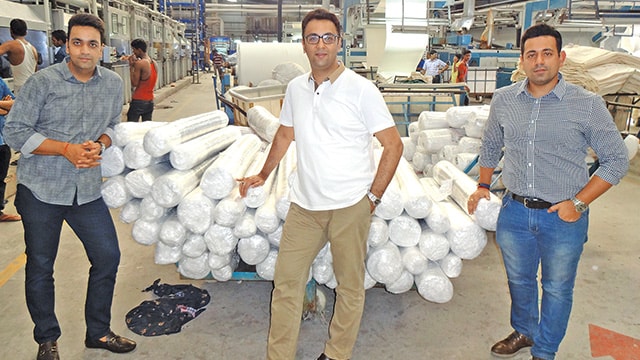
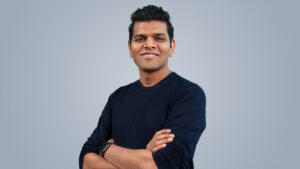
Aman Batra, Director of Bee. K. Bee Prints, shared with Apparel Online, “We are planning for at least 8 to 10 thousand metres per day in digital printing, only then it will be viable for us. Digital printing will help our clients to reduce cost. We will try to offer digital in a way that it is not niche and is in volume, to offer it at better price. Another reason is not to miss the small quantities like 1,000 or even 2,000 metres, as sometimes we miss such orders despite our wish to do those small orders. And such small orders are easily possible on digital machines.” He further added that there is something like transit in digital technology.
Despite the recent and consistent growth in digital printing, this printing can never replace the rotary printing. Digital printing has created its own space. Reactive print rate is normally Rs. 60 to 65 per metre while we have to target a price bracket of Rs. 75 to 85 per metre if we choose to go for unlimited colours so that the difference is not more.
Currently the senior team of Bee. K. Bee Prints is studying digital. Anuj Batra, the other Director of the organization comments, “No doubt that digital printing is the latest technology, but so far we don’t find that digital printing is as stable as rotary printing. There are some disadvantages too like heads in digital printing is still an issue, requiring heavy investment. There is no robust or stable technology in digital printing.” The company mainly works for Inditex through top garment exporters of Delhi-NCR and few from Bangalore have two units in Faridabad, one for dyeing processing and the other for printing. Currently having a turnover of Rs. 150 crore per year, the company is now looking for stable growth.
Despite the fact that digital printing companies are rising gradually, they are still struggling with many obstacles. N. Chandran informed, “The industry is not fully matured enough as volume is yet to catch up. The service is good, but still a long way to go.” Alok Agrawal shared that service in general is fine but cost of maintenance is high. Some exporters accepted that the response is both genuine and prompt.
Cost is still high
Price of digital printing is a concern these days as buyers are not willing to pay more difference if compared with the cost of screen printing. Not only printing cost, but the cost of spare parts, inks too are the other constraints. Alok states, “Print head is a major cost in digital print technique, we were expecting to get lower prices in ink which has not yet happened.” Rakesh elaborates, “When the game is production, there is obviously price war – that’s the biggest challenge for any entrepreneur entering business, or for old ones who are trying to survive with a couple of printers. It’s really a tough time for them. Price of digital printers is sustainable if you are keen for high production. The domestic manufacturer is offering price for ink at a lower end with no consistency and quality, except from those few old players (most of them located overseas) who are working at the same price which they were offered 5 years ago.” Though Rakesh claims that he is still running it with a different aspect. “I took up the word “mass customization” since the days of evolution of this industry and am still stuck to it. We are having production capacity of approximately 20,000 metre a month with two mid-range printers. But we really create stunning arts on fabric. Scarves are our frontline product which we successfully sell to wholesale and retail online having distribution offices in US since 2010,” he proudly confirmed. Hiren, on the other hand, referred to the predominant problem faced in this revolutionary art technique discussing, “Although buyers ask for digital printing, no one is ready to pay the premium price. Buyers would want that the exporter absorbs the cost difference. This becomes the most challenging part for us, keeping in mind how price-conscious buyers are, whereas the value addition on the garments keep on increasing,” says Hiren.
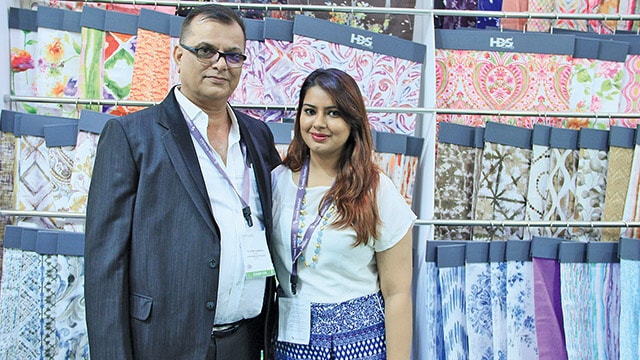
The companies doing printed products at bulk level still have a distance from digital printing because of the cost and order size. Alok Agarwal, ED (Operation), Shri Lakshmi Cotsyn Ltd., Kanpur, is planning to add its flatbed printing capacity. Even he highlights the cost factor involved in digital printing, “No doubt digital printing is in demand but its cost is still high. If we print a towel on flatbed machine, its cost is 3 times less than digital print. Customers still see cost aspect. It is perfect with smaller MOQs or customized clothing.” The company, working with top retailers of the world, is one of the leading terry towel and bedsheet producer in India.
Brands with multifarious experiences
Some of the brands/designers with similar kind of market segment state different experiences about this print’s demand. Lakshita, one of the famous Indian womenswear brand by Kavita Women Wear, Noida, is having 45 stores in North India. Pushpendra Singh, Merchandiser of the company informed AOI, “Regarding digital printing, currently there is not too much enthusiasm in the domestic market. From last two months, we are not using our digital printing infrastructure. Yes, earlier, it had become the market sensation but not now. I feel that the primary reason for this has been the availability of same type of prints at a cheaper price which are in fact not digital.”
Gagandeep Singh, Designer, Tagus brand (Tagus Global LLP, Gurgaon), states a contradictory opinion, “Digital printing is quite in nowadays. There are a variety of overall prints but some of them are outdated now and the newness is being offered by digital.” The company having expertise in design, different kinds of printing including hand prints too, has vertical operations.


 Bharat Tex Special Report 2026