The most critical question for the apparel exporters to answer today is – how to sustain in the long run? Prevailing challenges related to supply chain, squeezing profit margins, increasing labour cost and old methods of manufacturing have been hurting the export performance of India. Additionally, COVID-19 has hampered the already hurt industry in a big way. Buyers have either cancelled orders or deferred them, labours are moving back to their native towns due to closed factories and it’s not certain when they will come back once COVID-19 subsides. The traditional way of working won’t allow manufacturers to survive and young people with innovative ideas need to join business to pace up with the changing manufacturing trend. Here is what Amrutesh Jaghuva, Executive Director, Quality Knit Wears Pvt. Ltd., Madurai, Tamil Nadu (India), has to say about his business and the ongoing situation.
AR: You have been associated with this 29-year-old business as a next-gen business owner for over half a decade now. How are you assisting Quality Knit Wears?
Amrutesh: Our company has come a long way in the last almost 3 decades. It was in 2014 when top management felt need for me to join this business and I proudly took that opportunity in hands after completing Electronics & Communication Engineering in an era where most of the next-gen refrained themselves from stepping in their family garment manufacturing business. My role is to look after business processes right from sourcing of raw materials till the shipment of the finished merchandise to the buyers. Being the next-gen owner, my role doesn’t stop here. The major role is to promote innovations, integrate more technology within departments, bring in new skills and grow along with the company.
AR: As a young entrepreneur, what difference do you see between your approach of handling the business and that of your father who is the MD of your company and has been actively involved in the business since its inception?
Amrutesh: As a young entrepreneur, I try to imply new skills and techniques to change the existing process, whereas my father’s approach is purely based on experience, which is an important criterion in this field. Therefore, I discuss my ideas with my father to get the best outcome of those. I have always believed that some things cannot be taught; they must be experienced. We never learn the most valuable lessons in life until we go through our own journey. Therefore, I feel it’s my privilege to have my father by my side helping me blend new ideas and innovations with experiential knowledge.

AR: Enlighten us about the infrastructure of your company, the product you are catering to, the number of employees and the kind of machinery that you are using.
Amrutesh: We have 7 factories in and around Madurai and one sourcing factory in Tirupur, where we employ more than 1,000 people collectively. We are major producers of men/women underwear, and from some time now, we are also excelling in kidswear. Our current installed production capacity is 650,000 pieces per month, which is well-supported by majorly all in-house processes, right from fabric knitting to dispatching. In cutting department, we have both auto spreader (Lectra, Gerber) and auto cutter (IMA), while the sewing floor has state-of-the-art machines of Pegasus, Yamato, Kansai, Jack and Juki. We do have automation in areas that really require it the most, and if there is an inevitable need, we will surely invest more without hesitation. Our annual turnover was Rs. 75 crore in FY ’19, which increased to Rs. 93 crore in FY ’20. The growth factors remained our on-point expansion, efforts, hard work, dedication of top management and utmost support from our employees.
AR: Technology is a must to do investment in today’s era of cost-competitiveness. Have you been able to eliminate prolonged issues in factory using automation?
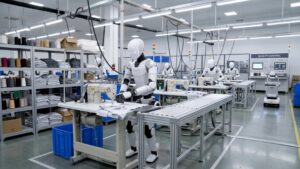
Amrutesh: Yes! As you said, investment in technology is necessary to sustain in business in the longer run and we are experiencing the same. We own automatic cutting machine from IMA in an era where most of the owners don’t invest in auto-cutters not just in India, but also in manufacturing hubs like Bangladesh. They hesitate to invest in auto-cutters, as the initial investment is huge and the major problem is that there is a disinterest in labours to adapt to new technologies. They don’t give a thought for long-term sustainability, but we do. We also own Tex-talk printing machine, which is a rare combination of digital printing and M&R screen printing. Though it involves utilisation of a huge capital, it has been too cost effective in the long run. It is cutting down the cost of labours enormously, and we are seeing almost no human errors during printing operation, which might otherwise cause delay in delivery and high cost of overall operation.
In textile and clothing business, it is really difficult to convert everything into automation. Though there is automation in cutting, printing and sewing, none of it has become completely automatic for any of the manufacturers, as there has to be a worker to feed material into machines or monitor equipment. It will take a long time to make the textile industry adapt to automation. But yes, seeing the current scenario in my factories, I can say automation is certainly reducing the human intervention, which is a good sign for us and we would like to continue our business with this trend.
AR: How important are ergonomics standards for you in the workplace, especially for the operators in the sewing lines? Do you have something different yet effective practice as far as ergonomics are concerned?
Amrutesh: Ergonomics in the workplace is important, as it helps the workers to be at ease while performing an operation. We have provided comfortable chairs without arm rest to the operators so that they can move freely. Proper lighting standards are followed in every department in all our factories as well as proper ventilation is there to minimise the strain. We have also cut down the movements of workers as much as possible in sewing line by planning lines in the most effective ways, and now we are planning to switch to ‘Overhead Production System’ which is well-known as ‘Unit Production System’ (UPS) to enable the workers to work effectively with minimum fatigue. UPS requires a computerised overhead transportation system to move the garment components automatically from one workstation to the next according to a pre-determined sequence and replaces the traditional production system of handing, bundling, tying and untying, and manually moving garment parts within the shop floor. So, ergonomics is our main priority and we are glad our workers are satisfied with our efforts.
AR: How has COVID-19 impacted your business? Which are the areas of operation that you feel need to be relooked at post COVID-19 and why?
Amrutesh: COVID-19 has impacted our business badly. It’s not less than a nightmare, as the industries have remained closed for over 40 days now. There are a few cancellations of orders as well and we anticipate reduction in our turnover of around 20 per cent this financial year. As an exporter of garments, our customer circle is limited to the brands we supply garments to and most of them are from Europe. Secondly, it is difficult to target new customers until you have lower prices to offer to buyers than your competitors. Plus, the COVID-19 pandemic is an additional shock for us. However, I am optimistic about the business revamp in coming months.
Our plan would be to yield more productivity with the same workforce and we will venture different methods in line production using re-engineering. We will also invest in automated machinery, which will reduce manpower and improve productivity and quality. Besides, as our end market is Europe, and as we all are aware Europe has been hit the hardest, we have to wait and watch the aftermath of COVID-19 in Europe, particularly in Germany and Italy.
AR: Has this pandemic also affected your expansion plans?
Amrutesh: We are a company which kept growing in the past and have strategies in hand to further grow in future. Though Tirupur is known as knitted garment manufacturing hub, we felt the need to diversify into woven category as well to supply a complete package to the buyers. This is why we had decided to add shirts in our basket for which we were finalising machinery and plant layout. However, we have laid down the plan of shirt manufacturing unit for quite some time now, as it is a disaster period for entrepreneurs to invest in. We are sure the market will grow in days to come, and when the time is right, we will be right back on track with shirt manufacturing unit.