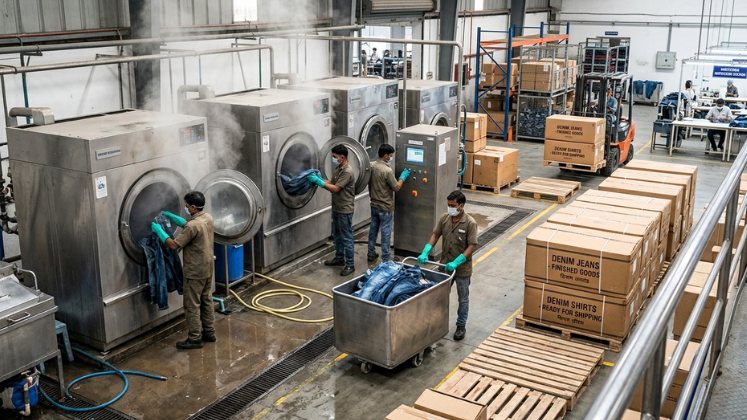
The denim washing and processing industry in Karnataka’s Ballari district has been severely impacted by an acute water shortage over the past two weeks, forcing several units to reduce operations and temporarily suspend production.
More than 55 jeans washing units operating in Ballari city are reportedly struggling to maintain regular operations amid the ongoing water crisis. Industry stakeholders stated that only a limited number of units are currently functioning at reduced capacity, while several others have either halted operations or are running intermittently depending on the availability of private water tankers.
The disruption has affected production activities and employment across the local garment sector, which relies heavily on water-intensive processes such as washing, dyeing and finishing.
According to unit owners, daily production volumes have fallen sharply, resulting in delayed deliveries and mounting financial pressure on businesses.
Industry representatives stated that the shortage began nearly two weeks ago due to irregular water supply and depletion of available water sources. With limited alternative arrangements available, many units have been forced to depend on private tanker operators, significantly increasing operational costs.
Workers employed in the sector have also raised concerns over reduced working hours and uncertainty surrounding wages as production activities continue to decline.
Owners of denim washing units have urged the district administration to intervene immediately and ensure adequate water supply to industrial areas. Industry stakeholders have appealed for temporary relief measures, including dedicated tanker supply, while also seeking long-term solutions to prevent recurring disruptions to the sector.
Stakeholders warned that prolonged operational disruptions could adversely affect the local economy and small-scale businesses linked to the garment trade. They added that the Ballari denim processing sector supports the livelihoods of hundreds of workers directly and indirectly.
Industry representatives have requested authorities to hold discussions with industrial stakeholders and address the crisis on priority before the situation worsens further.