No doubt 2012 was a very difficult year for the EU, most retailers and brands found it difficult to sustain growth with many seeing downfall in sales and revenue. While stores offering ‘value for money’ were better placed, this slogan now seems to be at the core of most retail companies. While many economists had predicted that 2013 should be better for retail, it is not going that way, and now companies envisage that the economic headwinds faced during FY12 will remain at least through the first half of FY13, as consumer confidence remains low with high levels of uncertainty around the Eurozone, increasing unemployment rates, higher domestic bills and lower disposable incomes. All of these factors contribute to a difficult trading environment continuing. Many of the retailers and brands have already seen low sales in the first three months of the year. Analyzing 10 leading EU retailers/brands, the common thread is the determination to be more efficient in the sourcing, offer better product range as also be perceived as a sustainable company with ethical business practices…
NEXT: ‘Develop, improve and expand the product ranges’
The year 2012 was the fourth consecutive good year for NEXT, despite the fact that the UK economy has continued to struggle for growth. NEXT Directory, the online and catalogue business, registered sales increase by 9.5% and the growth differential between NEXT Directory and NEXT Retail, where the sales were level, narrowed. The two businesses continue to work well together and support each other in many ways. For example, over 20% of Directory sales are delivered through the stores and over 60% of the returns come back that way. Both businesses increased their operating margins during the year and the Group’s underlying profit before tax rose by 9.0% to £ 622 million. However, 2013 is anticipated as a difficult year. “We anticipate another challenging year ahead, with little, if any, growth in the UK retail economy. In these circumstances we again aim to achieve growth by investing in the Brand, improving our products, controlling costs,” says John Barton, Chairman, NEXT.
The company has defined five straightforward objectives and underlying these operational goals is the overriding financial objective of delivering long-term, sustainable growth. The first is to develop, improve and expand the product ranges, focusing on being better by design. The second objective is to control costs through constantly developing more efficient ways of operating without detracting from the quality of products and services. Also important is opening profitable new retail space, with at least 15% net store profit and payback on net capital invested in 24 months. The focus is also on investing in growth of online business, through improving UK services and new overseas markets and last but not the least is focus on cash generation.
NEXT has always maintained that, if we are to succeed, our products must be better by design. Additional time and money has been invested in the design process for Autumn Winter 2013. “We hope to see continuing improvements in the fashion content and quality of our ranges as the year progresses,” says Barton. Even as he foresees a decline in real earnings for several more years to come as inflation has worsened since last year.

OTTO GROUP: E-retailing the way to grow
Dr. Rainer Hillebrand, who in addition to his function as Vice Chairman of the Board, has steered the Group’s e-commerce activities since August 2012 in more than 20 countries in which the Group is active. Under his leadership, the Group has a sharper focus on e-commerce and plans to raise its online turnover from today’s 5.7 billion to 8 billion euros by 2015. To achieve this, the Group is investing some 300 million euros, particularly in multichannel retail and internet pure players.
Worldwide online retail via more than 60 e-commerce websites is the Otto Group’s growth driver and turnover increased in the past financial year by around 400 million euros to top the 5.7 billion euro mark. This means online turnover currently makes up some 57% of the Group’s total trading turnover, and already over 62% in Germany.
With the goal of sustainable and profitable growth in e-commerce, Otto Group is concentrating on precisely these success models. The beginning of 2014 will see the launch of a new and innovative e-commerce business model named Project Collins, with assortments from the segments of Fashion and Home Living targeting a young, female customer group. Benjamin Otto, son of entrepreneur and Supervisory Board Chairman Dr. Michael Otto, and Tarek Müller are responsible for the project.
Since autumn 2008 the Otto Group has been active in the venture-capital business, and is today invested in over 100 participations. Through the venture capital company e.ventures, the Otto Group holds stake in European, Asian, North and South American businesses, amongst others, plus twelve start-ups in Russia and now seven in Brazil.
Since early 2012 the Otto Group is the main shareholder in Project A Ventures, which supports young online companies in the early phase; this venture has already secured participations in over a dozen start-ups. The Group has already invested a three-figure million sum in participations in new business concepts via e.ventures and Project A.
 Primark: Offering quality, fashion at value-for-money prices
“Global economic uncertainty remains but we have opportunities for further investment and the strength of the group balance sheet and a strong cash flow will enable us to pursue them with confidence,” shares George Weston, Chief Executive, Primark.
Primark, a major clothing retailer with stores in the UK, Ireland, Spain, Portugal, Germany, The Netherlands, Belgium and Austria, offers customers quality, up-to-the minute fashion at value-for-money prices. In 2012, revenue was 17% ahead of last year at constant exchange rates. As a result of the weakening of the euro in the second half of the year, the increase was 15% when translated at actual exchange rates. This excellent result was driven by an increase in retail selling space and like-for-like sales growth of 3% for the full year.
UK trading was particularly strong during the summer and sales in continental Europe remained buoyant. Trading in newly opened stores exceeded expectations and the opening of the new store in Berlin in July saw the most successful first day’s sales ever for the brand. “The excitement that continues to be generated by each new store opening and the sales densities that we are achieving in continental Europe afford us the confidence to believe that Primark is capable of much further growth,” says Weston.
By the end of the financial year end Primark had opened 19 new stores and added 0.9 million sq. ft. of selling space bringing the total to 242 stores and 8.2 million sq. ft. Three new stores were opened in the UK, 11 in Iberia and five in northern continental Europe. Operating a supply chain that delivers over two million items to stores every single day of the year, requires an eye for detail and a relentless focus on efficiency and effectiveness.
Earning the title of ‘A new generation of value retailers’ in the past decade, the brand having buying and merchandising teams in Dublin (Republic of Ireland) and Reading (UK) has successfully managed to put pressure on even the biggest high street names like Peacocks, New Look and TK Maxx with its ‘chip chic formula’ of delivering catwalk designs at a decimal point of the prices.
 Debenhams: Banking on UK stores for growth
Debenhams has been having a difficult time and in 2012 like-for-like sales increased by 1.6%, the first time it has grown in the past five years. This was a good performance given the difficult market conditions that prevailed throughout the year. The clear strategy for the company is opening of new stores in the UK as drivers of sales growth. In 2012 two new stores were opened taking the store count to 154.
The number of international stores increased by four in 2012. At the end of the year, the Debenhams brand traded from 85 stores in 27 countries: six in Denmark, 11 in the Republic of Ireland and 68 franchise stores in 25 countries. 2012 was another year of strong growth in online sales. Over the past three years online sales have grown by more than 350%. This performance has given confidence to increase medium-term sales target for online sales from £ 500 million to £ 600 million. Meanwhile, Group sales increased by 39.8%, driven by increased choice of products, brands and ways to shop and a 54% increase in the number of visits to debenhams.com.
The brand is investing in marketing through the “Life Made Fabulous” campaign which focuses on Designers at Debenhams to drive sales and improve brand perceptions. ‘Designers at Debenhams’, is an exclusive portfolio of diffusion brands designed by some of the UK’s leading fashion designers. The medium-term target for designer sales is £ 750 million. “We have begun to see some real results from the “Life Made Fabulous” marketing campaign that ran throughout 2012” shares Michael Sharp, Chief Executive.
Newness and product innovation are key to delivering a compelling customer proposition and the brand added several new brands in 2012. These include: No.1 by Jenny Packham, a glamorous new occasion wear range by one of the UK’s best designers; classic American menswear brand Nautica which is now available in the UK exclusively at Debenhams; and the extension of the Edition Designer concept into home through Ashley Thomas, Yukari Sweeney and Carole Lake. New launches for 2013 include Marios Schwab in women’s wear and Donna & Mark in children’s wear.
Sainsbury: Sees clothing business grow faster than core food business
“In recent years we have transformed our business, while remaining true to our 143 year heritage. By offering universal appeal we are helping our customers Live Well for Less. We are delivering on our business strategy’s five areas of focus and continue to outperform the market and gain share,” stresses David Tyler, Chairman Sainsbury.
The retailer has a clear strategy based on offering high street styles at supermarket prices in a way which makes the most of their strength in food. The ‘hero’ categories for the retailer, which complement and add value to the core business, are women’s wear, children’s wear, cook shop, home, paper shop and seasonal merchandising. In clothing, the in-house label TU is the UK’s seventh largest clothing brand by volume, and sixth for children’s wear. In 2011, the retailer announced a partnership with TV personality Gok Wan, to create a number of women’s wear collections with us. His debut range, Gok for TU, launched in October 2011 with the second collection launched just six weeks later in anticipation of the Christmas season, and the third in March 2012. It is available in over 200 stores with prices from £ 20. In children’s wear the retailer saw record-breaking school wear sales, up 38% in 2012, and in the peak week Sainsbury’s sold over 1,00,000 pairs of trousers and over 1,40,000 polo shirts.
With the retailer doing well, underlying profit before tax was up 7.1% to £ 712 million. As the wider economic situation looks likely to remain uncertain, helping customers make their money go further and ‘Live Well for Less’, Sainsbury’s has demonstrated that they can succeed against this backdrop. “Furthermore, the business has some exciting growth opportunities including our multi-channel strategy to help our customers to shop the way they want, and our store space strategy which brings our great food, clothing and general merchandise to new customers. We have laid strong foundations for growth. Your Board believes these will allow us to achieve our vision to be the most trusted retailer where people love to work and shop,” concludes Tyler.
 Inditex: Core business model sees worldwide expansion
A trail blazer that has changed the way consumers perceive fashion, the Inditex Group continues on its growth projectile with net sales in FY 2012 (1 February 2012 to 31 January 2013) increasing by 16% from 2011, to 15.9 billion Euros (like-for-like store sales rose by 6%). Net income totalled 2.3 billion Euros, an increase of 22% from a year earlier. With fast expanding market presence Inditex had 6,009 stores at the end of 2012, 482 more than a year earlier. New stores were opened in 64 markets, including the initial launches in five countries.
The online store network also continued to expand, reaching 23 markets, with noteworthy launches including Zara online stores in China in 2012 and Canada in 2013. All of the company’s retailers continued to steadily expand online shopping into new markets. Expansion milestones included the arrival of Massimo Dutti and Zara Home online shops in the United States. Additional launches are scheduled for 2013.
Zara has stuck to a strategy that has proved to work: strategically located stores, layouts that take advantage of each store’s unique visual and functional space, and a brand message “Buy it now or regret it later” that builds on its ability to translate trends into merchandise, from drawing board to shelf in just two weeks.
M&S: Combining sustainability with affordable product
 “In a highly competitive market, M&S remains the UK’s first choice for clothing. Customers appreciated our interpretations of seasonal trends, underpinned by our continued focus on great value and quality,” argues Robert Swannell, Chairman, M&S.
While M&S delivered strong performances across lingerie, menswear and kidswear, it saw a more mixed performance in both women’s wear and home. Overall Clothing and Home (GM) sales were down 0.9%. With a 10.4% market share in women’s wear M&S has consistently offered quality clothing at great prices and the two most successful brands were confident and sophisticated Autograph range and Indigo Collection casualwear, with sales up 9% and 16%, respectively.
“With value remaining front of mind for customers, we will stay focused on providing the great quality products that they trust us to do well. We will provide customers with compelling reasons to buy, through appropriate interpretations of trends and regularly updated ranges. The roll-out of our new store format will strengthen the in-store presentation of our clothing brands, helping customers better identify the styles for them,” informs Swannell.
In FY 2011/12 international business for M&S continued to grow, with sales up 5.8% to£ 1.1 billion. The company added 26 new stores to its portfolio and entered new markets, giving a total of 387 stores across 43 territories. Through 2011-12, Plan A continued to make the company more efficient; contributing £ 105 million net benefit back into the business. The fifth anniversary of Plan A represents a significant milestone in the journey and since launch M&S has continued to raise the bar. The company now has 180 commitments under seven pillars that are driving the company’s ambition to become the world’s most sustainable major retailer. In the FY, M&S achieved a further 43 commitments.
With Multi-channel sales increasing +22.9% in fourth quarter of FY 2012-13, the management continues to make good progress in transforming M&S from a traditional UK retailer to an international multi-channel retailer.
 Tesco: Building success on home ground
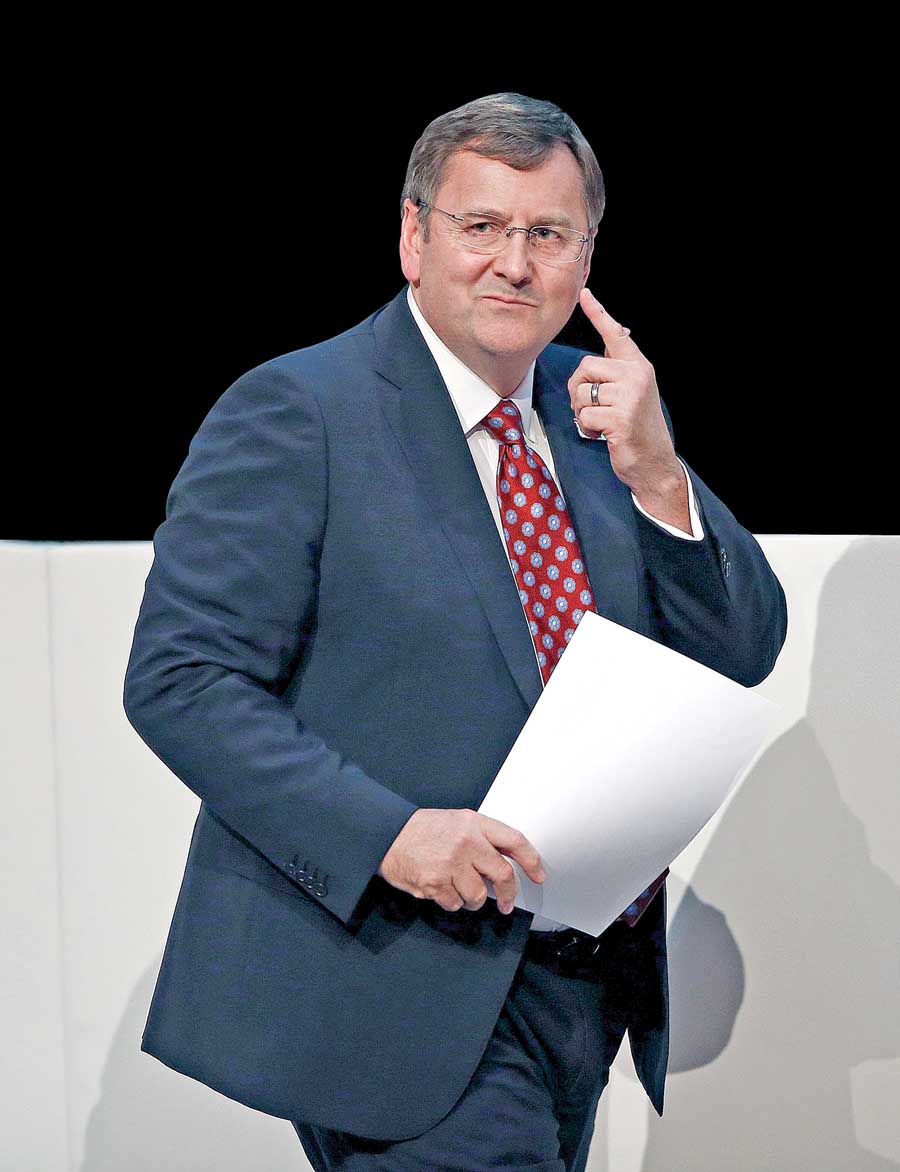
“With profound and rapid change in the way consumers live their lives; our objective is to be the best multi-channel retailer for customers. Our plan to ‘Build a Better Tesco’ is on track and I am pleased with the real progress in the UK. Our focus now is on disciplined and targeted investment in those markets with significant growth potential and the opportunity to deliver strong returns,” emphasizes Philip Clarke, Chief Executive.
While the food business at Tesco takes a beating and general merchandise continued to weigh on UK performance throughout the year, with a slight decline in total sales and a decline in like-for-like sales of over 5% for the year as a whole, clothing, however, has continued to deliver a strong performance, as customers have responded well to the better garment quality, ranging, and merchandising introduced. Sales from the F&F ranges of clothing alone now total more than £ 1 billion, with like-for-like sales growth of over 9% for the year.
The company made good progress in the UK, up 13%. But the company is exiting from the United States as sales drop drastically. The company has adopted a more cautious stance in China, opening just 12 new stores in 2012 and closing five underperforming ones. This year Tesco plans to open 2.8 million square feet of net new selling area in Asia.
 H&M: Expanding globally as a responsible fashion company
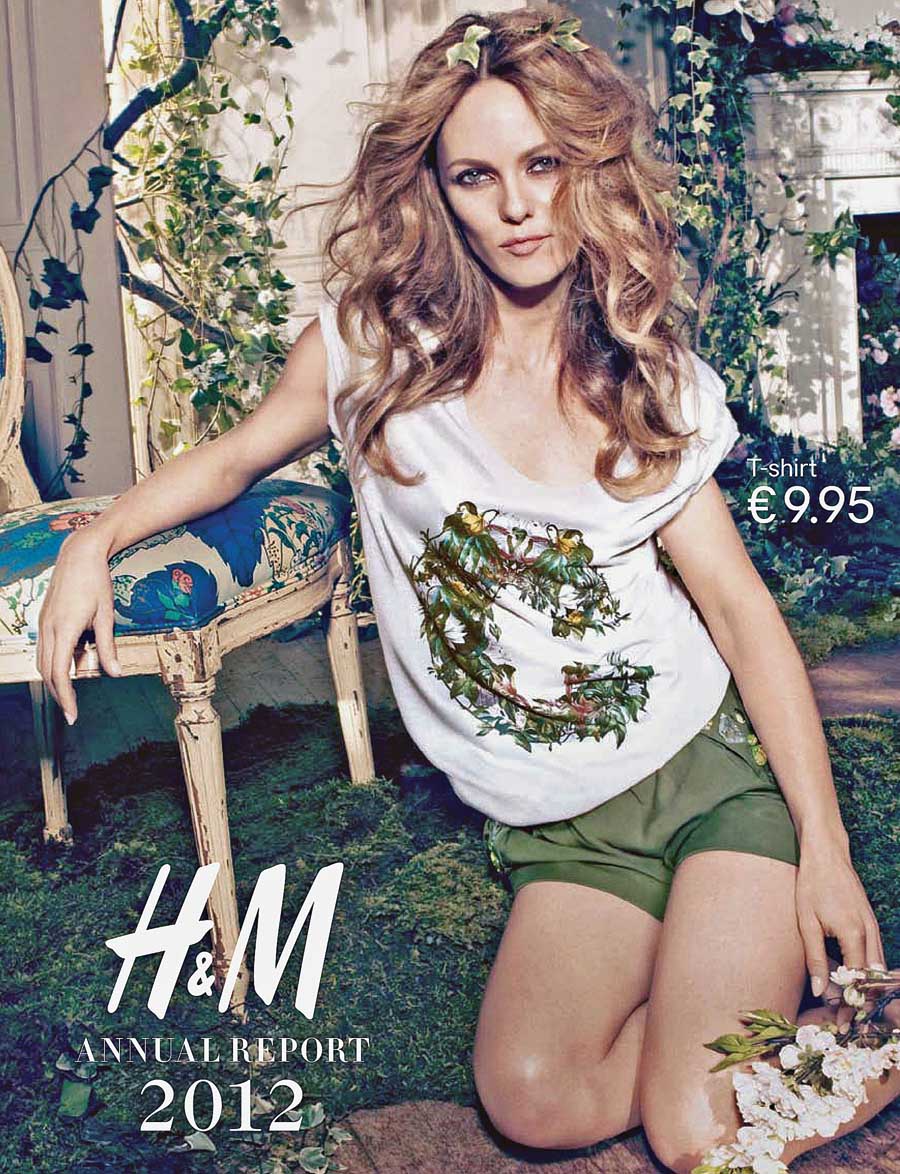
“H&M is expanding globally and will have more than3,000 stores before the end of 2013,” argues Karl-Johan Persson, CEO.
H&M is a design-driven, creative and responsible fashion company guided by strong values that are based on a fundamental respect for the individual and a belief in people’s ability to use their initiative. With a focus on fashion and customers, and a shared aim among employees to always exceed customers’ expectations, H&M is growing all over the world while maintaining quality, sustainability and high profitability. H&M’s collections include everything from the hottest trends to the very best in basics – for women, men, children and teenagers. In 2012, H&M once again qualified for the Dow Jones Sustainability Index World, which lists the companies leading the drive towards more sustainability.
H&M’s design team creates sustainable fashion for all, and always at the best price. Spring 2013 means exciting news as the H&M Group is launching its new brand ‘& Other Stories’. This exciting new fashion brand offers shoes, bags, jewellery, cosmetics and clothing with an emphasis on quality materials and attention to detail. Since January 2013, H&M shop online is completely mobile-adapted. In the US, the world’s largest retail market, H&M plans to offer online shopping from summer 2013.
The Group’s gross profit for the 2012 financial year amounted to SEK 71,871 million (66,147), an increase of 9%. This corresponds to a gross margin of 59.5% (60.1). In 2012, the Group stepped up the rate of expansion and opened 304 new stores net compared to the originally planned 275 stores. By the end of the financial year 2012, H&M had a total of 2,776 stores in 48 countries. New stores opened in markets around the world. Most new stores were opened in China and the US but Russia, Italy, Poland, France, Spain and the UK were also large expansion markets. Five new markets are planned also for 2013: Chile, Estonia, Lithuania, Serbia and (via franchise) Indonesia.
New Look: Delivering exciting, authoritative, appealing fashion, at the right price every time
 “2011/12 has undoubtedly been a challenging year for New Look as we took action to address issues around our product ranges, pricing architecture and cost base,” says Alistair Mcgeorge, Executive Chairman
The Group’s like-for-like sales was down (-) 5.9% and UK like-for-like sales were (-) 5.7%. At 77.6% of Group revenues, the UK inevitably has a significant impact on the Group performance. In an effort to remain profitable the companies put in place a clear strategy to tightened inventory further and continue to exploit short lead times to improve buying decisions and help mitigate inherent fashion risk. The mission is to deliver exciting, authoritative, appealing fashion, at the right price every time, and across whichever channel is most convenient to customers.
During FY12, the Group achieved a number of key milestones. They re-gained lost market share to hold the No. 2 position in women’s clothing and accessories by value, re-launched the Kelly Brook ranges, launched the ‘Style the Nation’ television show and strengthened brand value in the marketplace through focus on Presentation, Product and Price. The most successful products were lingerie, nightwear and swimwear, which now represent 3.9% of New Look sales.
The international business now represents an increasingly substantial part of the Group – with the New Look brand reaching 80 directly managed stores in Western and 103 partnership stores across 14 markets by year end, and the Mim brand in France and Belgium reaching 316 stores.
The company is cautious about the outlook for the year 2013 and has made effort to strengthen sourcing teams and given more responsibility for ensuring an efficient and effective supply chain. The aim is to treat suppliers as key business partners and so work to shared objectives such as reduced lead times.