Over the past few years, organised Indian apparel retail has emerged as one of the fastest growing markets in the world. The menacing wrath of pandemic did impact the industry in 2020, but despite all the pandemic-induced constraints, the industry seems to be coming back with a vengeance – at least that’s what the numbers state.
In a latest business survey conducted by Retailers Association of India (RAI), the overall retail business has grown by 10 per cent in February 2022 compared to what it was in the same month a year ago. Apparels, in particular, showed double digit growth in the month with consistent fall in Omicron cases.
So, it’s been a decent start to the year for the apparel retail market. And it’s not just from RAI! If reports by Statista are anything to go by, then the Indian apparel retail market is expected to reach US $ 88.48 billion by the end of 2022 and a whopping US $ 106.93 billion by 2026.
In fact, the growth witnessed, especially in last five years, has been exemplary. After a fantastic 2019 (US $ 80.01 billion), 2020 did see a dip in numbers (US $ 66.54 billion), before the fashion retail sector made a comeback in 2021 by clocking US $ 73.18 billion.
And if at all India manages to attain the projected US $ 88.48 billion by the end of this year, then it will help the country become the third largest apparel retail market globally – just behind the US and China, which are expected to generate US $ 335.10 billion and US $ 318.97 billion, respectively, in 2022.
What’s, however, noteworthy is to ascertain and analyse the factors that have been instrumental in the growth of Indian apparel retail market and how the scenario will be in 2022 and beyond.
Driving force behind Indian apparel retail sector’s growth…
Yes, Indian fashion retail is definitely poised for ascendancy. The revival started sometime in late 2021 when people came out and started buying everything they couldn’t in 2020 and early 2021 – especially apparels and fashion accessories.
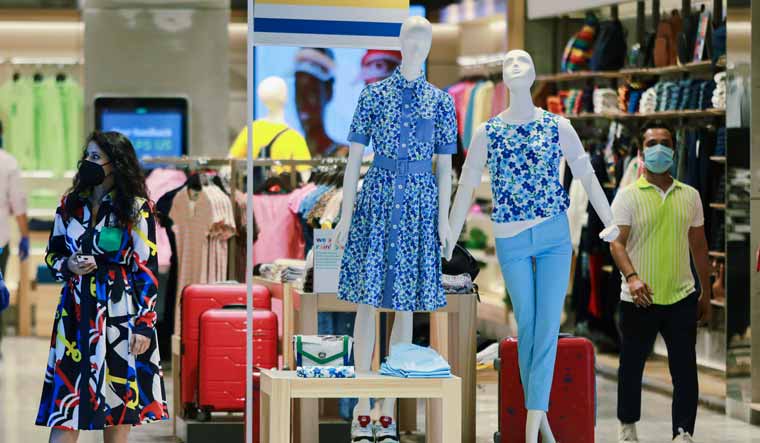
With vaccination drive picking up significant pace all through the year, and schools and offices opening in many parts of the country, one saw a rise in both consumer confidence and consumer exuberance. It was this confidence and enthusiasm that drove people to the apparel/footwear store in the city and buy the item of their choice.
Notably, the revenge buying that one got to witness in the US and Europe, was very much evident in India too. There was no longer any salary constraint and it was just a matter of re-living the good old pre-pandemic days and buying apparels of their liking – even if it meant stocking up dresses. Many of them were seen filling their shelves with their favourite dresses.
One of the most notable developments over the last 15 months has been the successful acquisition of many small brands/retailers by big retail giants. It happened across the globe and it happened in India. One such recent development was in March 2022 when India’s retail giant Reliance Retail Ventures (RRV) bought a majority stake in Clovia, a popular lingerie brand, for US $ 125 million or Rs. 950 crore (owned by Purple Panda Fashions). And it’s not the only one! RRV had earlier announced an investment in 30-year-old designer brand Abraham & Thakore (A&T) for a majority stake.
Earlier this year, we saw Aditya Birla Fashion and Retail (ABFRL) too buy 51 per cent stake in House of Masaba Lifestyle for around Rs. 90 crore to enhance its portfolio of fashion labels. This is in addition to its investments in Sabyasachi and Tarun Tahiliani. RRV and ABFRL have today left a mark on the global front too.
More on this, Ananth Narayanan, Founder, Mensa Brands, says, “In all our categories (apparels, beauty and home), we are not trying to build a brand for India, but a brand for the globe. 30 per cent of our revenue already comes from overseas markets.” Bengaluru-based Mensa Brands has been successfully acquiring direct-to-consumer brands and helping them scale within the home market and overseas.
Retail corporatisation has, lately, gained importance in the fashion products segment, thereby bolstering the retail ecosystem in India. Notably, 2022 will see the penetration of retail corporatisation into Tier-2 and Tier-2 cities with the adoption of retail technology – addressing fashion demands there, which is driven by an increase in media reach and growing aspirations amongst the youth.
The apparel retail growth has also been attributed to efforts initiated by many to innovate as well as embrace new business strategies. It was not just about enhancing product development process, tracking and studying consumer and shopping behaviour or revamping the supply chain, but also about adopting new technologies. Every retailer had a clear-cut plan to progress with a purposeful agility – eventually translating the efforts into good numbers.
Many apparel retailers also invested significantly in building their marketing teams (both online and offline) and restructuring their marketing and distribution approach so as to be ready with all plans to combat the uncertainties.
Also, with parties, marriages and events back into action, the market for partywear or bridalwear too has opened. The stores have started displaying – yet again – the best of not only partywear, but also formalwear and casualwear. All products are back in action. The good part is the resurgence of bricks-and-mortar stores.
Resurgence of bricks-and-mortar stores
Despite the fast-growing popularity of fashion e-commerce over the last decade – especially in last 24 months – the fact remains that there’s no immersive brand experience than shopping at a physical store. It’s been a new era of in-store convenience especially with surge in services like same-day order fulfillment, curbside pickup and self-checkout.
Also, one cannot overlook the fact that most of the shoppers still want to see, touch, feel and experience the products they buy, especially in case of apparels, footwear and fashion items. Notably, vibrant, interactive digital signage has heightened in-store marketing and customer experience.
Fabindia, which has made significant tech investments for the digital platform, and successfully executed them too, has increased its store numbers to 308 across India and now plans to unveil 30 more stores in 2022.
Then there’s The Raymond Group, majorly known for its textiles and apparels, which has been proactive and, along with its brands, has been marking its presence by opening bricks-and-mortar stores in Tier-4 and Tier-5 cities as well. Here one must add that Fabindia, which has 55 per cent of its stores in metros and Tier-2 and Tier-3 cities, is eyeing global expansion too. That’s way forward!
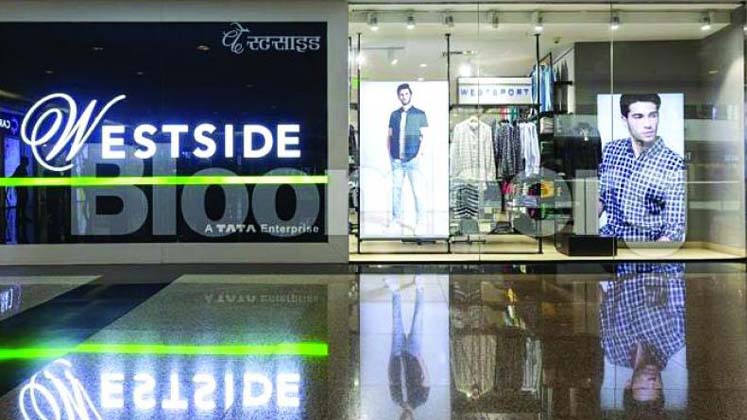
Tata Group-owned Trent Ltd. (Westside), which was founded back in 1998, is today amongst top 10 retailers in India. Not surprising, considering it has over 90 stores across 60 cities. It has left a mark for itself by offering the best of menswear and womenswear, in addition to kidswear.
Another notable aspect is that applications, robust online stores and other arms of digitised retail have today become complementary assets to the in-store experience. Customers can now check a dress’ availability, buy them and find coupons for in-store purchases before going to a store.
Even international brands that have their retail operations in India have been investing big in bricks-and-mortar stores. H&M India, in the last five years, opened almost 50 stores in the country, and the retailer now believes that there’s no reason why in next five years, it can’t open more stores despite all challenges and constraints.
Similarly, Uniqlo India, which opened its first store in 2019, now has six physical stores in Delhi-NCR. Additionally, the retailer is also planning to open stores in other Indian states in the coming years. More on this, Tomohiko Sei, CEO, Uniqlo India, said “This is one of our big responsibilities and commitments to increase the local sourcing for business in India. This is one of our first priorities.”
There are many more like Indian Terrain Fashions Ltd., Biba and V2 Retail Ltd., who have managed to win the hearts of Indian consumers and are still doing very well, so it isn’t surprising when one sees experts associating big numbers with Indian retail market. But it’s not just been about bricks-and-mortar clothing retailers; it’s also about the pace at which fashion e-commerce has been growing in India.
Indian e-commerce continues to grow…
Indian e-commerce has completely transformed the way business is done in India especially in last decade and in last 24 months, it’s been exemplary. As per India Brand Equity Foundation (IBEF), India’s e-commerce is expected to reach US $ 99 billion by 2024, with fashion/apparel likely to be key growth drivers.
In fact, according to a Technopak report, by 2025 close to 20 per cent of all apparels sold in India will be sold online; this will be a US $ 16 billion market. That says it all!
While US e-commerce bigwig Amazon has established itself strongly in India over the last few years, the notable aspect has been the rapid emergence of online stalwarts like Myntra, Flipkart, IndiaMart and Snapdeal. Amazon, notably, saw 40 per cent growth in its fashion category in FY ’21, while Snapdeal’s fashion sales rose by 210 per cent in the first six months of last year.
The good part is that the rapid growth of fashion e-commerce has been fast reaching not only the Metro cities, but also small towns and rural areas. In this regard one must say, 65 per cent of demand from Amazon in FY ‘21 came from Tier-2, Tier-3 and Tier-4 cities. Similarly Snapdeal also, reportedly, receives more than 72 per cent of its orders from smaller cities and towns. The numbers are surely expected to rise this year and beyond.
Reliance Retail’s fashion marketplace Ajio, which now accounts for 25 per cent of the retailer’s clothing sales, has also managed to carve a niche of its own in last few years. The company owns multiple fashion and lifestyle brands such as Reliance Trends, Marks and Spencer as well as other premium brands sold through Reliance Brands Ltd. and is growing fast.
Flipkart also recently invested Rs. 260 crore for a 27 per cent stake in Arvind Fashions Ltd.’s subsidiary Arvind Youth Brands which owns the Flying Machine brand – the focus is to identify opportunities and synergies to innovate and develop products with strong value propositions at attractive price points.
As of now the Indian fashion e-commerce market per se is in good space and the online fashion retail market share in the country is expected to rise by US $ 22.97 billion (from 2021 to 2026), with the market’s growth momentum to accelerate at a CAGR of 18.83 per cent.
However, what’s pleasing is that while some people prefer visiting stores and get the feel of the dress before buying it, some others prefer sitting in their luxurious homes and buying the shirt or skirt of their choice online. So, while apparel retail market, on the whole, is reaping rich dividends, some of apparel products too have been doing well lately in Indian fashion market.
Growing Indian apparel product categories…
Amongst some of the major product categories that have been doing well and are expected to maintain their momentum in 2022 are men’s woven trousers, knitted T-shirts and men’s shirts. The 2021 numbers distinctly show that India’s apparel imports, especially from Bangladesh (which is around good 40 to 45 per cent), have been mainly owing to growing demand for knitwear products and also woven products.
If reports are anything to go by, the import value of men’s woven trousers, whose Indian market is estimated at around US $ 5 billion, was US $ 154.60 million at an impressive year-on-year (Y-o-Y) growth of 56.38 per cent.
Next in line is knitted T-shirts, the import value of which was US $ 63.37 million in 2021 – at an astounding rise of 114.89 per cent. The fact that India is a major producer of T-shirts has further helped its retail market.
Similarly, the men’s shirt too valued a good US $ 50.79 million at a growth rate of 26.22 per cent. The numbers are only going to grow in 2022.*
*This has been analysed and explained at length in the second part of this article
With markets opening and economy reviving, happy days are here again for Indian fashion retailers/e-tailers, and the pace at which the market is growing is good enough to make it one of the biggest in the world this decade.
And that’s not an exaggeration!