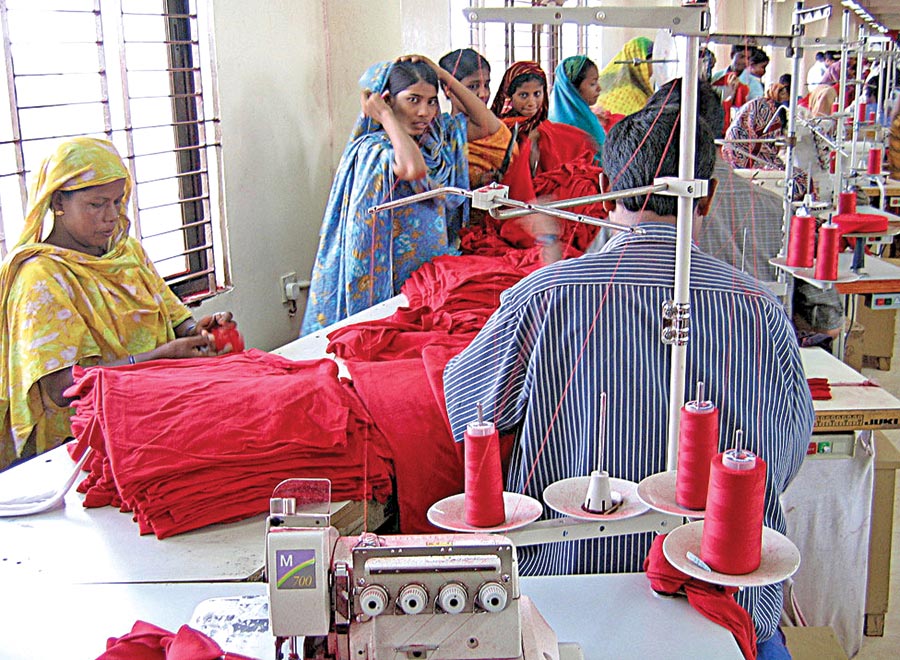
As the neighbouring countries struggle to maintain a safe industry, free of accidental deaths with international committees intervening to bring out reforms, India is emerging as a mature compliant market making it ethical for western corporations to do business here. Buyers should applaud India’s effort by paying them a few cents more as low cost of production would not work in the long run. Nevertheless, the Indian garment industry is not without its share of ‘issues’ related more with social compliances entangled with local customs.
The recent collapse of the commercial buildings in Bangladesh and Cambodia brings to fore the problems related to the garment industry in cheap manufacturing destinations where the cost of production is perhaps more important than any other consideration, raising alarming questions concerning factory compliances and labour safety. Fortunately, the Indian garment industry with its stringent legal norms and regulations in place has not seen such disregard to worker welfare, yet it is still surrounded by various concerns such as the Sumangali scheme, child labour, labour abuses, low wages, overtime, etc.
With its promise of a decent wage, comfortable accommodation, and a lump-sum payment at the end of three years which may be used to pay one’s dowry (yet another social problem that engulfs the country), the Sumangali scheme, has attracted a large proportion of young females and the practice is particularly rampant in Tamil Nadu. Though the number of girls employed under the scheme is far less when compared to the total workforce in the area, the impact is enough to tarnish the image of the country. Employment through Sumangali can be considered a bonded labour scheme for many, but for the families of the deprived who are not able to meet the ends, it can be a blessing in disguise, assuring them the safety of dowry for their daughter’s marriage.
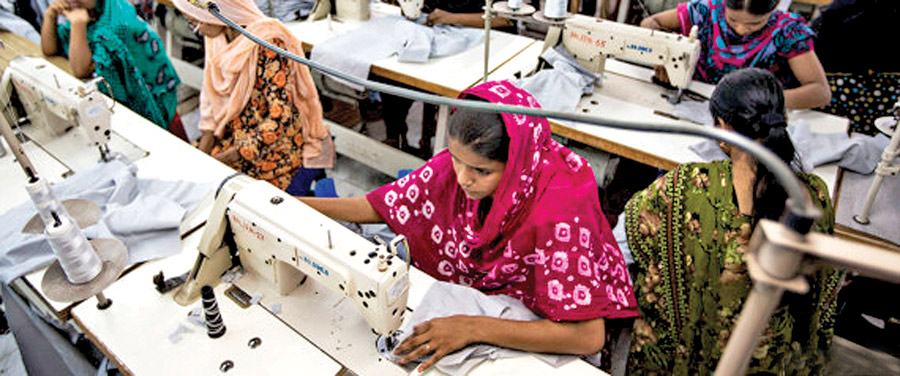 In addition, the industry is also under constant scrutiny for child labour, a problem existing for ages. In April 2013, around 30 children were rescued from the shoe and garment manufacturing units of Delhi by Bachpan Bachao Andolan (BBA). R. S. Chaurasia, Chairperson of BBA declares, “It is very important for consumers in India and the west to speak up. People need to wake up and face the fact that many of the products they buy are made involving child labour, by the children abducted from their homes, and whose lives have been violated.”
Industry experts believe that the problem of child labour lies in the supply chain, and not in the factories as there are various norms and regulations to keep a check on them. Though poverty and social security may be the reason for child labour, these school-going children help by earning a bit extra for their families and acquiring the unique skills of the trade too. However, the country’s apex garment body, the Apparel Export Promotion Council (AEPC), believes that the industry complies with the international labour laws and prohibits child labour. “We would like to reiterate that the garment industry of India is deeply engaged in ensuring compliance with the law and that its efforts encompass the informal sector, including home workers, and facilities serving solely in the domestic market,” says A. Sakthivel, Chairman, AEPC vehemently.
[bleft]The Indian economy, the second largest in Asia in terms of purchasing power just behind China, is steadily growing at approximately 8 per cent, and is robust and providing a substantial labour force and strong labour laws in place[/bleft]
As the Government is continuously upgrading wages according to the internationally accepted norms, it has resulted in the rise of minimum wages for unskilled, semi-skilled and skilled labour by 6 per cent in Delhi as recent as in April this year. The western retailers should appreciate India in terms of providing an established market which is free of compliance hazards, though it is still encircled by a few social concerns. Issues such as overtime is rampant in the garment industry, with many labourers making a quick buck by extending their working hours, which according to international standards is unacceptable.
Many labour organizations believe that India’s success in the global market has been at the cost of the basic rights of the industry’s predominantly female and migrant labour force. These women work in factories that demand impossible targets, with virtually no breaks allowed. Working under the constant fear of deduction in salaries, no job security and constant threat of being fired, these workers face verbal abuse, when production targets are not met. Living in desperate conditions, the garment workers are crushed under the burden of sustaining their families in severe conditions of inflation. In addition, the workers face sexual harassment, verbal abuse and the endemic problem regarding overtime. According to industry watchers, close to thousand workers or family members have committed suicides due to mounting poverty, overwork, precarious employment or layoff, severe debts, and harassment from private money-lenders and their goons.
If the above social issues are kept in check, then India could gain a wider business opportunities from retailers worldwide. Further, with the recent mishap in Bangladesh, India is gaining business enquiries and Dr. Sakthivel estimates that orders worth US $ 500 million have been shifted from Bangladesh to India in the past four months and some of the buyers are coming back to India. But the country can only reap profits and retain these western giants, if it provides immeasurable support to its labour force which is the main reason for the economic growth of the country.