Being one of the largest knitted fabric manufacturers in India, Mercury Fabrics is a significant supplier to many leading fashion labels of the world including H&M, C&A, M&S, etc. A fully furbished R&D lab accredited and approved by leading international fashion labels together with the best of technology from around the world like Italy, Japan, Germany and Korea, and teamed up with lean manufacturing processes, enables Mercury to deliver unmatched quality and high-value products. In conversation with Apparel Online, Tajinder Sachdeva, Managing Director, Mercury Fabrics shares the journey
of becoming a market leader today and the future ahead…
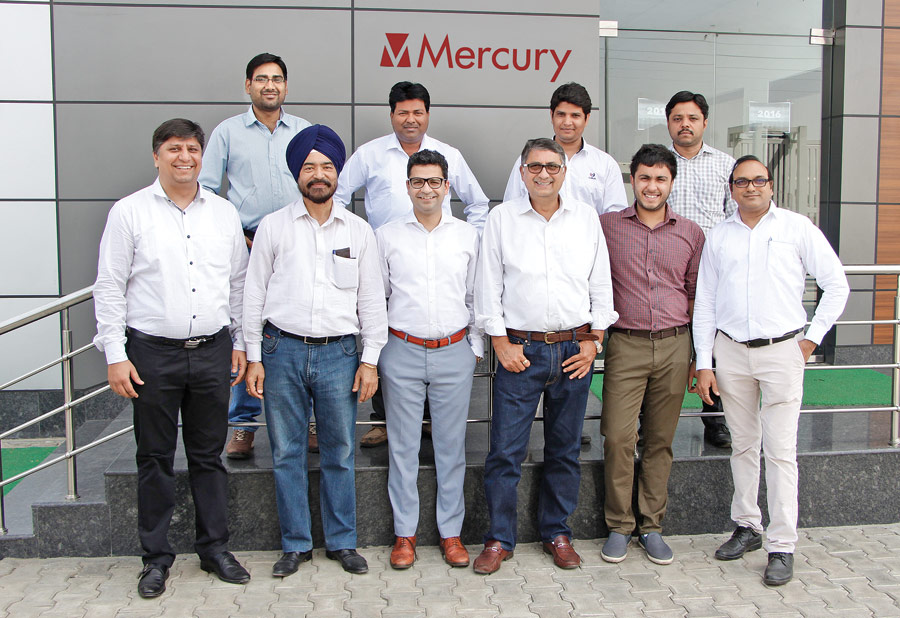
“My enthusiasm for learning and the passion to do things differently has brought me where I am today. Whenever I go to any exhibition, I insist the machine providers to show me their factories, which widens my learning experience,” asserts Tajinder. Such is the case that taking inspiration from global benchmarks, the Mercury factory in Bawal (Haryana), on the outskirts of Delhi-NCR, has been built on the lines of a European factory. The most stringent and quality-conscious buyers like H&M, C&A and M&S, have accredited the factory and appreciated the effort gone in to making it a world-class facility; no wonder its customers include big names in the export arena such as Shahi Exports, Orient Craft, Richa Global, etc. “I listen and take corrective actions around the smallest of complaints that come to me. That’s how you earn respect. Seeing me working like this, my coming generation is also equally sincere. What else do you want?” reasons Tajinder, whose sons Rahul and Pranav are deeply involved with Mercury Fabrics.
Currently, Mercury produces 600+ tonnes of finished fabric every month out of which more than 50 per cent of its production is into blended fabric. The company’s value chain for superlative quality includes everything from knitting (yarn), interim inspection, greige warehouse, processing lab, dyeing, printing and finishing to quality check and assurance.
Equipped with the latest technology, Mercury is also providing better price in comparison to China in certain qualities with the help of a trained technical team, who not only understand knitted fabrics, but also the technology installed. “I am completely satisfied and happy that I have a good team consisting of people who have many years of experience in this field and have been with me for a very long time, to man the unit,” states Tajinder. The facilities at the factory also includes Reggiani Mezzera washer, a pre-requisite for superlative reactive prints that is the first in India, besides sampling, larger volumes are also possible with the machine. The focus of technology is such that as of today the company is the largest buyers in India for Italian machine manufacturer Bianco, for which it was awarded as world’s best customer in 2015 at the ITMA show. The company is also the largest buyer in India for Korean machine manufacturer Ehwa.
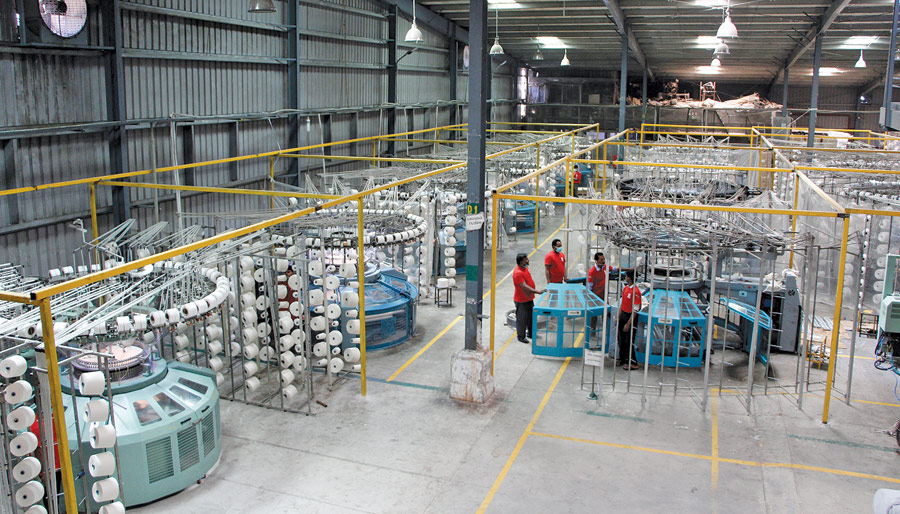
Currently, the company produces 600+ tonnes of finished fabric every month out of which more than 50 per cent of its production is into blended fabric. The company’s value chain for superlative quality includes everything from knitting (yarn), interim inspection, greige warehouse, processing lab, dyeing, printing and finishing to quality check and assurance. It’s the only company in India which does bio-washed cotton fabrics with reactive printing having high pressure washing that helps the fluffs to be removed from the fabric. From natural fibres to man-made fibres to recycled fibres and blends, the company is not just well known in the domestic arena but also exports. Mercury is amongst the leaders in viscose elastic fibre market for which it is nominated by M&S. “We are concentrating on elastin knitted fabric through which various other structures can be made. Our specialization lies in a certain niche area such as viscose, elastin, blends, which is then being carried forward to printing,” claims Tajinder. In addition, the company also caters to blended linen in cotton as well as polyester, though the demand is limited.
With a pledge to provide a sustainable environment through its ‘target zero’ initiative focusing on reduction and recycling while keeping up with the world trends in fibre and fabrics across the world, Mercury, a Rs. 150 crore (US $ 23 million) turnover company, is targeting a 27 per cent growth this year, making it a name to reckon within the Indian textile industry.
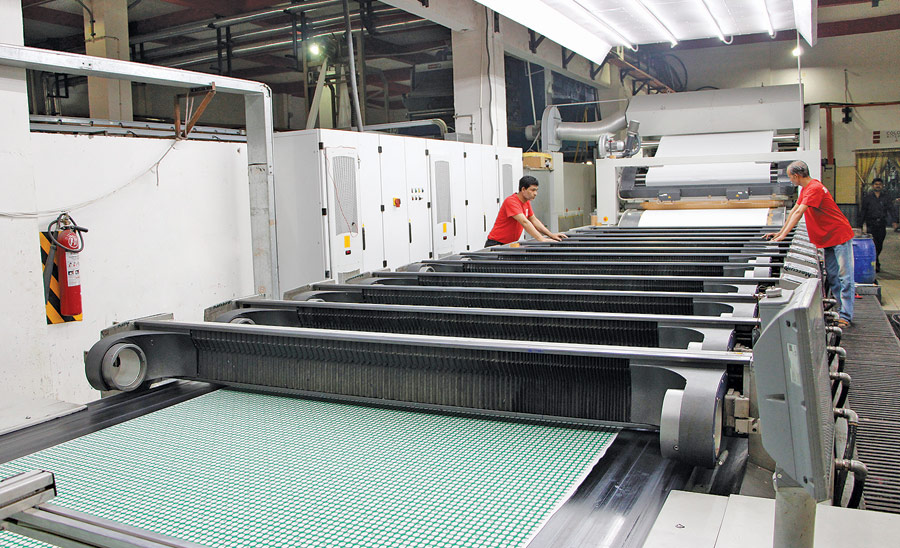
Apart from quality fabrics, the company is also proud of its printing capabilities, having two types of printing equipment – pneumatic pressure and magnetic pressure equipment to deal with different print requirements – while magnetic is used for printing blotches or a complete print on fabric, pneumatic is required for sharper and specific printing. The company heavily relies on CAD during its sampling stages for orders. The company’s high-end lab enables it to ensure quality standards that are at par with many international players. “If you want to do a quality product, your production team should know whether they are on the right track or not. What kind of colour or light fastness they are achieving is the fabric in tune with international testing norms. Our lab allows them to keep a sharp focus on all these issues. Whether it’s quality standard or shrinkages, equipment for everything that you can think of is available in this lab. A lot of companies that work with us have already accredited our labs and now Disney is in the process of getting it done,” claims Tajinder.
The company feels that India still lacks acceptance of finer gauges in comparison to what is available in the international market. Though worldwide people are stressing on the finer fabrics and polyamides, India has not yet developed capabilities to handle such orders due to their price points. “In India, 99 per cent of the knitting is done up to 28 gauge whereas the world does it even up to 70 or 80 gauge, which is high-end and expensive. Very few companies have started asking for 28 gauges. But in the future, businesses of 5-7 years down the line would also shift to finer fabrics,” predicts Tajinder. Nonetheless as fashion is changing in India, designers and the Indian market is becoming more receptive to different kinds of fabrics and fibres. Amongst the major challenges for the company, is to constantly keep up with the growing market and its demand. “The next challenge is the survival of the fittest! You have to constantly upgrade, keep travelling and understand new markets and be prepared to meet the demand of the customers,” emphasizes Tajinder.
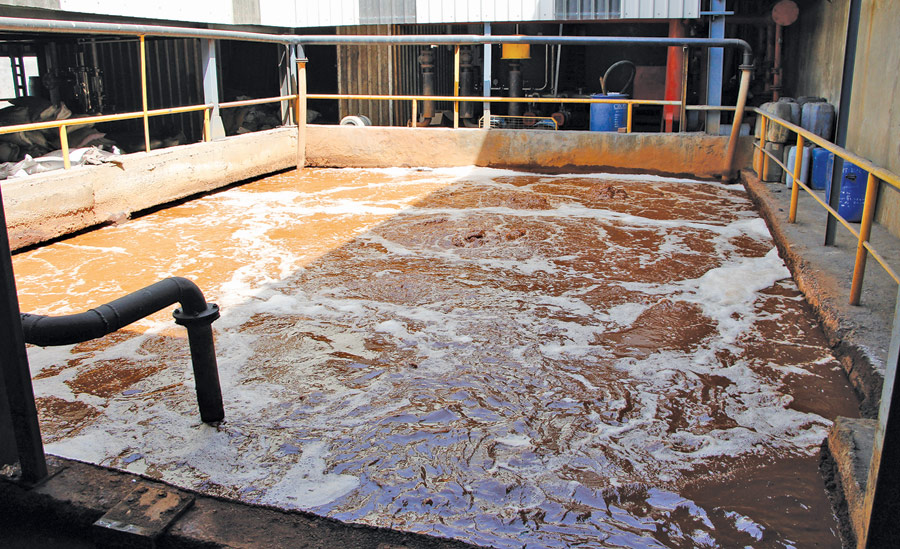
Progressively, the company is adding various verticals to its already technically-equipped plant with the latest inclusion of a zero liquid discharge unit which would be fully functional within the next few months. Apart from this, the company also plans to add bleaching, increase knitting capacity of 10 tonnes per day with 25-30 circular knitting machines, invest further in the finishing and printing areas, and start importing polyamides and viscose. “All brands are after my life to get into garmenting. Firstly, I do not want to compete against my clients, and secondly I feel that improving and enhancing core strengths is a better way to grow,” concludes Tajinder. With a pledge to provide a sustainable environment through its ‘target zero’ initiative focusing on reduction and recycling while keeping up with the world trends in fibre and fabrics across the world, Mercury, a Rs. 150 crore (US $ 23 million) turnover company, is targeting a 27 per cent growth this year, making it a name to reckon within the Indian textile industry.