One of the fastest growing manufacturers and exporters of knitwear, with a diverse product portfolio which includes T-shirts, polo shirts, sweat shirts, legging, sportswear, nightwear and much more, Wisteria Textiles Ltd. was founded in 2009, and has in this short span reached a turnover of US $ 20 million. Building on the foundation created by its sister company JNG Fashion Fabrics Ltd., which has been in operation for the last 15 years, Wisteria has knitting and dyeing capacity of 12 and 10 tonnes per day respectively, manufacturing 1.2 million garments per month with a setup of 600 sewing machines.
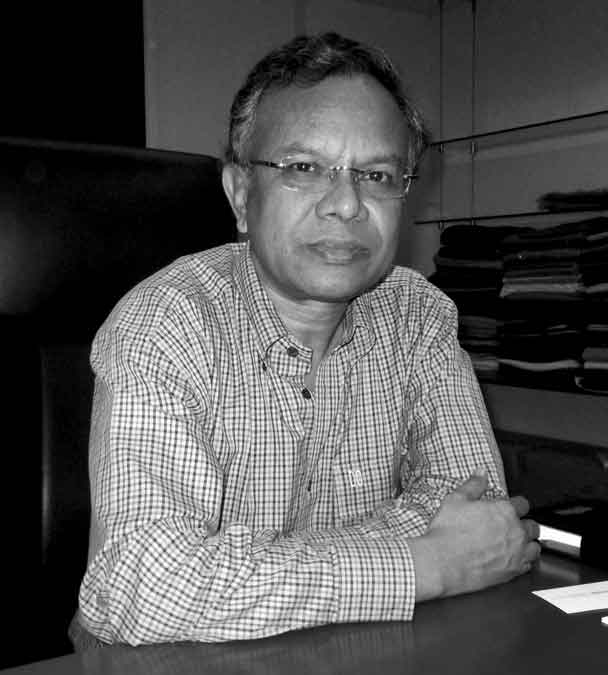
A civil engineer by qualification, Gazi Mohiuddin Ahmed, Managing Director, Wisteria Group, entered into apparel manufacturing in 1995 as JNG Fashion Fabric after studying different business models by visiting various factories in Tirupur and Turkey. As a strategic move he first started to cater to small quantity orders with 80 sewing machines, which was in deep contrast to the general Bangladeshi preference of working in large quantity orders. “Since I did not have a very big factory, it was imperative for me to create a niche in low volume high quality garments complemented with strong product development and swift turnaround capabilities,” reasons Gazi.
JNG Fashion Fabrics subsequently grew to handle 300 distinct orders per season for knitted apparels, with small quantities ranging from 2000 to 2500 pieces. Around 1997, came the big break when the Commonwealth of Nations engaged a consulting firm from Canada to select some factories for buyers in Canada and USA, and after consultation with the Export Promotion Bureau of Bangladesh, JNG Fashion Fabrics was chosen amongst the 8 shortlisted factories, from a pool of 200 factories. “The focus was on companies doing innovative product categories in small quantities. It was a turning point for my company,” asserts Gazi.
In order to tap the lucrative segment of volume business being sourced out of Bangladesh, Wisteria Textiles was setup in 2009 with 600 sewing machines and a totally different set of buyers. “Moving to a volume business model requires a completely different mindset, starting from identifying the right buyers. For this concept, my major buyers were companies like Aldi and the minimum order quantity was 50,000 pieces,” shares Gazi.
With a civil engineering background coupled with a concern for safety of its people and property, Gazi built a two-storey factory spread over 35,000 sq. feet, unlike most of the Bangladeshi companies, which are vertical and used only standard electrical fitting, sockets and other such equipments keeping in mind the safety of the workers.“Even in the initial years, I had foreseen that safety issue would be immensely important,” says Gazi. Wisteria Textiles has also worked with the Indian consultancy firm Technopak for improving its plant layout for optimising the internal material flow of the factory and to avoid many hazards that come with uneven work flow.“We handle 10 tonnes of fabric everyday so a lot of labour was required only for moving the fabric back and forth, as the entry and exit points for every department were the same. But now the departments have been repositioned as per the process flow, with every department having different entry and exit points,” explains Gazi.
Turkish inspiration on manufacturing is dominantly obvious, with the company focusing on value addition, majorly through R&D in fabric development, with expertise in Lycra blends and stretchable single jersey fabrics. Unlike the industry’s regular practice of knitting fabrics in different diameter to optimize fabric usage and marker efficiencies while cutting, Wisteria manufactures fabric in only one width to deliver consistent quality, which becomes difficult to maintain when the fabric width is variable. The company uses 28 gauge machines for manufacturing fabric, against the industry standard of 24 gauge machine, thus making them capable of manufacturing fabric with even finer yarns giving it a much better feel and quality. Not only this, the fabric processing is designed to finish only open width fabric which gives better results than its tubular counterpart and for that purpose the company has two Bruckner stenters from Germany to ensure the same.
Thanks to his zeal for Kaizen in fabric processing, Gazi prides himself on implementing few innovative initiatives to improve consistency in dyeing. “When we started dyeing, we would face shade variation in the lab dip every time, compared to the final fabric. The common excuse from the dyeing technician was that the variation was due to the difference in machinery, environment and quantity between the lab machine and the actual dyeing machine. But now we take the fabric for lab dip from the bulk grey fabric after it has gone through processing. Thus it has the same characteristic as the main fabric, so the colour retention is also the same. Although we do waste two hours in waiting for the fabric to be processed, but we do not take the risk of wasting almost 400 kg fabric in the first dyeing batch,” exemplifies Gazi.
Water and chemical use is another important concern in fabric dyeing, with most factories forced to use expensive machineries as the only solution for reducing water consumption. Having understood that water besides being the medium for the dyes, is also used to move the fabric in the machine, often creating functional hiccups like entanglement or knot formation in the fabric, Gazi worked out an indigenous and almost inexpensive solution for fabric movement without the need of water which also helped reduce water ratio, just by making changes and adjustment in the existing machines for fabric movement without dependency on water. “The intervention was implemented a year ago due to which the liquor ratio came down from 1:8 to 1:4, a saving of 60% and even the output increased by an additional 2.5 tonnes,” says Gazi.
Wisteria’s journey which began without any competition in exports because of low wages in Bangladesh, is taking a hit with the impending increase in wages, but the company is well prepared. “We are pushing our production managers and IE to improve our efficiencies. We are trying to reduce redundancies on the shop floor and make optimum use of the manpower, use motion study to improve efficiencies and work towards reducing the helpers by 20%, by focussing on planning and by strictly adhering to pre-defined Time and Action (T&A) calendars,” concludes Gazi.