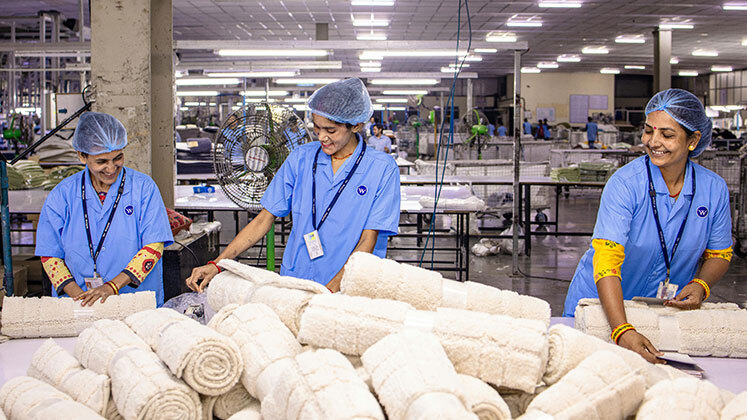
Amnesty International has called on major textile companies and the governments of four Asian nations to take concrete steps to uphold workers’ rights and guarantee decent wages across the garment industry.
The organisation, which released two reports on the issue, said fashion brands with manufacturing operations in India, Bangladesh, Pakistan and Sri Lanka must act urgently to strengthen protections throughout their supply chains.
Drawing on nearly 90 interviews conducted in 20 factories across the four countries, the reports highlight what Amnesty describes as widespread violations of freedom of association in the garment sector, including breaches of workers’ rights and incidents of harassment and violence allegedly perpetrated by employers.
Dominique Muller, a researcher on the textile industry at Amnesty, said that the fashion industry was, in the organisation’s assessment, built on the exploitation of low-cost labour. Muller said Amnesty believed that producing countries such as India, Pakistan and Sri Lanka were effectively pressured to keep wages low and to suppress unionisation in order to attract and retain business from major brands.
Despite the textile sector accounting for up to 40% of manufacturing jobs in these countries, Amnesty reported that workers remained underpaid and overworked, with limited access to fundamental rights, and were systematically deprived of protections through informal and precarious contracts. The organisation stated that the garment industry had still not adequately addressed the denial of these essential rights.
Amnesty said it had sent questionnaires to 21 companies, seeking details on their human rights policies, monitoring practices and concrete actions taken to safeguard freedom of association. However, the organisation concluded that there was insufficient evidence to determine whether such policies were being implemented at factory level.
Muller said companies needed to move beyond restating their commitment to freedom of association and instead adopt an active sourcing strategy that rewards suppliers and countries upholding this right.
The release of the reports comes as the European Union moves to weaken a proposed directive on social and environmental due diligence for large companies. In mid-November, Members of the European Parliament voted to scale back key elements of the legislation, narrowing the range of companies covered and removing several social and environmental obligations.