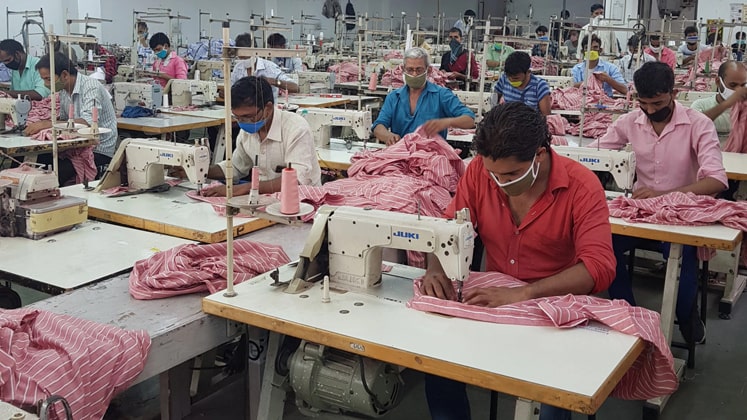
- Women workers are being called for stitching tests but they are refused despite having essential skills. The factories falsely claim that women don’t have the required skills for the specified jobs.
- Some of the factories are laying off women who get aged as ‘supervisors’ believe that with age, women’s efficiency gets reduced!
- A large chunk of garment factories don’t want to spend on women workers’ social security like leaves during pregnancy, and conveyance after the factory’s standard time; hence they avoid hiring them.
These are just three unfortunate examples out of many and this trend of not hiring women in garment factories of Delhi-NCR is insanely ridiculous, as a lot has been said about gender equality in garment factories of late. The situation on the ground level is not improving much. As per industry’s estimates, there are around 2,000 garment factories (catering to both domestic and export markets) in this region that offer employment to around 6,00,000 workers. Most of these employees are migratory male workers, while only about 20 per cent (120,000) of these workers are women!
For the past few years, many factories, reportedly, have not been preferring to hire female operators to avoid issues such as sexual harassment, and thus ‘save money’ on social security. For these factories, it is also easy to deal with male workers – be it the issue of overtime, hiring and firing, or pressurising to complete the production targets. Production teams or supervisors across the factories have a mindset that they can’t be strict with women operators, thus the situation is becoming worrisome for female fraternity who want to be employed but aren’t getting equal chances.
Equation is changing in post-Covid era
During the pandemic, a massive chunk of the workforce were left jobless. And when factories restarted their operations, they took the liberty to choose operators as per their convenience and majority of factories went ahead with men workforce. As market situation gradually revived and orders from buyers started pouring in, factories went for ‘over time’ (OT) to prepare the shipment on time and to see their operations back on track. This OT concept has never been preferred by most of the women as they do not want to work beyond standard time but, as market is reviving, factories need to utilise their resources as much as they can. Hence it was natural for factories, as they report, to avoid hiring of women workers, despite the fact that the women operators are more disciplined and more productive than their men counterparts!

“Research shows that in the post-pandemic scenario, a number of women operators/women workers in the value chain who lost their jobs during Covid, did not get it back. The unsteadiness of order flow has resulted in more contractual workers being hired and fired at will and some say it’s easier to get this done with men. Some factories also state that the higher costs associated with hiring women (providing transportation, child care, etc.) are difficult to maintain in this precarious time,” says Lakshmi Menon Bhatia, a Veteran of the apparel industry, who is also associated with Traidcraft, that is working with like-minded industry stakeholders and civil societies for the informal women workforce in the supply chain to come out with an industry-led solution.
She further adds that many women who used to work earlier in big factories were left with no choice than to work in lower tiers of the value chains and later on were made redundant there as well!
Swapan Kumar Kalra, Factory Manager, Richa Global, Noida shares with Team ApparelResources (AR) that women workers’ availability is little more in Noida compared to Gurugram and Faridabad as most of the migratory workforce is from Uttar Pradesh. “And they prefer to work in Noida as few of their family members are already working here that makes their living much cost-effective if they stay together.” Swapan is amongst those few who have increased hiring of women in recent months.
Rise in untoward incidents is restricting factories from hiring women
Swapan’s statements are also agreed upon by HKL Magu, Managing Director, Jyoti Apparels that’s located in Gurugram. Magu accepts that there are challenges having women workers in the factory. “Yes, there is a tilt in this region (NCR) towards hiring male workers. And this is natural because even if women’s complaints are proved to be false, they always and everywhere get priority and sympathy from everyone. So mindset change is required on all fronts,” mentions Magu.

By further digging into the claims, Team AR got to know from industry insiders that in recent months, untoward incidents are increasing in some of the factories and to avoid further complications, factories prefer not to have women workers or to keep minimum female staff. The majority of these incidents go unreported or supervisors/production and HR staff try to solve them at their level only without involving concerned authorities.
In one of such incidents recently, BL International, Noida – a leading export house – resumed production after three weeks of halt! As per the company, the production stopped due to a fight between one female and one male worker where they physically hurt and abused each other. The male worker even slapped the female worker! The issue escalated and the factory was forced to suspend another 16 workers who were creating violence and spoiling the whole environment. This is another reason being cited by factories behind not going for female workforce and that’s purely unethical.
VK Jha, Founder, AIDER, a pro-industry NGO working in Delhi-NCR, has observed alarming developments. He met the management of a few factories to discuss these unfortunate issues and surprisingly factory owners/senior management were not aware of all these developments. “Factories have assured us to look into the matter and we will keep following up with them,” said Jha.
‘Genuine’ reason or ‘Excuse’!
There is a ‘genuine’ reason also that some factories don’t hire women operators. A lot of factories still prefer to work on piece rate which requires multi-skilling. A trained tailor, fit for a piece-rate working system, normally performs four different operations while the majority of women have comparatively fewer skills and are more suited to work in the assembly line. However, the onus should be on factories only to train women for multi-skilling jobs.
Exceptions are always there
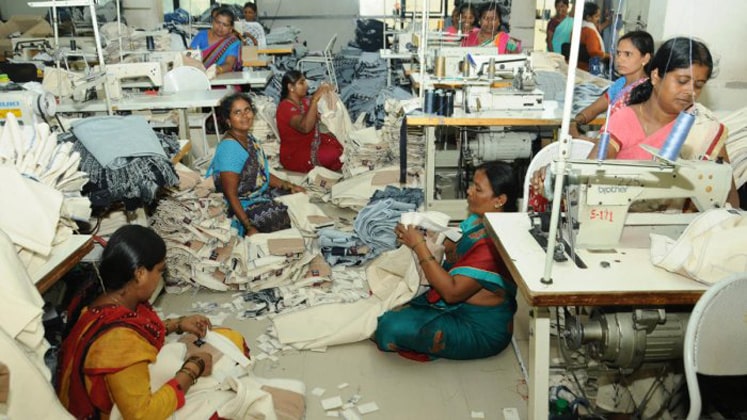
KPR Mill in South India is a perfect example as one of its garment units has employed around 97 per cent of women and this is rarely seen in North India, especially in Delhi-NCR. Only Shahi Exports (Faridabad) and a few other companies’ units have a good number of female workers employed with them. A few of the mid-scale factories are also exception as they are diligently trying to hire more women.
Animesh Saxena, MD, Neetee Clothing, Gurugram – a well-known exporter who is also associated with various trade bodies – has 30 per cent women in its factory and he is content with the women’s efficiency, discipline and sincerity. “The factories have immense pressure on the shopfloor, they fail to develop good working culture, and have some misconceptions regarding women hiring! This needs to be changed and this change can come when mindset of production people and HR managers changes as these professionals sometimes give wrong perception to their management,” avers Animesh.
Brands/buyers need to intervene
Without being biased, one can say that various brands and retailers have pushed the factories to have women in their workforce in recent years, though leading brands are still working with many such factories that have even less than 10-15 per cent female workers! And, it seems no solution is plausible until brands and retailers increase their thrust on the ground level and ask factories to have more women in their premises. Currently, brands and retailers are just focused mainly on women’s safety and to avoid sexual harassment, but they need to put emphasis on increasing the number of women as well at their vendor’ factories.
“Factories are mainly buyer-driven and brands have to translate their vision on the shopfloor for real women empowerment. Continuous soft skill and behavioural training is equally required. Factories have to realise that such training exercises have no major impact on cost. Overall the factory gets benefited by improving the work culture,” suggests VK Jha.
Earlier, lot of women operators used to come to factories of Delhi-NCR from training centres of states like Jharkhand, Odisha, etc. Such women workers have basic training and understanding of garment manufacturing. After joining factories in Delhi-NCR, they get completely exposed to the metro city’s culture and their expectations increase immediately. Due to this, they change factories even for a little higher salary. The situation would have been completely different had these female workers joined factories in South India like Tirupur or Coimbatore because they get dormitories or hostel facilities there and they rarely go out of their factory or hostel premises after work! These kind of facilities are required in North India too as such facilities help women in every aspect.
Another solution that is debatable but logical is that the higher number of women at mid and senior levels in the production team will also help to increase the number of women operators but factories need to change their mindset regarding this.






 Bharat Tex Special Report 2026