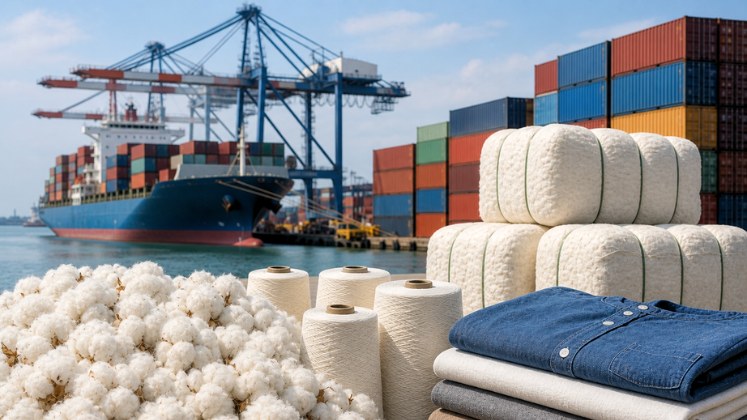
The Textile Ministry has proposed a temporary removal or reduction of import duties on raw cotton to ease input costs for apparel exporters amid the West Asia crisis, but the Agriculture Ministry has yet to agree.
The Textile Ministry said in a discussion with the Revenue Department that care would be taken to ensure that farmers are not adversely affected as duty cuts could be extended only during the lean season.
However, given the political and economic sensitivity of raw cotton, the Agriculture Ministry is treading cautiously and conducting multi-stakeholder consultations before making a final decision.
The Revenue Department has decided that any decision on removing or reducing import duties on raw cotton will be taken only after securing the Agriculture Ministry’s consent, indicating the process may be prolonged.
Garment exporters have separately approached the Finance Ministry seeking relief on duties. In a representation to Finance Minister Nirmala Sitharaman, the Apparel Export Promotion Council (AEPC) highlighted that cotton prices have been rising steadily due to ongoing geopolitical tensions and supply-side constraints.
The letter stated that cotton prices in Northern India have also increased by limited stock availability and mills are relying on auctions conducted by Cotton Corporation of India (CCI).
Meanwhile most of the cotton has already moved out of farmers’ hands and is currently held by traders. Rising yarn and fabric prices have further increased production costs, eroding the industry’s export competitiveness despite strong global demand.
The trade body urged for the immediate removal of customs duty on the import of raw cotton.
India, one of the world’s largest producers of cotton, imports from other countries to meet the demand during the lean summer months and also sources some superior varieties not available locally.
India’s cotton output for the 2025–26 season has been revised upwards by 3.50 lakh bales to 320.50 lakh bales of 170 kg by the Cotton Association of India (CAI), which indicates better crop prospects and stronger arrivals in key cotton producing states.