This Wednesday (29 April), Stefan Löfven, Prime Minister of Sweden, made a phone call to Sheikh Hasina, his Bangladeshi counterpart, and said, “We’ll continue importing RMG products from Bangladesh.” In this 15-minute discussion, he also assured that Sweden would not cancel any garment order from Bangladesh.
Sigrid Kaag, the Minister for Foreign Trade and Development Cooperation, Netherlands, also assured Bangladesh’s Foreign Minister AK Abdul Momen that the Dutch Government would ensure Bangladesh’s RMG value chain would not be disrupted. Dutch buyers will not cancel or suspend their orders from the Bangladeshi apparel factories.
Exactly a month ago, GerdMüller, Germany’s Federal Minister of Economic Cooperation and Development, also expressed a similar gesture on this issue in response to a letter from Dr. Rubana Huq, President of the Bangladesh Garment Manufacturers and Exporters Association (BGMEA).
There are various such examples of efforts made by Bangladesh that became successful to create pressure on brands and buyers, as major brands assured not to cancel orders. Indeed, apparel export should be the prime focus for Bangladesh; after all, it annually exports RMG worth US $ 34 billion, which is around 83 per cent of the country’s total exports, offering employment to nearly four million people.
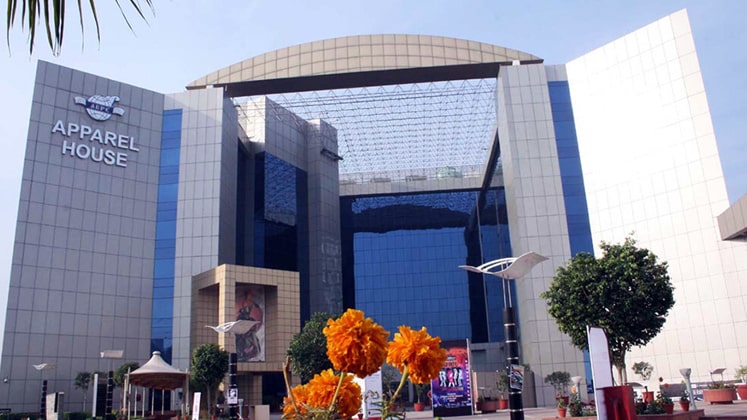
But the important question here is – in the current critical scenario, what is India’s nodal agency Apparel Export Promotion Council (AEPC) doing? The entire Indian industry is whispering about this.
When Apparel Resources raised this issue with AEPC, the agency replied, “The Council has taken first-hand feedback through surveys in terms of order cancellation and payment pendency. The Chairman has reached out and appealed to all overseas buyers not to cancel orders. He has also requested for giving 40 per cent of order payments urgently, so that the salaries and other such immediate expenses can be met.”
Around 50 letters have been written by the AEPC to the PM Office and various ministries and departments so far in this pandemic phase.
Apart from approaching the Government, which is a routine for AEPC, it is also engaging with Ethical Trading Initiative (ETI) and International Labour Organisation (ILO) for closer collaborative actions with the brands.
The Council, in collaboration with the Ministry of Textiles and the Ministry of Commerce and Industry, is exploring new buyers and products which may hold opportunities post COVID-19. It will shortly be engaging with embassies for B2B interactions.
Not only that, AEPC has also approached the BGMEA and Sri Lanka Apparel Exporters Association to join and strengthen the initiative related to Responsible Purchasing Practices taken up by Sustainable Textile of Asian Region Network of six producing and exporting countries.
But where are the results, as despite a lot of hue and cry, the Government has not made any special and major announcement for the apparel industry? Industry insiders confirm that renowned retailers, who have openly said that they are not cancelling orders, are putting such stringent conditions regarding discounts and delivery dates which are not viable at all for any exporter.
Having said that, there has been no official information by AEPC regarding the cancellation of orders and payment issues.
Struggling hard to survive, the entire Indian apparel industry, right from owners to mid-level professionals, compares activities of AEPC with BGMEA. This comparison has increased a lot during the time of COVID-19. AEPC shared its views on the same, “We are both working to the best of our capabilities for the industry. Both India and Bangladesh have different constraints and opportunities, and both organisations are trying to address in their specific ways.”
Though the scale of efforts made by Dr. Rubana Huq must be higher as compared to that of AEPC, all the endeavours undertaken by the BGMEA and AEPC lead to one observation – that AEPC and Indian apparel exporters are not actively present on social media. No leading and well-known Indian apparel exporters or even buying houses are aggressively using any of the social media platforms. And as business is all about sentiments, social media is unavoidable in this day and age.
BGMEA’s strong presence in western media also compels brands and buyers to react on significant issues regarding the RMG industry of Bangladesh, while India again misses here too.
As per industry estimates and various reports, when COVID-19 became a full-blown pandemic and countries across the world went in a shutdown mode by the mid of March, Bangladesh was gearing up to ship goods approximately worth US $ 12 billion, whereas India was shipping goods worth US $ 4 billion during the same time. Bangladesh industry came on the same platform, formulated an incredible strategy, created the communication and went to work with a vengeance. At the same time, India’s efforts were not so visible and effective.
Running few good projects of consultancy in apparel industry of Bangladesh and India, Nimish Dave, Founder and CEO, The Idea Smith, Gurugram, said, “Bangladesh has been running a very visible and successful campaign urging brands, stores and importers to accept the produced goods and not cancel them, make payments for the merchandise shipped and stay committed to the Bangladesh industry by ensuring fair and sustainable business practices. The results have been extremely satisfactory, while the response from India was lacking. An appeal made by the Textile Minister was visible, but there was no effective campaign by the AEPC, whereas, it was the time for a high decibel campaign by AEPC, Ministry and key voices of the industry.”
Moreover, Indian exporters still have hopes from AEPC for lack of any other option. Rajiv Kapoor, MD, Affordable Exports, Delhi, who is also a flag-bearer to make AEPC more effective, told Apparel Resources “AEPC should do marketing very aggressively at a global level, as many small and medium buyers now don’t wish to source from China, but they don’t have much idea about sourcing from India. Everyone has to think about the long-term. It is ‘now or never’ kind of a situation for Indians.”
It is also pertinent to highlight here that almost a month ago, AEPC initiated a survey to know the actual situation of Indian apparel industry, the result of which has not been made public yet. Also, while several big and small associations are conducting webinars almost every day, AEPC initiated the same only this month.
At the various seminars, industry leaders insist on learning from each other and focus on collective efforts. And now, this has become more relevant than ever, so the industry is looking towards AEPC with high hopes. Will its efforts convert into good results?