AO: What is so special about this new lab in Bangalore, and why?
Dr. Krause: Bangalore as a location plays an important role in the buying strategy of our international key clients. As speed of merchandise delivery for them is a key performance index, speedy delivery of testing service on that merchandise is a must for SGS as their business partner. Our lab in Bangalore is built-up to have another “proximity” service centre of excellence for our clients in softlines and restricted substances testing. One major vision at SGS is to have a high level of quality and competence in all our local but strategically very important laboratories, and Bangalore is one of them. We have a team of excellent and competent people here.
AO: Today, everyone is moving beyond social compliance, as it is increasingly being taken as given…, now the focus is on the environment…, what does SGS have to offer in this area?
Dr. Krause: SGS foresees environmental compliance becoming mandatory in the future, like social compliance, so as an upfront ‘global’ player for our global clients we have a couple of solutions available. On behalf, and together with key clients, like for example NIKE, adidas, Puma, ESPRIT and Li-Ning, we are working on service solutions for waste water and sludge testing in the world-wide production sites. We are offering training sessions to raise the awareness of the supply chains mainly in the production countries and also offering a lot of special consultancy, training and chemical auditing services around the very demanding topic of “zero discharge” of hazardous chemicals in the textile and footwear supply chain.
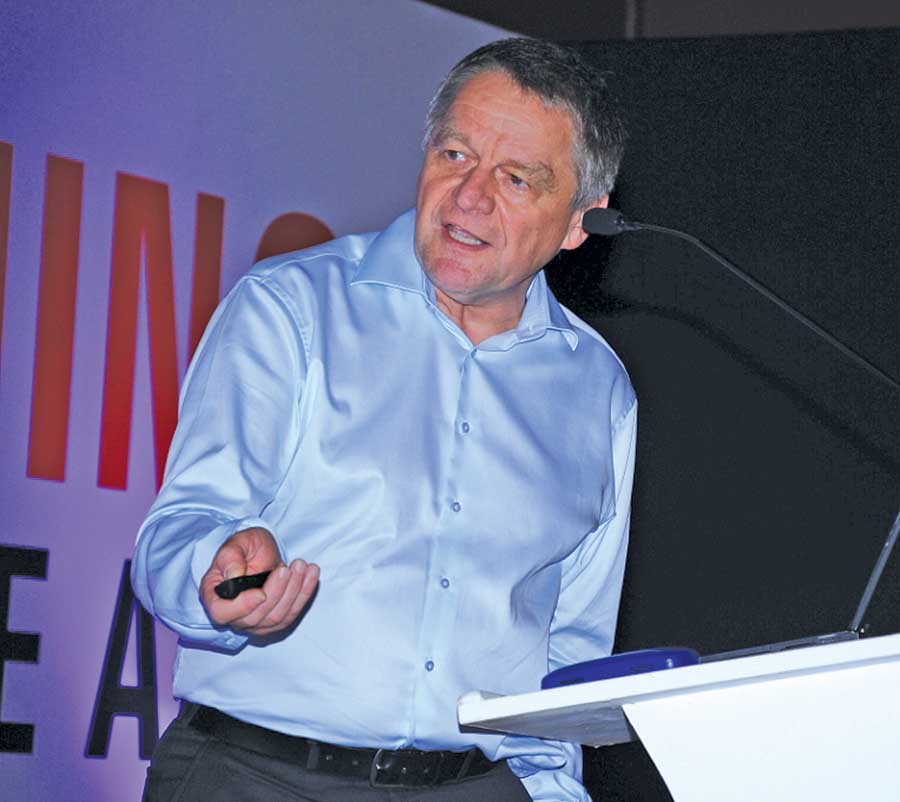
“Our lab in Bangalore is built-up to have another “proximity” service centre of excellence for our clients in softlines and restricted substances testing. One major vision at SGS is to have a high level of quality and competence in all our local but strategically very important laboratories, and Bangalore is one of them. We have a team of excellent and competent people here.”
AO: How are countries in Asia positioned on environmental compliance?
Dr. Krause: Listening to NGOs like Greenpeace, it is obvious that there is still a lot to do concerning environmental compliance. Especially in China, while still being the biggest producer in the fields of textiles/clothing and footwear, has a long way to go as the pollution levels are still very high if not too high in China. Other countries have similar issues. To the best of my knowledge there is not yet any governmentally-driven environmental protection system in place in Asian countries that would really be suitable to start immediate actions; this should be taken up without delay.
AO: How is India positioned…, has the awareness and pro-activeness on environmental compliance increased over the past few years?
Dr. Krause: There is some proactivity, but no nationwide enforcement to regulate effluent discharge. We saw good activism in Tirupur in last few years and the industry has aligned to zero discharge requirements. There needs to be a national policy with strict adherence and enforcement mechanism.
AO: Bangladesh has faced a lot of backlash on safety issues… What is the position with regards to environmental compliance?
Dr. Krause: To the best of my knowledge I do not see any real action taken in Bangladesh, neither by the Government nor by the industry associations to stop environmental pollution. May be some local activities have been started but I do not see a general approach yet.
AO: As a new company that wants to become environmentally compliant, what are the three critical steps that need to be taken to begin this journey?
Dr. Krause: Step one: Awareness and detailed understanding of the total challenge. Step two: Top management commitment and implementation of a key management system and management functions to implement and follow a stringent management of chemicals and materials used in the supply chain. Step three: Implement all systems needed on a local scale, like waste-water treatment, air emission control and energy saving measurements.