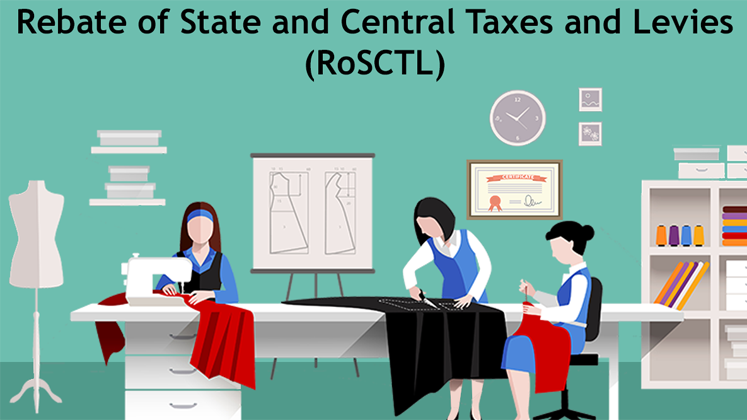
India’s apparel export industry may face losses worth Rs. 1,500 crore due to imbalances in “Rebate of State and Central Taxes and Levies (RoSCTL). Industry leaders have urged the Government to address this issue immediately.
Vijay Jindal, Member, Export Promotion, AEPC & President, GEMA (Garment Exporters & Manufacturers Association)and promoter of SPL Industries, one of the largest apparel exporters, said“RoSCTL scheme provides rebate against the taxes, levies, etc. already paid by the exporters on the input.”
He added “This rebate has been converted into scrips that are tradable, i.e., exporters can sell scrips to the importers who, in turn, can pay import duty with these purchased scrips as an alternative to cash import duty payments. The same was in discount earlier also, but now the discount has gone up from 3 per cent to about 20 per cent.”
This discounting of scrips benefits importers, who are taking undue advantage at the cost of exporters.
Based on estimated calculations, of the total US $ 16 billion in apparel exports, around 5 per cent is reimbursement, which is roughly Rs. 6,000 crore. At a broad level, given a discount of 20-25 per cent on this, there is a direct hit of around Rs. 1,500 crore on the feeble margins of companies operating in the apparel sector.
Harish Ahuja, Executive Member, AEPC & Management Committee Member, and MD, Shahi Exporters, India’s largest apparel exporter,said “At present, demand for such scrips is very less as exporters are finding it difficult to find enough importers who can buy the scrips obtained under the RoSCTL scheme. Lack of demand means that importers offer to buy scrips only at a steep discount of up to 20 per cent. If not addressed, India may lose its edge in global textile markets.”
Even though the scheme was launched with the intention of making India’s textile industry competitive and bolstering the exports, these changes are acting against the Government’s intention of benefitting exporters and are instead benefitting importers. This defeats the very purpose and intent of this entire scheme of promoting the Government’s stated policy of ‘Make in India’ for the world.





 Bharat Tex Special Report 2026