India’s textile and apparel industry is currently at a very interesting as well as crucial juncture. As per official export data,India has shown signs of recovery in the first nine months of FY ’22 and textile and apparel exports increased by 40.56 per cent on Y-o-Y basis, achieving nearly 68 per cent of the set target for the year, with three months yet to go. The efforts of the Indian Government have been commendable in recent months as they have launched policies such as PLI Scheme, MITRA Park etc., to attract major investments in order to boost production of textile and apparels within the country and they are aggressively monitoring the recently set target of US $ 100 billion of export turnover by next 5 years.
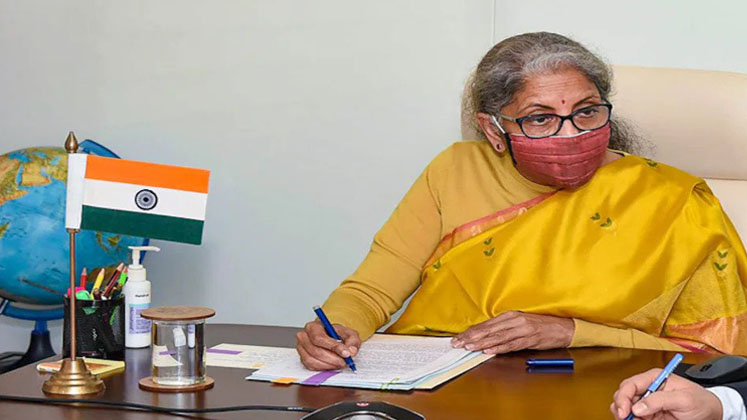
Since Budget announcement for FY ’23 is just a few days away, the industry is expecting the efforts of the Government to be more result-oriented rather than being limited to mere paperwork.At the same time, there are prolonged challenges such as high price of raw material, especially cotton and cotton yarns, and high rate of GST on garments below Rs. 1000(that was just deferred not withdrawn)which the industry wants to see addressed in the Budget presented by Finance Minister Nirmala Sitharaman on 1st February.
This budget becomes even more important for the industry as the pandemic is still here to stay and the economy is facing some headwinds.Just to cite an example – December’s retail inflation climbed to a five-month high of 5.59 per cent. The latest report of Oxfam says that the income of 84 per cent of Indian households fell in 2021, while more than 4.60 crore Indians were estimated to have fallen into extreme poverty in 2020 alone.
Irrespective of previous experiences, the Indian textile and apparel industry is optimistic about its demands. Here is a deep dive into what the industry is demanding from the budget in the current scenario…
Burning Issues that need serious attention in Budget…
The industry has been strongly demanding the removal of 11 per cent import duty on cotton as well as a ban on raw cotton export. And, it is a highly crucial issue as the reduction or complete withdrawal of the import duty on cotton would go a long way in increasing the overall turnover of the industry. The leaders within the industry are strongly of the view that the Government should equally draw attention to how the yield of the cotton can be increased by improving the quality of seeds due to the gradual shortage in yields and they also need to have an eagle eye on improving these yields in order to increase production.
Atul Ganatra, President, Cotton Association of India says, “Government should issue good fund for the development of cotton seeds as India’s cotton productivity level is now among the lowest in the world. Increased cotton yield will benefit right from farmers to end users in the entire supply chain.”
Apparel Resources (AR) has recently reported that Import duty on cotton may get removed soon as MoT is also under pressure for this.Similarly apparel manufacturers are also demanding to regulate the export of cotton yarn and fabric exports too need to be regulated. Especially, as the year 2022 is all set to see revival of the Indian textile industry buoyed by the overseas demand for Indian textile and apparels, this regulation becomes a key discussion point. Global factors are also in India’s favour like a massive slowdown in the Chinese economy clubbed with the anti-China industry sentiment have helped the Indian textile sector to grab a bigger share of the international market.
Vinod Kumar Gupta, MD, Dollar Industries Limited, Kolkata also highlights concern over raw material and says, “Right now, both the retail and hosiery industry are under tremendous pressure due the price of the cotton yarn. We have spoken to Union Textile Minister, Piyush Goyal urging him two things – firstly, to abolish import duty on inward cotton so that the import becomes cheaper than the domestic prices and secondly, impose export duty on cotton yarn so that the industry does not suffer anymore.”
Dr. S N Modani, CEO & MD, Sangam India Ltd, Bhilwara who is also associated with some leading trade organisations believes, “This is an ideal time for the Finance Ministry to announce some supportive measures which would strengthen the industry’s position in the global markets. A strategic reduction in the GST tax slabs (from 18 per cent to 12 per cent) on Polyester Stable Fibre(PSF)and Viscose Stable Fibre(VSF) would only help stabilise pricing and increase demand. The 5 per cent tax on fabrics should be maintained in the future as well.”
AEPC has sent detailed suggestions on the apparel package to the Ministry of Finance and the Ministry of Commerce. And it includes providing cash refund of RoSCTL or to allow payment of IGST as well; restoration of the facility for import of Trimmings and Embellishments, etc.;clarification with respect to procurements made under advance authorisation after payment of IGST; changes in Emergency Credit Line Guarantee Scheme (ECLGS) for the apparel sector; a longer window for interest equalisation and allowing palletisation of apparel cargo for customs clearance mainly.
At the same time, industry is also expecting sufficient allocation for all major schemes of Government like ATUF, RRTUF, RoDTEPD, RoSTCL etc.
Here it is worth mentioning that a new scheme will replace the Amended Technology Upgradation Fund Scheme (ATUFS), which ends on 31 March 2022. And this new scheme might be announced in the Union Budget.
With regard to budget specific for MoT, it is also worth mentioning here that in recent years, allocation to textile industry has not been very enthusiastic. (See Table below)
| Year | Budget allocation (Rs. crore) |
| 2016-17 | 6,286.1 |
| 2017-18 | 6,226.5 |
| 2018-19 | 6,943.26 |
| 2019-20 | 4,831.48 |
| 2020-21 | 3,514.79 |
Irrespective of the interests of the fragmented supply chain and issues of various stakeholders, everyone at present is insisting on a growth-oriented and holistic budget. And this is the need of the hour. “Against the backdrop of the pandemic and an economy facing some headwinds, I look forward to a well-rounded and growth-oriented holistic budget. This budget should embrace all sectors through various growth measures that will boost economic activity,” says Rahul Tikoo, MD, Huntsman India.
He further adds that recognising the potential of this sector, the Government has already outlined a strategy in line with its call for Atmanirbhar Bharat, and we hope that efforts to improve the competitiveness of the industry shall continue to be on the economic agenda. All policy initiatives should be aimed at establishing India as a differentiated global manufacturing hub.
Hub-specific pending demands…
Apart from policy level issues, the industry every year expects some specific support to a particular cluster. Some of such demands have been raised time and again on various platforms but are still not fulfilled.
In Telangana, Industries Minister KT Rama Rao has sent a long list to the Ministry of Commerce and Ministry of Textiles for the state which includes around Rs. 898 crore to be sanctioned for taking up infrastructure development at KMTP. Similarly he has urged the Centre to sanction the mega powerloom cluster at Sircilla with a funding of Rs. 49.84 crore out of the projected outlay of Rs. 993.65 crore towards filling the various gaps and to implement several components.
In Tamil Nadu, Tirupur’s apparel exporters have been long asking for Knitwear Board to be developed at Tirupur with an attached R&D facility. Being dependent majorly on migratory workers, this hub also seeks support for labour housing and it can be an incentivised scheme like giving tax benefits to those companies which build houses for their labourers.
Insisting on these demands, Raja M Shanmugham, President, Tirupur Exporters’ Association (TEA) says, “Further the already available housing subsidy schemes need to tweaked to support the housing projects to be taken up in industrial clusters like Tirupur.”
Micro and small players’ concerns…
The major part of the textile industry is MSME-based while the recent schemes like PLI and MITRA are mainly for large players. Owing to working capital crunch and for managing finance, MSMEs are seeking support on financial front. Rajiv Chawla, Chairman of industry body IamSME of India highlights, “It is the removal of prepayment and foreclosure penalty on loans for MSMEs. The Government’s flagship PLI-scheme is now only for large investors. It should introduce a similar incentive programme for SMEs.”
As everyone expects that condition will be normal in future, micro and small players will be more aggressive for marketing activities. For this, physical fairs are a major tool for them. Representing micro players, Tapasvilal Jain, President, District Jeans Garments Merchants Association, Bellary (Karnataka) adds an interesting view, “We require aggressive marketing in countries where our presence is negligible and small buyers are dominating these markets. So we should get support to tap these markets and travel for the same.”
As Minister of Textiles Piyush Goyal is on toes for FTAs, industry is of the view that 2022 will be the starting year for FTAs. “India need to send a signal as one of the most progressive economies and open for a more free trade regime. We need to open up few sectors to other countries so as to gain market reach for our strong products in those countries. We expect Budget may send some strong signals in this regard,” says Prabhu Damodaran, Convenor, Indian Texpreneurs Federation (ITF), Coimbatore.
Key demands and expectations from the Budget
- Remove duty on cotton import
- Good fund for the development of Cotton seeds
- To provide cash refund of RoSCTL or to allow payment of IGST as well
- Changes in Emergency Credit Line Guarantee Scheme (ECLGS) for apparel sector
- Request for a uniform GST rate of 8 per cent for fibre, yarn, fabric and garments of all fibres types
- Restoration of facility for import of Trimmings and Embellishments, etc.
- 15 per cent Concessional Tax Regime (CTR) for expansion to boost the investment may be extended to new units, set-up in existing manufacturing companies
- Schemes like PLI or special package for MSMEs
- IGST paid route for procurement of inputs by Advance Authorisation holders while taking goods from SEZ
- Allowing palletisation of apparel cargo for customs clearance