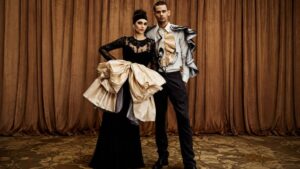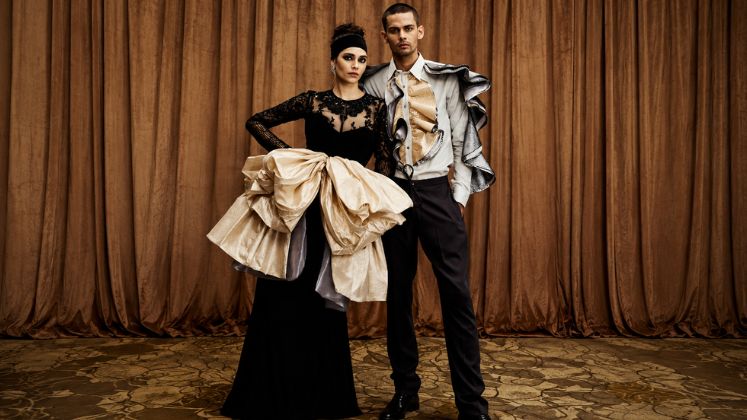
Fashion’s Fall/Winter 2026 season has crystallised around a single dominant mood: dark romance. Described by buyers and editors as a mash-up of feminine drama and masculine tailoring, the trend pairs lace, satin and velvet against starched shirting and structured silhouettes, finished in a largely monochrome, gothic-tinged palette.
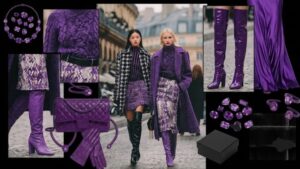
The look emerged strongly out of London, where Erdem and Simone Rocha anchored a darkly romantic, gothic glamour that became the connective thread of the season. Milan and Paris reinforced the direction: Gucci’s Demna Gvasalia debut leaned into inky, second-skin silhouettes, while Saint Laurent and Tom Ford both showed latex and lace paired with vampy collars. NET-A-PORTER’s buying team has flagged the shift as more wearable than previous seasons’ extremes, with slim tailoring and structured silhouettes dominating runways, balanced against velvet, charmeuse and leather, and a palette moving toward chartreuse, deep red and rich purple.
Editorial coverage frames the trend as literary and Victorian-inflected. Dark romantic dressing has been described as sitting somewhere between gothic film references and a windswept literary heroine, built on corsets, black lace, velvet, sheer layers, oxblood tones and antique jewellery. Industry commentary has also linked the trend’s staying power to entertainment — the anticipated release of Practical Magic 2 and pop culture’s broader fascination with gothic storytelling are cited as accelerants. On the runway specifically, Ann Demeulemeester showed silk and chiffon bodice dresses, Saint Laurent leaned into jewel-toned lace, and Alexander McQueen layered feathered bolero-style shrugs over corsetry and lace, reinforcing the season’s moody, contrast-driven construction.
At the accessible end, the aesthetic is already filtering into commercial retail. Essentiel Antwerp’s check dress, Sea-M’s tailored shirting and La DoubleJ’s feather earrings illustrate how the trend is being priced and merchandised for a wider audience — check and lace paired against classic shirting, with texture-forward accessories completing the look.
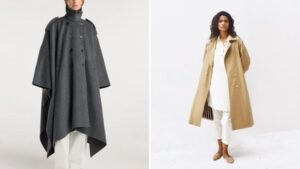
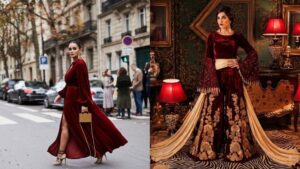
Indian fashion media has already begun contextualising dark romance for a local audience. Domestic coverage has translated the trend for Indian winters by layering dark-hued trenches over lace dresses, with soft curls and cool-toned makeup rounding out the look, adapting the mood to the country’s shorter, milder cold season rather than the heavier coats and shearling driving it in European markets.
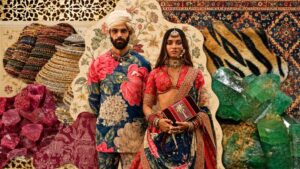
Corsetry already has domestic infrastructure to build on. Tarun Tahiliani runs a standing corset line within his ready-to-wear, and multi-designer platforms including Pernia’s Pop-up Shop and Bangalore-based studio label Mogra Designs carry dedicated corset edits, giving Indian buyers an existing entry point into the structure. The silhouette has moved well beyond niche positioning too: lehengas with corset tops and fishcut skirts have entered the mainstream, pairing traditional lehenga volume with crop tops, jackets or sheer panels for a more structured, runway-adjacent shape.
On the D2C side, the anarkali is the garment doing the heavy lifting. Koskii, Soch and Libas are rebuilding the anarkali around lighter fabrics, sharper fit and accessible pricing, moving the silhouette out of pure bridal trousseau and into everyday wardrobes, a shift in construction that leaves room for lace panelling and monochrome palettes to sit naturally within the category. At the newer end of the market, labels like JOVI India are already working lace detailing and fine thread embroidery into anarkali and sharara sets, giving the aesthetic a foothold in mid-market festive wear. Emerging studio-scale labels focused on corsetry and structured silhouettes are the segment best placed to push the look furthest, since their design language already leans closer to Western tailoring than to traditional Indian draping.
Bridal and occasion wear remain where the silhouette shift is most visible for now; corseted lehengas, structured anarkalis, fishcut skirts, while casual and daily wear is likely to follow at a slower pace as the season’s collections roll out over the coming weeks.