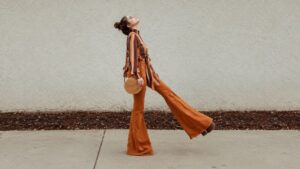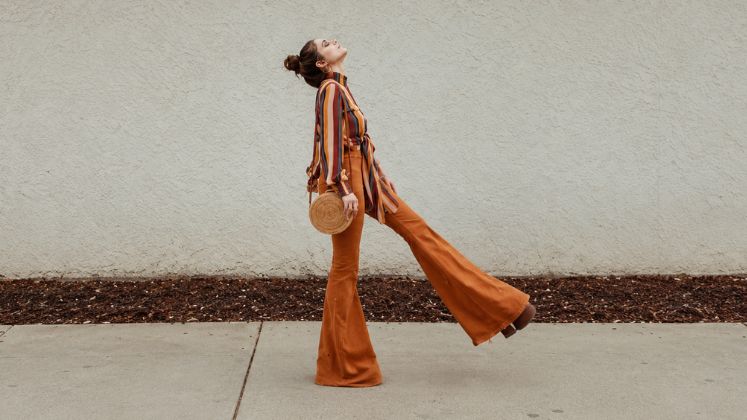
As the industry moves past camel and beige fatigue, a warmer, more saturated earth tone is asserting itself for Fall/Winter 2026: scorched paprika, sitting at the intersection of rust, burnt sienna and copper. Pantone’s Autumn/Winter 2026-27 New York Fashion Week colour report flagged this warm-earth register as a defining thread of the season, positioned alongside more expressive hues rather than as a standalone neutral this time around.
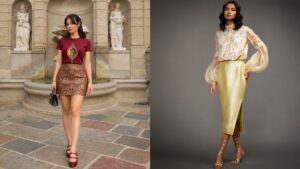
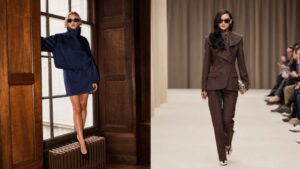
On the runways, the shade showed up with real conviction. Orange-family tones like persimmon, rust, burnt orange and pumpkin spice, appeared across Chanel and Dior, and also dominated Milan Fashion Week street style. Warm medium browns more broadly cinnamon, burnt sienna, rust, terracotta, copper brown and cognac are gaining ground this season, offering more depth than beige without tipping into chocolate or espresso. Copper’s emergence is noted as one of autumn 2026’s most under-the-radar colour trends, adding warmth and a subtle sense of luxury in place of one-note beige, with strong appearances at Chanel, Saint Laurent and Zimmermann. The tone reads well in boho dressing, tailored jackets and in tonal dressing paired with denim, olive or camel.
The shade has clear traction across Indian price points and design philosophies. At the mass end, Fabindia’s Rust Viscose Silk Printed Long Kurta puts the trend within everyday reach via hand-block printing. Mumbai-based handloom label Suta has built the colour into a recurring house staple, spanning its “Rust E Chumki” sequinned mul-cotton sari, the plain “Rustic” mul-cotton drape, and a “Rust Eri” viscose-blend blouse. At the designer end, Sanjay Garg’s Raw Mango offers a more directly metallic articulation with “Reis,” a rust silk-organza sari hand-embroidered in dori kaam, alongside Banarasi sarees finished with copper zari borders and butis. Anavila, known for reinventing the linen sari, has taken the tone to a brand-identity level, its new Delhi flagship was built around terracotta as a core material and colour cue, alongside natural light and a ber tree.
At the more off-beat, slow-fashion end, 11.11/eleven eleven’s “Orange Rust Wide Pleated Pants” show the same shade produced through natural dyeing, a blend of rubia, iron rust and harda solution on handwoven linen, offering a craft-first counterpoint to the trend’s mass and premium expressions.
Taken together, the range from Fabindia’s block-printed kurta to 11.11’s naturally-dyed linen trousers, suggests scorched paprika isn’t confined to a single price tier or design sensibility in India; it’s being interpreted across the spectrum, from accessible ready-to-wear to slow, artisanal production.
For Indian D2C and export-facing labels, this gives paprika a rare double mandate, a shade validated on the global runway calendar while carrying inbuilt festive and craft associations at home, from Ajrakh and bandhani dye traditions to zari-woven silks.
For Indian manufacturers and brands supplying both domestic festive/wedding demand and international private-label or export orders, scorched paprika offers a genuine cross-season, cross-market colour, one that doesn’t require a separate story for Diwali/wedding buying versus AW26 international sell-in. Handloom and craft clusters working in natural dyes (madder, rust-toned vegetable dyes) are well positioned to capture this palette authentically rather than reproducing it synthetically.