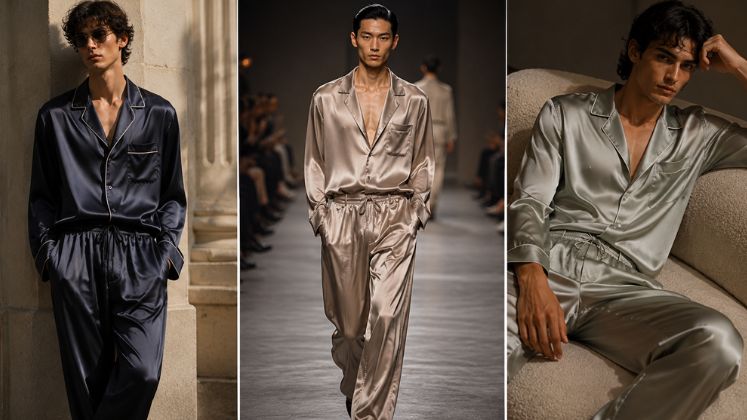
Satin, long confined to pocket squares and neckties in menswear, has moved to the centre of the wardrobe this year. Where tailoring and utilitarian fabrics once dominated, designers across Paris, Milan and Mumbai are now building entire looks around the fabric’s sheen and drape.
The appeal is practical as much as aesthetic. Satin weaves, whether synthetic or silk-based, are typically lightweight and breathable, and silk satin in particular carries natural cooling properties; a functional case for the fabric as menswear leans into heat-conscious dressing. That functionality dovetails neatly with pyjama dressing’s rise: a satin shirt or a pair of satin shorts worn against everyday separates, or a satin scarf knotted loosely at the hip, translate the trend without demanding a full look.
The fabric trend was emphasized greatly at the Paris menswear shows, where Willy Chavarria sent out a full look in floral satin, Celine worked pure white satin into shirting and trousers. GmBH pushed the fabric into unconventional territory with a golden satin V-neck, and Ami Paris used a silky brown satin overcoat to soften its outerwear.
Amiri crafted embroidered silk and satin jackets and dressing gowns for its SS26 collection, complete with tasselled key rings echoing five-star hotel robes, while Dolce & Gabbana gave nearly every look in its SS26 lineup a pyjama-dressing sensibility.
Forecasters expect the fabric’s momentum to build further: SS27 menswear previews already point to satin shine as one of the season’s defining directions, alongside sheer shirting and shorter silhouettes.
In India, the fabric is taking a parallel but distinct route.. At Lakmé Fashion Week X FDCI 2026, menswear had its strongest showing yet, with designers reaching for satin-adjacent silks and shimmer to update ceremonial dressing.
Anamika Khanna’s AK|OK styled its menswear debut looks with shiny satin sneakers, threading the fabric’s gloss into footwear even where garments leaned restrained.
Vivek Karunakaran’s opening menswear showcase, “The Thangam,” built ceremonial silhouettes from raw silks, tussar and organza in gold and earthen tones, the same lustrous, fluid family of fabrics that satin belongs to, signalling that Indian menswear’s appetite for sheen extends well beyond the West’s pyjama moment.
Satin’s crossover from occasion-wear trim to a standalone menswear fabric gives Indian designers and D2C festive-wear labels a ready-made bridge between bandhgala tradition and contemporary global tailoring. With Lakmé Fashion Week’s Boys’ Club showcase confirming menswear’s growing runway weight, and global houses validating satin as everyday wear rather than eveningwear alone, Indian brands have an opening to reposition satin shirting and jackets as year-round pieces, for a market where lightweight, breathable fabrics already carry strong seasonal logic.