For the denim industry, 2026 is less about disruption and more about recalibration of what is already present on the table. What was once a dependable basic is now being positioned as a strategic category – one that anchors wardrobes, bridges casual and formal dressing, and offers brands a reliable vehicle for both volume and value creation. Across global runways and retail, denim is being elevated through restraint, refined through detail, and expanded through experimental styling techniques.
This shift is being driven by a consumer who is editing more ruthlessly, one who is prioritising longevity, versatility and opting for pieces that justify their place in a tighter wardrobe. In response to these consumer preferences, designers are reworking denim with a sharper lens, while brands are building more intentional assortments that move beyond seasonal novelty.
In this report, we breakdown how menswear and womenswear are shaping this evolution, before unpacking the key trends and how they have been interpreted on the global runway and what that means for business in order for you to make informed decisions to plan your next assortment.
Menswear: Between Experimentation And Reset
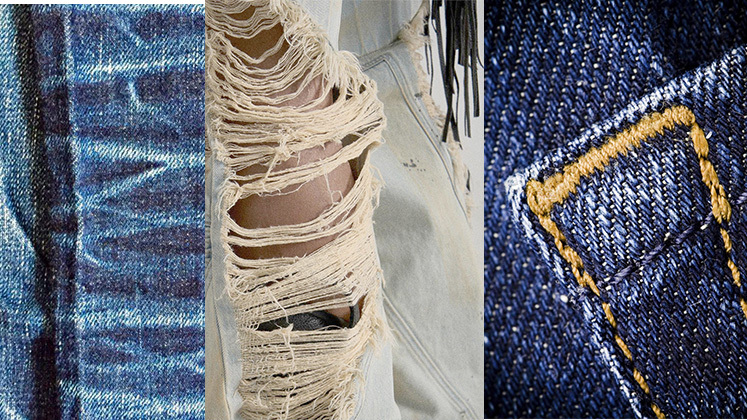
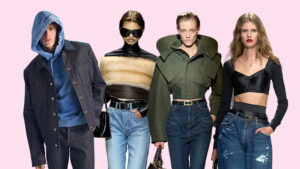
2026 sees denim operating in dual modes: on one end, we have designers pushing proportion and construction with players such as Juun.J showcasing exaggerated, panelled volumes that taper into ballooned ankles, offering a sculptural take on denim that feels almost architectural. Similarly, Junya Watanabe’s collaboration with Shawn Stüssy and Levi’s reframed patchwork through a more engineered, hybrid lens that is less bohemian, more considered.
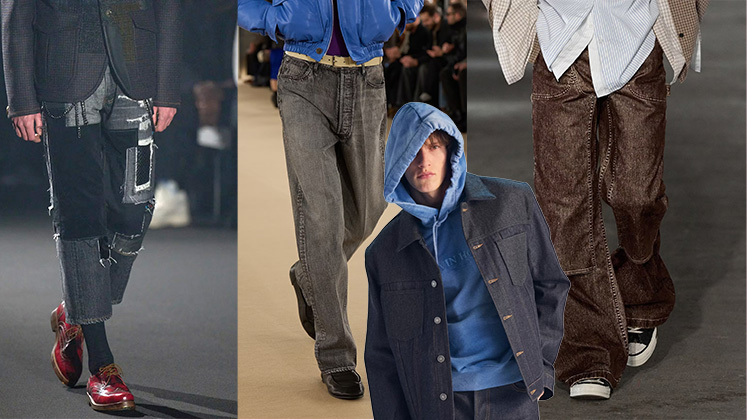
On the other end, there is a deliberate return to grounding silhouettes. At Dior Homme, Jonathan Anderson opened with straight-leg jeans that were depicted via a plethora of washes, styled with an ease that reinforced their role as wardrobe constants. Willy Chavarria paired classic denim with leather outerwear, reinforcing a utilitarian masculinity, while Lanvin leaned into raw indigo sets-jeans paired with matching jackets and logo hoodies-to underscoring the importance of coordination.
What emerges is a layered market: directional pieces that drive attention coupled with foundational fits that drive volume. For brands, this duality is essential- men’s denim must balance experimentation with reliability.
Womenswear: Polished Lines, Elevated Surfaces
In womenswear, we see denim being recontextualised through refinement and embellishment. The return of the slim silhouette is impossible to ignore- seen at Balenciaga in high-waisted dark washes styled with cropped utility jackets, and at Gucci where lighter slim jeans were seen paired with elevated elements such as leather and fur, thai signals denim’s move into more polished territory.
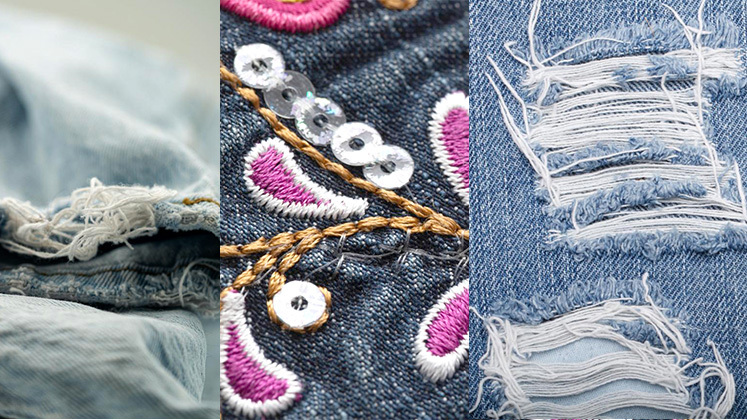
At the same time, surface detailing is experiencing an all time high. Diesel pushed distressing to an extreme, integrating diamante studs and even layering sheer tulle over denim, effectively blurring the line between casualwear and occasionwear, while Christian Dior approached embellishment through a couture lens, with crystal embroidery referencing archival motifs. Stella McCartney and Ann Demeulemeester explored patchwork and distressing in a more relaxed, artisanal way.
Coordinated dressing continues to gain traction with Conner Ives introducing embellished denim sets with intricate trims, and Kseniaschnaider presenting bustier-and-skirt combinations with strong paneling. Zadig & Voltaire offered embellished skirt suits-each reinforcing the idea that denim is no longer a standalone category but part of a complete look.
Thai season, womenswear denim is expected to deliver both polish and personality, with enough design interest to stand apart while remaining wearable.
Key Denim Directions for 2026
Elevated Darks: Depth as a Marker of Value
What
A move towards deep indigo, inky blues and richer, warmer rinses that replace lighter, overly processed finishes.
How designers presented it
Runways consistently reinforced the sophistication of darker washes. At Balenciaga, slim dark denim was styled with utilitarian outerwear, grounding the look in modern practicality, while Lanvin’s raw indigo sets leaned into uniform dressing. Dior Homme’s darker tones were presented alongside cleaner silhouettes, emphasising polish over distressed versions.
Why it matters
Darker washes inherently signal quality and longevity, both of which emerge as key drivers in a market where consumers are spending more cautiously but at the same time, expect more from each purchase.
Business integration
Brand sand designers should look at increasing the share of dark washes across both core and fashion lines while positioning them as wardrobe anchors through tonal merchandising and elevated styling in order to ensure they transition seamlessly from casual to smart contexts.
Controlled Silhouettes: The Return of Line and Proportion

What
A shift towards refined, controlled silhouettes ranging from straight, slim and subtly flared, over exaggerated extremes.
How designers presented it
Jonathan Anderson’s opening looks for Dior Homme spotlighted straight-leg jeans that were styled simply to emphasise cut. In womenswear, Balenciaga and Gucci leaned into slim, high-waisted fits, often paired with structured outerwear to enhance proportion. Even when volume appeared, as with Juun.J, it was engineered and intentional rather than purely oversized.
Why it matters
Consumers are seeking silhouettes that feel current but not fleeting- essentially pieces that can remain relevant across seasons.
Business integration
Focus on perfecting fit blocks. Invest in consistency across sizes and washes, and ensure silhouettes are versatile enough to work across multiple styling contexts.
Surface as Value: Craft, Texture and Visibility
What
An increased emphasis on surface detailing ranging from patchwork, embroidery, embellishment and distressing, as a means of adding value to the product.
How designers presented it
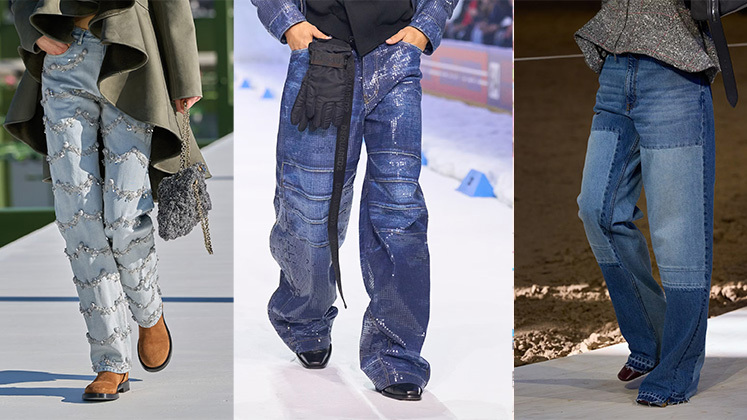
Diesel’s heavily distressed, studded denim pushed maximalism, while Dior’s crystal-embroidered jeans offered a more refined, couture-driven approach on international runways. Stella McCartney and Ann Demeulemeester used patchwork and tonal contrasts to introduce texture without excess, while Junya Watanabe’s hybrid constructions elevated patchwork into something more architectural.
Why it matters
In a competitive market, visible design effort helps justify price points and differentiates product from a noisy environment.
Business integration
Designers and brands should look at adopting a tiered approach- one that is clean and offers minimal basics for volume, complemented by statement pieces with higher design input. At the same time, capsule collections can be used to test more experimental treatments.
Denim as a Set: Coordination as a Selling Tool
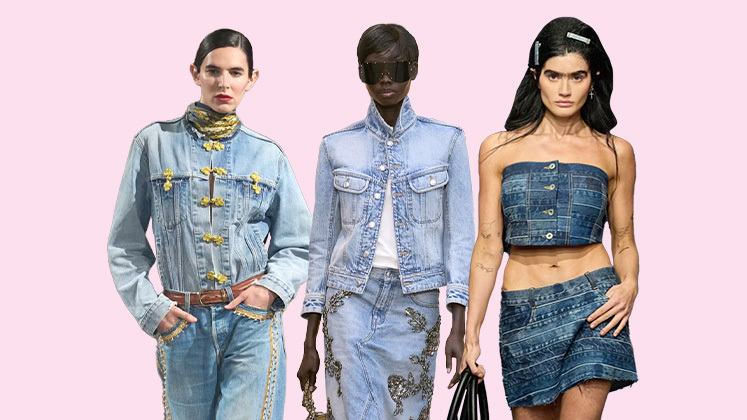
What
The evolution of denim-on-denim into cohesive, head-to-toe looks.
How designers presented it
Lanvin’s matching denim sets in menswear reinforced uniform dressing, while Conner Ives introduced embellished co-ords with intricate detailing. Kseniaschnaider’s bustierand-skirt combinations and Zadig & Voltaire’s embellished skirt sets further demonstrated denim’s potential as a fully styled proposition.
Why it matters
Coordinated dressing simplifies styling for consumers while increasing overall basket size for brands.
Business integration
Design with pairing in mind from the outset. Merchandise sets together, both visually and commercially, and look at bundled pricing strategies to drive full-look purchases.
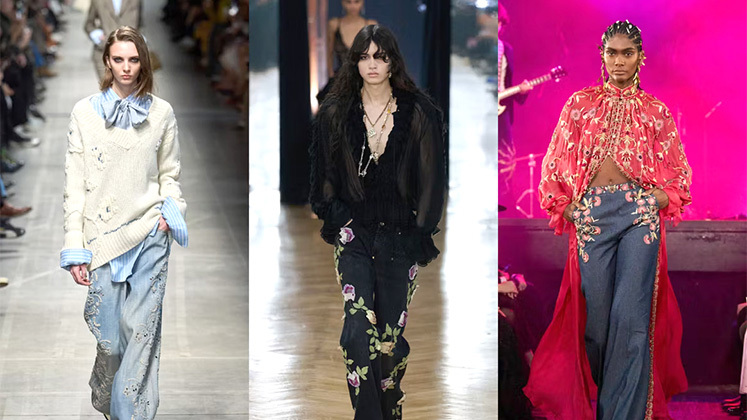
Decorative Femininity: Bold Florals and Soft Detailing
What
The integration of floral motifs and softer detailing into denim, often in bold, highly visible ways.
How designers presented it
From Dior’s intricate embroidery to Zadig & Voltaire’s rhinestone appliqués, florals were far from subtle, often climbing across garments or covering entire surfaces. Conner Ives incorporated decorative trims and embellishments that added a crafted, almost couture-like quality
Why it matters
This trend taps into the broader return of femininity, while offering a fresh way to update denim without changing core silhouettes.
Business integration
Use decorative denim as a seasonal refresh tool. These pieces can act as statement buys that inject novelty into collections while also complementing core basics.
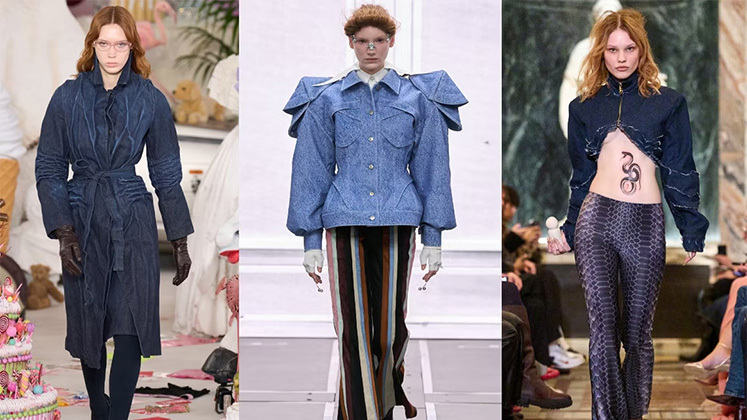
Statement Outerwear: Expanding the Category
What
Denim jackets evolving into statement pieces with strong design identities.
How designers presented it
On the international runways, jackets featured exaggerated proportions, sculptural collars, asymmetry and layered constructions across collections. Some extended into coatlength silhouettes or incorporated unexpected details like ruching and extended trains, pushing denim into more fashion-forward territory
Why it matters
Outerwear offers higher margins and greater scope for differentiation, making it a valuable extension of the denim category.
Business integration
Elevate denim outerwear to a hero category while also investing in distinctive design elements and positioning these pieces as seasonal highlights rather than basics.