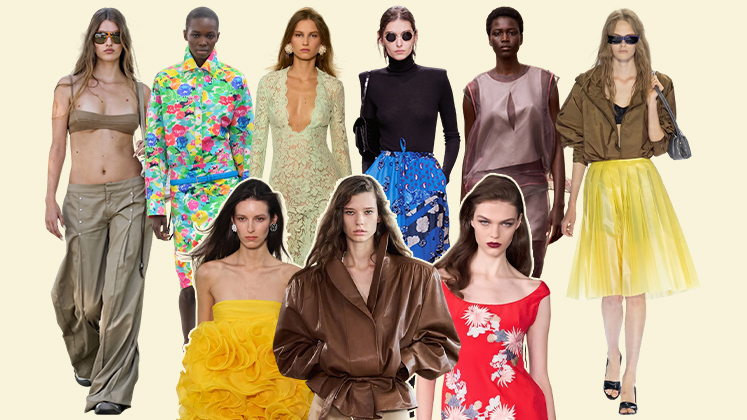
One year after fashion’s much hyped creative reset, the Spring Summer 2027 collections suggest that the industry is entering a more settled, yet no less experimental, period of evolution and growth. As designers consolidate their visions across established houses, the emphasis has shifted from defining collections through singular themes to creating wardrobes that are able to accommodate bold individual expression — a theme that we have seen gaining momentum since the past several seasons. This has been exceptionally evident across the runways of New York, London, Milan and Paris, translating into a compelling dialogue between restraint and excess, practicality and provocation.
The skirt emerged as a defining garment, with sheer skirts, exposed bralettes and unconventional layering challenged conventional ideas of occasion and everyday dressing. Simultaneously, a pursuit of lightness shaped fluid silhouettes and translucent fabrics, reflecting the practical implications of rising temperatures. Florals acquired a more eclectic character through unexpected prints and tactile embellishments, while saturated red, luminous blue and warmer yellows brought renewed intensity to the season’s colour palette.
These directions also reflect a consumer navigating information overload, economic uncertainty and increasingly fluid notions of personal style. In between constant digital stimulation and the growing uniformity aesthetics driven by algorithms, individuality and tactile expression offer a counterpoint to over polished dressing.
But at the same time, emotional appeal must translate into perceived value. McKinsey and Business of Fashion’s State of Fashion 2026 report found that 46 per cent of surveyed fashion executives expected industry conditions to worsen, highlighting the cautious commercial environment in which brands are developing their upcoming collections.
With consumers scrutinising discretionary spending, buyers should prioritise versatile pieces with multiple styling possibilities, reserving more experimental silhouettes and finishes for controlled quantities. The commercial imperative for Spring Summer 2027 is to balance seasonal newness with wardrobe utility.
SKIRTS REIGN SUPREME
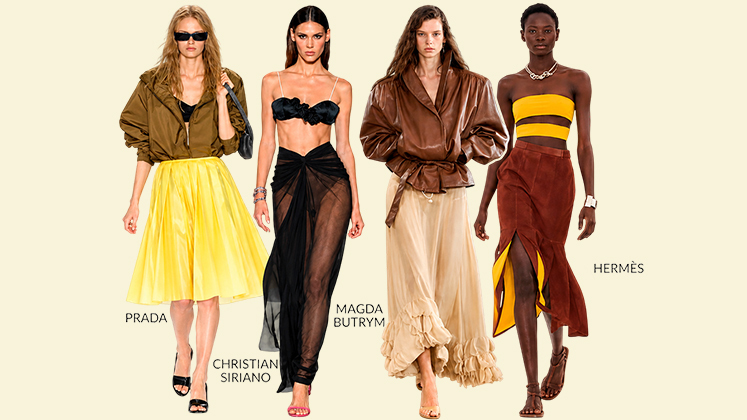
The skirt has transcended from its role as a supporting wardrobe staple to feature as a central design statement for the upcoming Spring Summer 2027 season and the runways won’t have enough of it. Prada made the strongest statement, dedicating its entire collection to the garment via 63 design variations, while Miu Miu, Chanel, Dior and Hermès explored contrasting approaches to proportion, texture and construction. Details such as knee-length tailoring, sculptural volumes, embellished surfaces and unconventional hems offered successful alternatives to the season’s familiar mini and maxi silhouettes.
The commercial opportunity lies in versatility that brands and designers can look at refreshing through fabric innovation, surface treatments and distinctive detailing without overly depending on new silhouettes. A balanced assortment for the season should look to combine wearable straight cut and A-line silhouettes with a smaller selection of statement pieces, accentuated by styling that demonstrates the product’s relevance across work, occasionwear and everyday dressing.
BRAS OUT
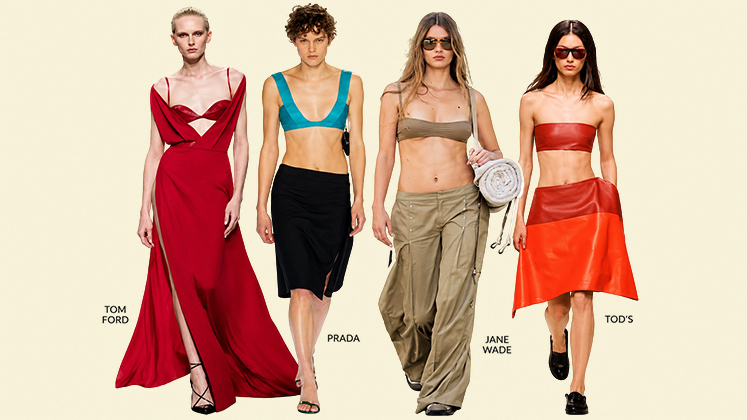
As the temperatures continue to soar and show no signs of mercy, lingerie inspired dressing takes a front seat for Spring Summer 2027, with the bra moving from an underlayer to a deliberate component of the outfit. Across the runways of New York and Milan, designers and high fashion brands showcased bra tops and bralettes as alternatives to conventional blouses, while open shirts, unfastened jackets and relaxed tailoring as layering pieces, offered ways to balance exposure with coverage.
Miu Miu made a strong case for sporty bralette styles, while Tom Ford and Jean Paul Gaultier pushed towards more structured lingerie references. The direction builds on the wider demand for adaptable separates but places emphasis on styling and coordinated dressing. For brands, the opportunity goes beyond standalone bras to include matching sets, cropped camisoles and lightweight outer layers. Offering different levels of coverage, supportive construction and complementary layering pieces can make the trend accessible to a broader consumer audience.
RED HOT
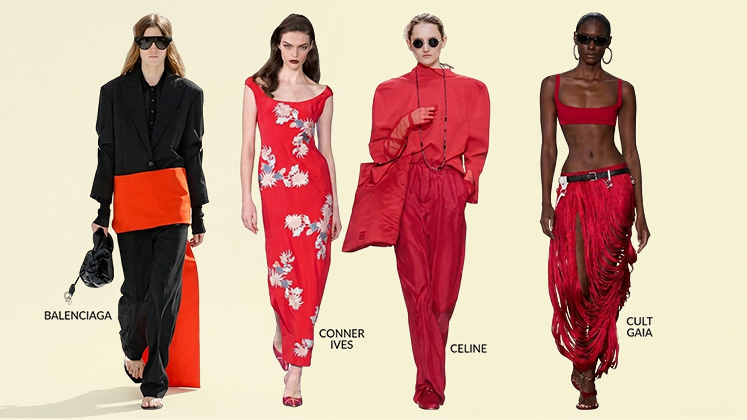
Red returns this summer season with a renewed conviction, shifting the focus from the burgundy and oxblood tones of previous seasons towards clear, saturated scarlet and fire engine red. The hue’s familiarity is commercially valuable with the colour delivering instant visual impact without requiring an unfamiliar silhouette or elaborate embellishment to communicate a seasonal update. Moreover, head-to-toe pairings present a stronger statement than the isolated accessories that previously popularised the shade.
Designers and brands are utilising the shade to sharpen both streamlined separates and more expressive looks, reinforcing its relevance across product categories. For the upcoming season, red cand be introduced within collections through dresses, tailoring, skirts and coordinated sets, while smaller accessories provide a lower risk entry point. Pairing it with white, navy or black can broaden the hue’s appeal and improve styling versatility.
LIGHTNESS
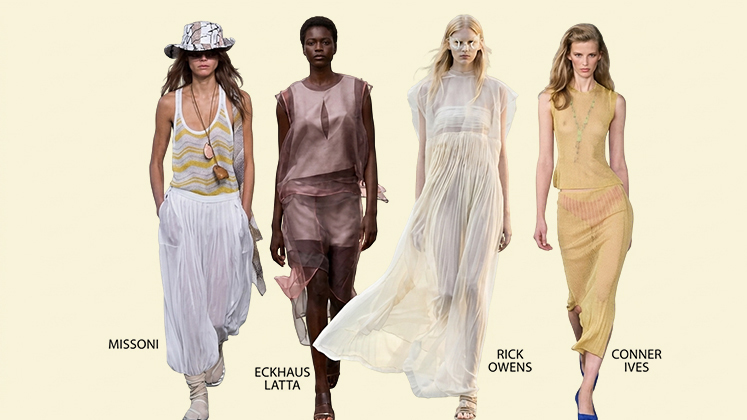
Lightness emerges as a strong and defining design direction for Spring Summer 2027, expressed through fabric weight, transparency and the way garments move around the body. Rather than relying solely on loose silhouettes, designers and high fashion brands are using fine pleats, sheer organza, unlined construction techniques and softly gathered volumes to create clothes that appear almost weightless and fluid.
At Dior, Jonathan Anderson explored featherlight tailoring and delicate surface details, while Chanel and Hermès reworked familiar wardrobe forms through lighter fabrications. The trend falls perfectly in line with the season and responds to the practical demands of warmer temperatures while giving brands enough scope to refresh established categories without upheavaling their design language. For upcoming assortments, priority should be given to breathable natural and blended fibres, lightweight tailoring, and layered separates alongside attention to opacity, lining and fabric recovery that will be essential to ensure that visual lightness translates into wearability.
A NEW TAKE ON SUMMER FLORALS
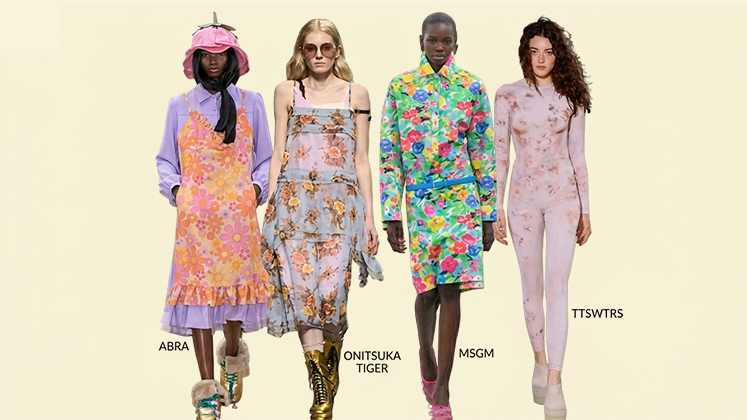
Florals aren’t really a surprising addition when it comes to spring Summer trend forecasts but this season, florals move beyond conventional all-over prints and predictable seasonal dresses. On the runway, Prada revisited chintzy, 1960s-inspired motifs and floral embellishments, while Burberry introduced prints and embroidery developed in collaboration with textile designer Celia Birtwell. Elsewhere, designers and brands experimented with flowers through appliqué, sequins, organza petals and deliberate clashing patterns, shifting the motif from surface decoration to a more considered design feature — a broader interpretation that allows florals to work across multiple product categories and aesthetic directions, from nostalgic and romantic to graphic and unconventional.
For brands and designers, the opportunity lies in diversifying floral placement and execution across shirts, skirts, lightweight jackets and coordinated separates. Combining familiar prints with tactile embroidery or contrasting fabrications can create seasonal distinction.
LUMINOUS BLUE
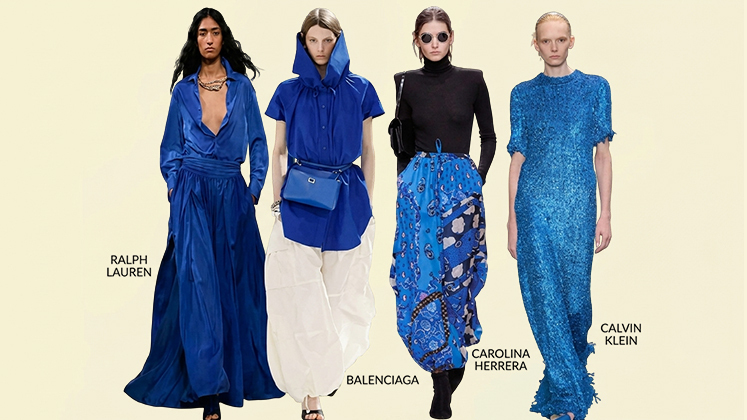
Dubbed “Color of the Year”, this saturated tone of blue, particularly intense ultramarine reminiscent of Yves Klein blue, offers a striking alternative to the softer pastels traditionally associated with spring. The Spring Summer 2027 runways show a broader return to primary colours, with designers favouring clarity and intensity over subtle tonal dressing. This gives blue a dual commercial advantage where it can function as a high impact statement in its own right while remaining relatively straightforward to integrate into existing wardrobes. Its contrast with white creates a crisp summer proposition, while combinations with red or yellow tap into the season’s more expressive colour direction.
Brands and designers can incorporate the shade within their collections through dresses, shirts, knitwear and occasion separates, supported by accessories for customers seeking a smaller commitment. For assortment planning, saturated blue works best as a defined colour story across selected categories rather than as an isolated fashion accent.
SHEER REVIEW
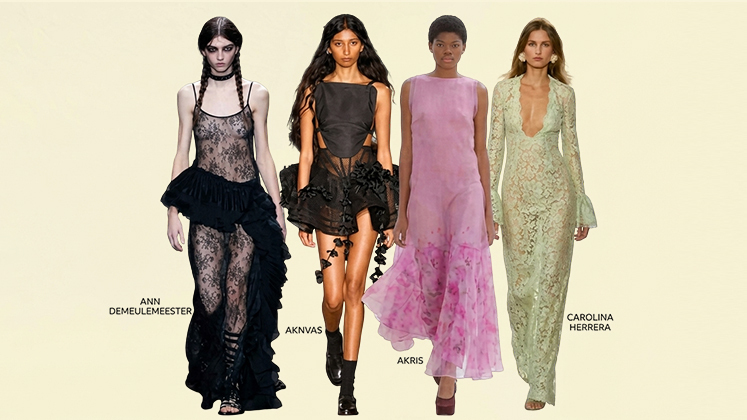
The conversation around skirts and sheer continues to grow stronger with Sheer dressing evolving for Spring/Summer 2027, and transparent skirts emerging as a particularly versatile expression of the wider reveal-andconceal movement.
Rather than relying on a single translucent layer, designers and brands alike, are exploring layered constructions, embellishment and combinations with more substantial garments. At Calvin Klein, Eckhaus Latta and Brandon Maxwell, sheer skirts demonstrated how transparency can introduce tension into otherwise restrained dressing, while other collections pushed the idea towards more overt exposure. The distinction this season is the emphasis on composition wherein transparency emerges a styling tool rather than the sole feature of a garment. For brands, sheer skirts can be developed in organza, mesh, chiffon or embellished fabrics, with double layers and coordinated slips offering greater coverage. Styling them over shorts, leggings or opaque skirts also creates multiple wearing options.
IT WAS ALL YELLOW
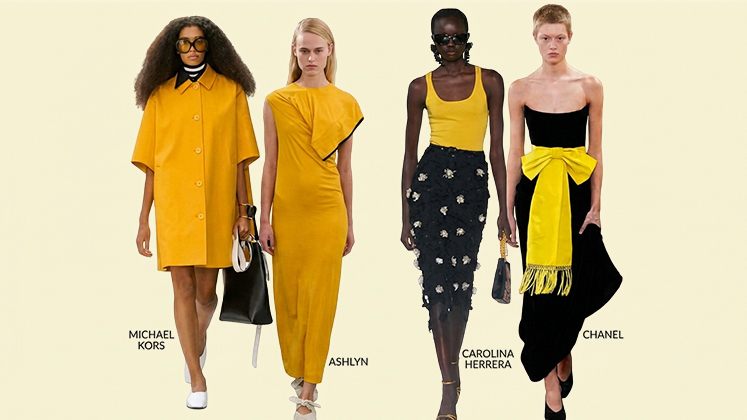
Yellow takes on a warmer, more saturated tone for Spring Summer 2027, with marigold, daffodil and banana tones offering a departure from the cooler lemon and muted buttery shades seen in recent seasons. Google searches for ‘yellow outfit’ are up 70% year on year and on the runways, Marigold was particularly visible across the New York collections, appearing at designers including Carolina Herrera, Michael Kors, Ashlyn and Emily Dawn Long.
The shift gives a familiar seasonal colour a stronger visual identity, with orange inflected undertones adding depth and making yellow suitable for both statement pieces and coordinated looks.
The hue’s commercial potential lies in the breadth of its application, from dresses and lightweight outerwear to knitwear, footwear and accessoriesbrands can build a tiered colour assortment, using softer yellows for core products and saturated marigold for fashion-led pieces.