Wearable electronics are hype. Yet, the gap between feasibility and market relevance is wide. Some concepts like the avalanche rescue signals or solar power supply for electronic device are popular already. The washability seems to be solved widely, as this was a serious obstacle to the introduction.
Claudia Ollenhauer-Ries, our Special Correspondent from Germany, reports.
Wearable electronics can be nice-to-have gimmicks for entertainment and show as well as rescue and communication devices for sports and profession. In-between these two extremes, we find all applications for body control to be used at sports and in the medical area.
Basics
Whatever devices, energy supplies and cables are used, they must resist the expected wearing stress as well as the normal household care. But first of all, they may not do any harm to the wearer – think of electro-smog, which might interfere with heart beat or the brain. All of the electronic parts must be light and rather small, in order to allow a maximum of comfort to the wearer. Moreover, the items must be fixed or integrated to the garment in an easy way at the production stage. Either removable or fixed, the electronics must keep in place safely while being worn at the stage of use.
We can classify wearable electronics into different categories:
1. Aesthetics
Examples: LED-lights enhancing T-shirts, luminating glass fibres woven into the fabric for dresses.
2. Functional
(a) Medical
Examples: Sensors monitoring heart beat, sweat amount and composition or muscle tension.
(b) Fitness
Examples: Devices calculating calories burnt while training, miles run or Body Mass Index (BMI) with percentage of muscle, water and fat in the body.
(c) Entertainment
Examples: Buttons for mp3-player integrated into the garment, microphones and loudspeaker of mobile phones integrated into the collar or hood.
(d) Security
Examples: Lit panels on outdoor jackets and vests glowing in the dark, signals for locating for divers, mountain climbers or children when lost.
While the aesthetic aspects can be mere fun or gimmick, the functional devices can be useful or even necessary, depending on the target security in precarious situations. Whenever the life of a person is endangered, wearable electronics would be a help. Think of monitoring the health of astronauts, sick persons and extreme sportsmen, securing persons in the dark, finding persons in distress. Many devices and ideas have already been presented, at www.freepatentsonline.com 11,478 (in February 2009), and some of them have been commercialized successfully: Flexible solar cells, buttons to steer entertainment devices or sensors to be placed on the skin.
Energy Supply
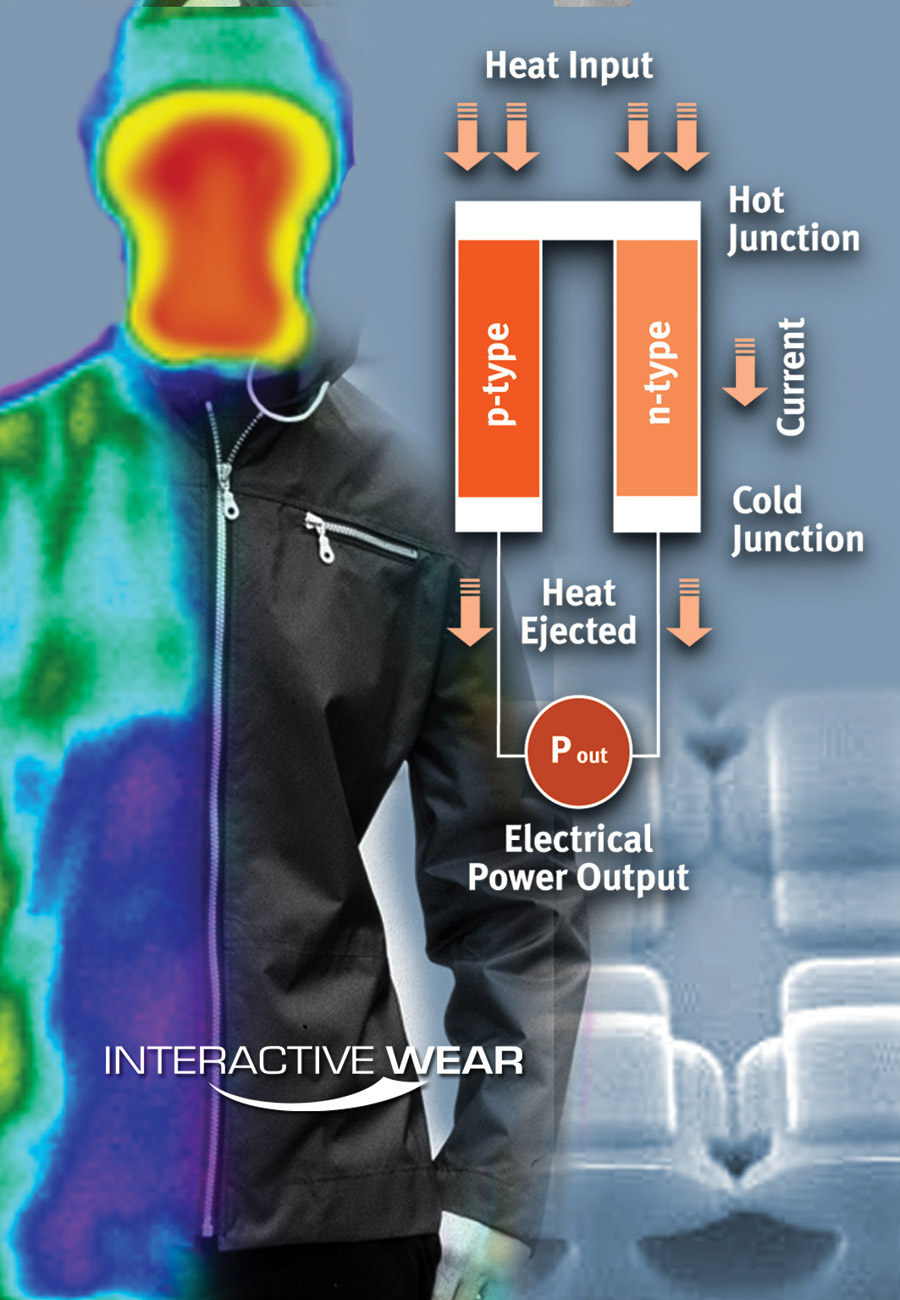
Energy can be supplied by small batteries (watch batteries), flexible solar cells (by SOLARC, Berlin, Germany or Konarka, Lowell, USA) or thermic generation (by Interactive Wear, Steinberg, Germany) as well as piezoelectric concepts based on the movements of the body.
The team of José Luis González, from the University of Barcelona, which concluded its investigation in 2002 mentioned: “This work has shown how it is feasible to use the energy harvested from human body to power-wearable units incorporating computing, communication and audio functions. Existing shoe mounted rotary electro-mechanical generators can provide enough power from walking to supply these devices.” They also said:
“However more investigation and development is necessary to raise the electrical output power for the existing prototypes to the power level that can be obtained theoretically.” Still today, the main challenge with human power harvesting is the discontinuous nature of the energy (movement) and the low available average power, which limits the applications, they say.
Sensors
We have two types of sensors:
- Sensors measuring the body status and sending the data to an output device, which could be on the garment, so that the person wearing it can control the results or in a distant place, where others could control the results.
- Sensors for steering entertainment or security devices by pressure, sound, movement or changes of the surrounding.

Sensors are typical devices, which register heart beat rate, electric changes of the skin or of muscles and transmit these to the control unit. State-of-the-art sensors are flexible structures, mostly bands. One option is metallic fibres woven, knitted or embroidered into the fabric or building the core of a core spun yarn.
In the EU’s CONTEXT project, companies and research institutes are developing a comfortable vest that will read muscle tension and deduce stress levels at any given time. At the core of the vest is “wearable electronics”. This consists of sensors woven into the fabric that register the electrical excitation of the muscle fibres, and thin conducting metallic fibres that pass the signals to an electronic analysis system. People’s muscle tension changes with their stress level – the greater the stress, the more likely the muscles are to produce a synchronous twitching effect. “The most important requirement for everyday use is a robust electronic system,” says Torsten Linz of the Fraunhofer Institute for Reliability and Microintegration IZM in Berlin, Germany the partner responsible for the “packaging”. The IZM researchers have meanwhile developed stable metallic fibres, watertight connections and durable sensor buttons. Their task over the next few months will be to integrate the analysis electronics. The project partners have already demonstrated during field hockey training that the vest really works; it enabled players to choose the ideal moment for striking the ball and to hit it much further than usual.
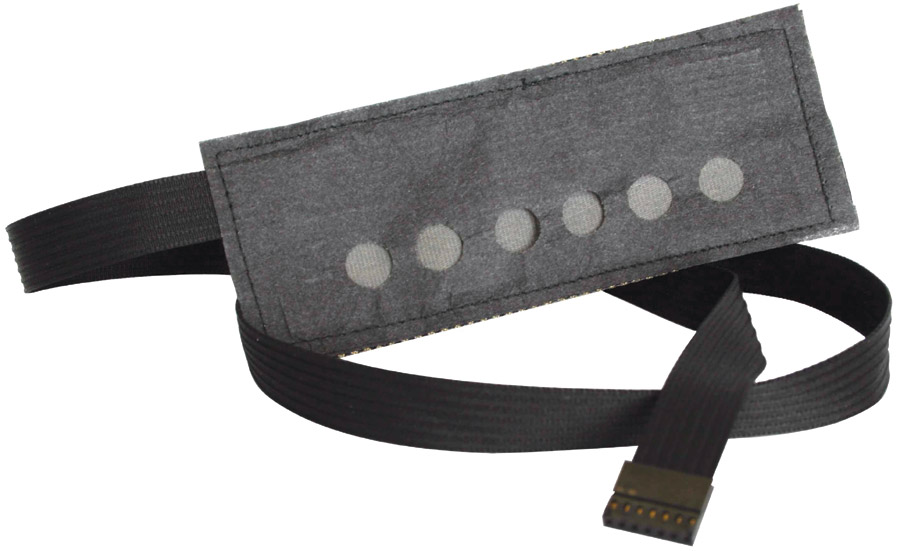
One of the big players in this market is Textronics, Wilmington, USA, which produces several components, among those sensors. The new system consists of a fabric, which exhibits light transmission and reflection properties that can be placed strategically in a garment. The amount of light transmitted through the fabric relative to the amount of light reflected by the fabric changes when the fabric stretches in response to a dramatic motion like respiration or a subtle motion like the beating of the heart. Other Textro-monitoring systems include methods for sensing the electrical signals generated by the body via textile electrodes in a unique design configuration which produces high quality signal sensing.
Another type of sensor function as buttons to command iPods and other devices: ON, OFF, Forward, Backward, STOP… Behind these button stand the Quantum Tunnelling Composite (QTC), a composite material made from metal filler particles combined with an elastomeric binder, typically silicone rubber, a patented technology by Peratech Ltd., Richmond, UK, a leader in new materials designed for touch technology solutions.
Data Transmission
Data transmission is far beyond sending an impulse to steer the wearable electronic device or delivering the energy supply: the signals taken by the sensors from the body of the wearer must be sent without loss to the processing device. The processing device can be integrated into the garment or be positioned at a distance. Both wire-bound and wire-less data transmission could apply.
Examples of commercialized data transmission elements:
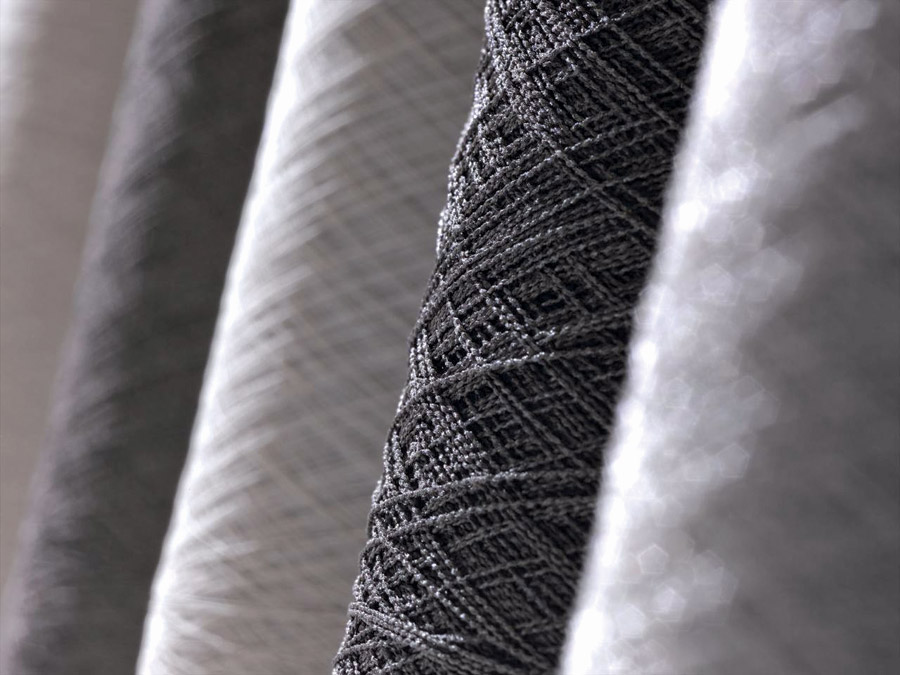
Zimmermann, a twisting company based in Weiler, Germany is producer of Novonic, a series of yarns used for heating, electro smog blocking, as sensor and for data transmission. Novonic electric connections do not tear because they have built-in elasticity. Thus, it is clearly far superior to conventional cable. It is ideally suited for the integration of earphones and headsets in clothing, the transmission of energy and data via washable, conductive textile connections for every electrical or data-processor application.
Once again, Textronics works also in this field, proposing a family of conductive, elastic yarns for weaving, knitting and application.
Wireless data transmission works as well, using GPRS or radiofrequency (RF).
But today, the wire-based technology still is its first choice, as it has the direct physical connection.
[bleft]Wearable electronics have all applications for body control to be used in sports and in the medical area. Whenever the life of a person is endangered, wearable electronics would be a help[/bleft]
Joining Devices and Garments
The classic solution is a pocket, where the elements are kept safe and can be extracted from it, if required. The wires are pulled through tunnels (and eyelets) within the garments. Both are solutions widely used for iPod applications in jackets and suits.
Conducting sewing threads are made of stainless steel spun fibre and polyester, a supplier is Durafil, Hongkong. Another supplier, Shieldex, Palmyra, USA offers silver plated Nylon 66 and PET. They are used to connect the sensors and devices with energy supply.
Wherever polyamide, silicone or rubber shells are used on the device, the choice is either high frequency welding, hot welding or gluing with tapes.
Fun with Wearable Electronics
A wealth of ideas and hints can be found on www.talk2myshirt.com, where DIY (do-it-yourself) designers discuss and comment on the matter. The links in the forums lead to the suppliers of the sensors and devices named.
CONNECTED-wear is a trademark by Fibretronic, Skipton, UK, focussing on audio controls for interactive apparel and soft goods. The CONNECTED-wear programme separates the integrated textile components (such as the keypads, joysticks and switches) from the electronic modules. Fibretronic supplies the apparel and soft goods manufacturer with their selected keypad or joystick controller for integration in their finished product. The final consumer can then activate the garment and connect it to their audio player by purchasing an electronic module from the CONNECTED-wear product range available at retail. This product range includes electronic modules for iPod, MP3 and music phones.
Qio Systems, New York, USA, launched PANiQ, a controller for iPod and other electronics with smart fabric buttons. Peratech Limited has licensed out its Eleksen consumer wearables business into QIO Systems. Peratech purchased the Eleksen wearables business as part of its acquisition of the assets of Eleksen Group Plc. QIO Systems plans to bring a comprehensive range of eSystem electronics for sale at retail by the end of Q1 2009. Fashion and active sports brands such as Bailo, Italy, CelioClub, France and Killa, Canada launch the first garments for Fall 2009.
Conclusion
The wearable electronic market is moving fast since its first steps some 10 years ago. The fun-driven music and communication items push the market to the broad public, especially the younger consumers.
Almost hidden behind this hype are the projects targeting the health and wellness market, both in consumer and institutional sectors. Nevertheless, these are as important. Wearable electronics are still in the stage of development and upswing, so it is worthwhile to consider moving into this field. The clue is, obviously, a close cooperation of specialists from the textile, apparel and electronic side. Marketing and medical experts must be involved as well. This demands a strong concept and a budget for R&D and market introduction.