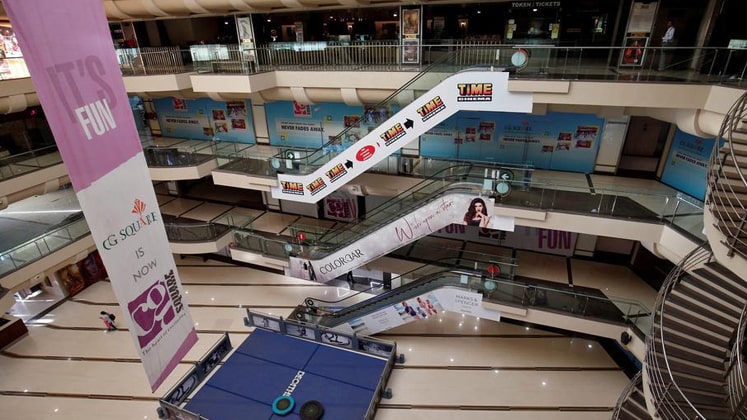
Ever since the Government announced a prolonged lockdown due to the COVID-19 pandemic, retail brands with zero revenues have been struggling to find a way to sustain, to stay afloat, and to get cash flows. The fashion retailers across the country have been asking the Government to devise a mechanism to help them secure some cash flow, stating that they are headed for a ‘very challenging time’ while also seeking support in co-sharing of worker wages, waiver of rentals and GST reduction. Due to this lockdown, all the shopping malls across India have also been shut until further notice. Since there is no exact time frame to control the pandemic, the lockdown can be extended even post 3 May and this has put a number of retail brands as well as shopping malls in a ditch. In this time of uncertainty, not only retail brands but shopping malls are also bleeding even as the two are looking at ways to co-survive this pandemic.
In a webinar, organised by the Trust for Retailers & Retail Associates of India (TRRAIN), Retailers Association of India (RAI), National Restaurant Association of India (NRAI) and The Clothing Manufacturers Association of India (CMAI), anticipated a 25-30 per cent impact on business with multiplier effect on subsidiary industries and lasting job losses, and said that a survival plan to co-survive is the need of the hour.
Selling piled-up inventory as soon as malls and stores reopen would be the key for retailers. RAI CEO Kumar Rajagopalan asserted, “It may take six months for the larger companies to revive and 12 months for the smaller retailers. Retailers are sitting with six months of unsold inventory. Also, reworking of congregation areas and queuing at malls are being relooked, as safety will be the top consumer demand in the recovery stage.”
The hit – where and with what intensity?

According to the Confederation of All India Traders (CAIT), the country’s retail sector, comprising 70 million small, medium and big traders and employing 450 million people, is one of the hardest hit due to the COVID-19 pandemic. The industry registers a monthly business of about US $ 70 billion. A survey by RAI suggests that around 80,000 jobs are expected to be cut by various retailers due to the outbreak and the subsequent lockdown. Post the lockdown, the fashion retailers are practically looking at no revenue and they expect to earn only about 40 percent of the previous year’s revenue in the coming six months.
While the losses are inevitable, retail brands are now strategising the steps forward. The de-risk strategies include inventory management, short-term business plans, budget allocation, more focus on omnichannel retail, and postponement of expansion plans.
Apparel has definitely dropped off the shopping list of consumers right now despite online retailers trying to entice buyers with lockdown sales, etc. Wazir Advisors anticipated that consumers might hesitate to go shopping apparels even after stores open post the lockdown period and predicted that the Indian apparel industry registering a sales turnover of US $ 74 billion might take a hit of 10-15 per cent this year. Furthermore, an internal report by CMAI has found that domestic apparel industry could take a hit of about Rs. 1 lakh crore due to the lockdown with around 80 per cent of manufacturers already receiving cancellation of orders from their buyers. Tanvi Malik and Shivani Poddar, Co-founders, FabAlley and Indya, stated, “Retail has been among the first industries to be hit by COVID-19 and the near future remains uncertain due to the unpredictability around containing the outbreak. As experts claim that the slump will last for at least two quarters, fashion retail brands like ours are focusing on minimising inventory losses by slowing production for the Spring/Summer season, with massive cost-cutting across all functions and refraining from any further expansion.”

Not only retail brands, but shopping malls are also bearing heavy losses in the wake of the lockdown and are living in uncertainty on how and when they will be allowed to start operations. They also have to evaluate whether they need to operate with 100 per cent manpower since the footfall is unlikely in the immediate post-lockdown period. The malls will also have to limit the number of customers inside to ensure social distancing. Abhishek Bansal, Executive Director, Pacific Malls, said, “Monetary losses would, of course, be huge. Fashion is seasonal, so spring merchandise will suffer badly. Cinema, entertainment and restaurant businesses are already bleeding. The cash flow is the biggest challenge for malls as the only source of income of these centres, that is, the rental income has come down to zero since the closure of malls. With expenses remaining constant, their debt serving and interest payment obligations remain. Unlike all other businesses, they do not have any goods or merchandise to sell or reduce inventory holding or take other such measures, which other industries can take.”
Also Read: Fashion in the time of COVID-19: Indian designers share their strategies to stay afloat
The co-survival strategy
While the situation is critical on the part of both retailers as well as mall owners, the two sides are yet to find a common ground on the issue of rental waivers, as the overall industry has come to a halt due to the prolonged lockdown. The lockdown, announced by the Modi Government, is slated to end on 3 May, but given the rising number of coronavirus cases in the country, it is only going to extend to a further date.
Shopping centers say that the force majeure clause does not apply to the lockdown period. Rajendra Kalkar, President – West, Phoenix Mills, maintained, “We will have to work with retailers. We can take a call only after visibility regarding mall openings emerge. Today, the situation is very fluid. We will wait for the situation to be better and only then we will know the real picture. It is too early to discuss various proposals of either side. We don’t know how much support the Government will give, the insurance benefits, etc. Today, everything is very ambiguous to take any decisions.” With no clear plan of action on waiving rentals, shopping malls said that they were working on reducing charges on common area maintenance and passing it on to retailers. Pushpa Bector, Executive Director, DLF Shopping Malls, averred, “Times like these require us to be patient and adapt our business strategies to prepare for the new normal. The industry has given its 100 per cent support to the Government’s decision on lockdown. That said, you must understand that we are a capital-intensive sector with very high costs. The fixed costs remain even during lockdown. Secondly, we are a labour-intensive industry; we support jobs and livelihoods of over 12 million people. As an industry, our request to the Government is a moratorium for at least 6-9 months. You also have to bear in mind that we will need to reinvest post lockdown, so that people feel safe. We have already prepared an SOP document in line with the international best practices.”

Meanwhile, RAI’s Kumar Rajagopalan confirmed that most heads of retail companies expect the crisis triggered by the pandemic and the subsequent lockdown to stretch well beyond the April-June quarter. Lalit Agarwal, Chairman and Managing Director, V-Mart Retail, added, “Retailers are looking at an amicable solution to the problem. I don’t think the endeavour is to damage our relationship with mall owners. They are important partners. But most retailers are speaking with mall owners on an individual basis.” A number of retail brands are appealing to mall developers to switch to a revenue-sharing agreement till the end of December. “On an association level, the landlords and malls have been asked to support the retailers to waive off minimum guarantee for the period of lockdown and probably come to revenue sharing for the next three months. Going forward, order cancellations look like the only contingency plan and these shall adversely affect the forthcoming end of season sale and early autumn season,” maintained Akhil Jain, Executive Director, Madame (from the house of Jain Amar Clothing Pvt Ltd.).
While others are still speculating the situation, few of the developers have come forward to bail out the retailers like the Lulu Group, as it announced rental waiver of Rs. 12 crore for retailers of Lulu Mall in Kerala. Shibu Philips, Business Head, Lulu Mall, shared the information on his LinkedIn profile. “Amid the economic crisis faced by businesses across due to Covid-19 global pandemic, Lulu Group Chairman and Managing Director MA Yusuf Ali leads the way by offering retail relief for all its retail partners in Kerala. One month’s rent from 254 stores in Lulu Mall, Kochi, amounting to Rs. 11 crore will get waived off owing to decision taken by MA Yusuf Ali. The retailers of Y Mall – Triprayar, located in his hometown Nattika, will also benefit from the announcement. The monthly rental revenue from both the malls combined will get rent relief of Rs. 12 crore. Due to rapid spread of coronavirus and the subsequent slump in consumption, businesses across the State are suffering,” it said.
Furthermore, even with the opening up of the shopping malls, the industry will witness the beginning of a new world where consumption will not be the same as it had been prior to the pandemic. Shopping centre bodies too have been writing to the Government on measures to safeguard their interests during the ‘uncertain times’.






 Bharat Tex Special Report 2026