The retail industry across the world is continuously growing for good and India has not been just a spectator in the overall retail game. In fact, India is today one of the fastest growing industries in the world. According to GlobalData, the Indian retail sector is expected to grow at a compound annual growth rate (CAGR) of 10.4 percent between 2018 and 2022. Also, the country is pushing itself to become one of the favourable markets for foreign brands. The Ministry of Commerce of India has recently announced a slew of relaxation on FDI investment in single-brand retail, in order to encourage investments and to ultimately create employment opportunities. As per a report by Department for Promotion of Industry and Internal Trade (DPIIT), FDI equity inflows in India in 2019-20 (till August) stood at US $ 19.33 billion, which is definitely a positive sign and proves that the Government’s efforts to improve ease of doing business and relaxation in FDI norms are yielding results. India received US $ 2.73 billion of foreign investment in the month of August 2019 as compared to US $ 2.54 billion in the previous year.
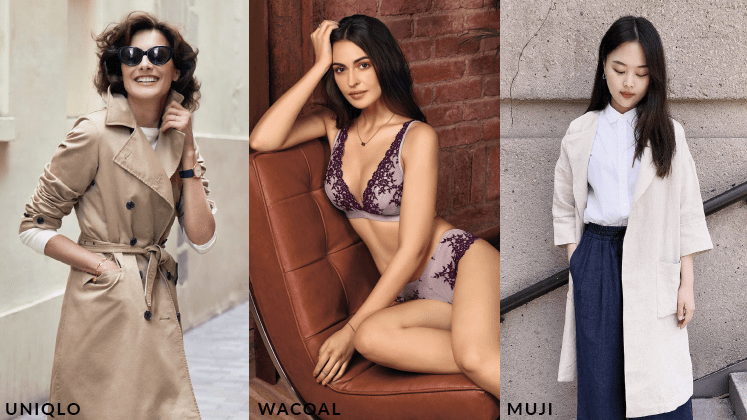
While India is making efforts to become a global economy, Japan is proving to be one such country truly fascinated by the fashion and lifestyle industry in here and the potential of its growth in the times to come. Japanese brands, being run by the concept called Kaizen which is the Sino-Japanese word for ‘continuous improvement’, are moving to potential retail destinations for growth and better market presence. While a number of Japanese fashion and lifestyle brands in the likes of Onitsuka Tiger, Miniso, Uniqlo, Wacoal, Muji, etc., already have presence in India, a country with a burgeoning and increasingly urbanised and prosperous middle-class, a number of others are planning to enter this market. The spokesperson from Muji India maintains, “There has been a gradual shift in the fashion retail industry wherein it has taken the form of modernisation and corporatisation. There is a visible evolution in terms of alternative retail landscapes, customisation of product portfolios to address the specific needs of various consumer segments and the growing focus on business efficiency not just for selling but also to delight the customer in terms of experience. It’s not surprising to read that the share of fashion in India’s retail market is around 8 per cent, corresponding to a value of US $ 40 billion as per reports.”
Why though?
While we have been witness to a slew of brands influxing the Indian retail market, what really is attracting them to India? According to McKinsey FashionScope, India is expected to welcome more than 300 international brands in the next two years and a number of these brands are Japan- based, even as a legion of fashion and lifestyle brands from this East Asian country have already made their presence felt on the Indian soil. India is definitely taking the centre stage among the other Asian countries in terms of economic expansion. For one, Uniqlo which entered the Indian market in October 2019 with a retail store spread across an area of 35,000 sq.ft., expects India to outpace China and its home country in about a decade to become its largest market. Shantanu, Head of Marketing, Uniqlo India, asserts, “There are three components which fall in place right now. The first component is the consumer taste and evolution for accessibility of our philosophy; we are a very simple brand but offer high quality. Secondly, I think the Government policies have been a great enabler for us, so much so that we applied for entering India in January 2018, and within only 20 months, we are here with our first store. I don’t think there is a better example of ‘ease of doing business’ than this mammoth scale of operation. Also, the Government’s move to relax the FDI norms and to liberalise its single-brand retail policy will enable the company to accelerate its growth in India. All these components – our readiness, consumers’ readiness and the micro-macro economics – facilitated our entry to India. For Uniqlo, India is kind of No.1 in terms of strategic priority across the globe. India has a huge middle- class, growing consumption, economy which is growing fast and will continue to grow, extremely high quality talent and the kind of opportunity that India provides makes it a preferable location to have a presence in. In fact, in our endeavour to be No.1 apparel brand in the world, India is the key building block to achieve that goal.”
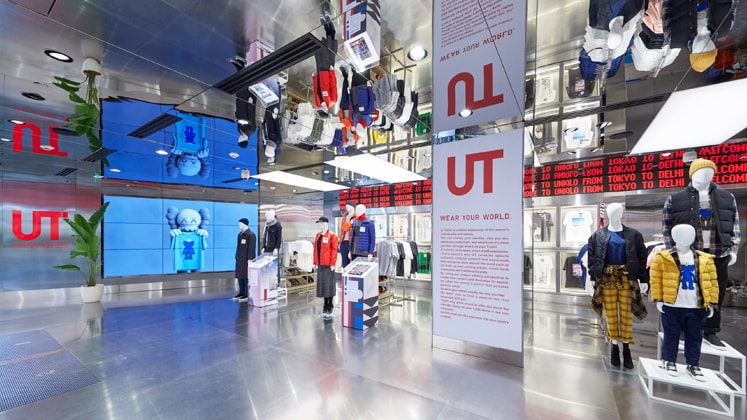
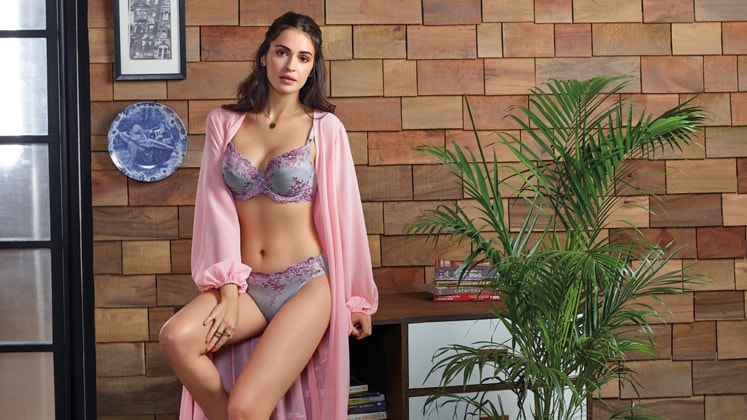
A number of factors including rapidly growing middle-class, aspirational consumers, infrastructure development, powerful manufacturing sector and strong economic fundamentals, among other drivers are making India too important for these Japanese brands. Furthermore, the Indian Government is leaving no stones unturned to make the country a favourable location for business. “Over the last few years, the Indian market has witnessed several fascinating changes and challenges, which are indicators of the country’s evolving fashion market. While actual consumption is price-conscious, purchase behaviour for premium and international brands is also increasing, and women’s social advancement is rapidly advancing. We believe this market change will accelerate in the next 10 years and we see it as a great opportunity for Wacoal’s market expansion. It seems to be the right opportunity for us to become No. 1 in India, which is the most west in Asia with all its fullness. Wacoal’s mission is ‘to contribute to society by helping women express their beauty’ and being able to help 600 million women in India express their beauty has become crucial to Wacoal’s mission globally,” avers Nobuhiro Katsumata, CEO, Wacoal India, which entered India in 2016 through a joint venture with Periwinkle Group wherein Wacoal has 51 per cent share and Periwinkle holds 49 per cent share.
India is among the highest in the world in terms of per capita retail store availability and also the fifth largest preferred retail destinations in the world and there is practically no reason why these Japanese retail stalwarts should not enter this lucrative retail landscape.
Cut for Indian market. Or not?
India and Japan have always had a friendly relation and the latter’s Prime Minister Shinzo Abe has been reaching out to countries like India which fit well within his schemes. Furthermore, it is worth noting that Japan has been allowed to invest in the Andaman & Nicobar Islands and northeastern region of India which is a no-go area for other countries. This and many other factors have been a major push for the Japanese brands to enter India’s retail landscape and invest in the country. Along with the advantages, there are disadvantages and challenges as well. While these Japanese brands have all the potential to create disruption in the Indian market, there are an endless number of both homegrown as well as international brands who have already established their presence in the country. Therefore the Japanese brands, in order to sustain, need to invest in brand awareness, customer engagement and loyalty. “Muji products vividly embody both our design methods and overall philosophy. Unlike most retailers, Muji is not a brand whose value rests in the frills and ‘extras’ it adds to its products. Muji is simplicity – but a simplicity achieved through a complexity of thought and design. Our products are a result of careful elimination and subtraction of gratuitous features and designs unrelated to function. Muji aspires modesty and plainness, with a deliberate pursuit of the pure and the ordinary to achieve the extraordinary. Instead of going for aggressive marketing, product remains the core focus in terms of quality and communication,” avers Muji India spokesperson maintaining that the brand launches two collections — Spring/Summer and Autumn/Winter — keeping in mind the demography of the market.
Furthermore, India has a diverse population with different tastes in their clothing choices too which necessitates any international brand to curate their respective collections for this market. While Wacoal brings in the bestsellers that would suit the Indian market, from the company in different countries and is planning on developing an exclusive merchandise for the Indian market, Uniqlo has curated an India-specific collection of ‘Uniqlo Kurtas’ to better associate with its consumer group in the country. The fast-fashion brand under Fast Retailing Group has set itself apart from other competing brands and is continuously working to ensure that it understands the Indian market thoroughly. Inspite of the challenges on its way, Japan has a fair advantage to settle its brands in India if they adapt to the consumer preferences. Not only this, the fashion retail majors are also exploring the hinterlands of the country, where the industry is now headed, given the rise in consumer base in these areas. “In Japan, every 7 in 10 consumers use Uniqlo, which is an unheard kind of number for an apparel brand. This is the level we want to be at in India as well, going forward. Whatever it takes to achieve it, how so long it takes, we are targeting at reaching that level of consumer acceptance. To make Uniqlo accessible, we are working actively towards establishing a seamless online-offline experience,” says Shantanu. Wacoal, which has 12 exclusive stores in five major metropolitan cities of Mumbai, Delhi, Kolkata, Chennai and Bangalore, is planning to set up 50 exclusive stores by the end of FY 2020 and has presence in 30 department stores, bringing the total number to 80 outlets. “We will be growing our presence in certain Tier-1 and Tier-2 cities such as Ahmedabad, Bhopal, Goa, Jaipur, Chandigarh, Hyderabad to name a few, taking the total count to about 30 cities,” informs Nobuhiro Katsumata.
Sourcing pre-requisite

According to the latest FDI policy framed, the Government has eased the norms that permit 30 percent local sourcing by brands on an average over a five year block, rather than in a single year. All the procurement done by a retail brand will be considered under the 30 percent clause, whether or not the goods procured are sold in India or exported. Additionally, favouring the interests of the retailers, the new policy will also consider the procurement done by group entities for the brand (including global operations) within the 30 percent clause.
The Japanese brands in India are betting on these relaxed policies by the Indian Government to accelerate their growth plans in the country – both as a wholly owned subsidiary and through partner-led supply chain and local sourcing. Like for instance, Uniqlo has entered India ‘not just to sell clothes in the country but is planning to produce in India as well going forward with the ‘Make in India’ initiative”. In fact, a key component of Uniqlo in India will be ‘Design in India, Make in India, Sell in India and Export from India’ and the brand is working towards this ultimate goal in the country. And truly so, as while the country is talking about the influx of retail brands in India, the pragmatic thinking by the Government on FDI policies, etc., will also start encouraging stakeholders to source their global procurement requirements from India, thereby giving boost to manufacturing within India. Moving forward, with their set plan charts in place, Japanese brands will continue to enter the Indian market and India, as lucrative as it is, will have a share of this pie to offer to them. Also, in addition, the fact that the relationship between India and Japan are the best in the history with leaders from both the countries – PM Narendra Modi and Japan’s PM Shinzo Abe — taking a number of steps for improving the bilateral trade, is further facilitating the brands to leverage upon this.



 Bharat Tex Special Report 2026