The pandemic caused by COVID-19 changed too much too soon in not only the apparel retail industry but also the overall retail segment and just when the businesses and the consumers were hoping for a revival in 2021, the second wave hit the country, even harder, with a number of cases and deaths rising to a record high and leading to partial lockdowns, closure of malls and curbs on late evening movement that kept consumers confined to their homes. The series of setbacks due to the pandemic has affected the industry in ways people had not really imagined and these changes are going to dictate how the industry will function in the coming years too.
However, the world is now all set to function in this New Normal with changes in the way people shop, consumer behaviour, their lifestyle, their shopping choices, etc., and according to Retailers Association of India’s 19th edition of the Retail Business Survey, retail sales in India in August 2021 recovered to 88 percent of pre-Covid levels or August 2019, on the back of the early festive season. Peak festive season sales combined with a wider inoculation drive are likely to drive footfall for retailers in the coming months, and on the back of this, some retailers are hoping to cross pre-pandemic sales numbers, said RAI.
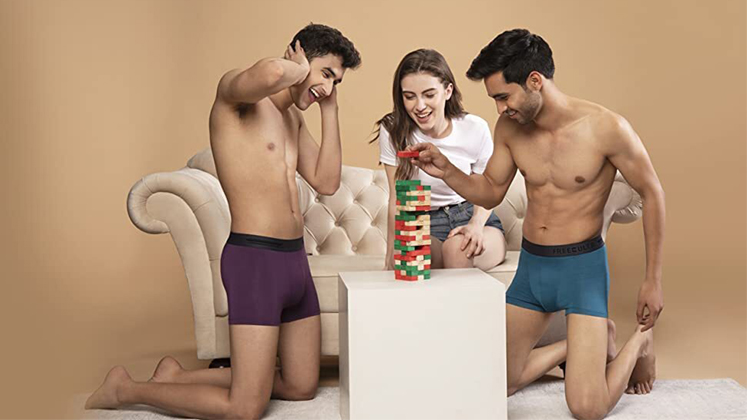
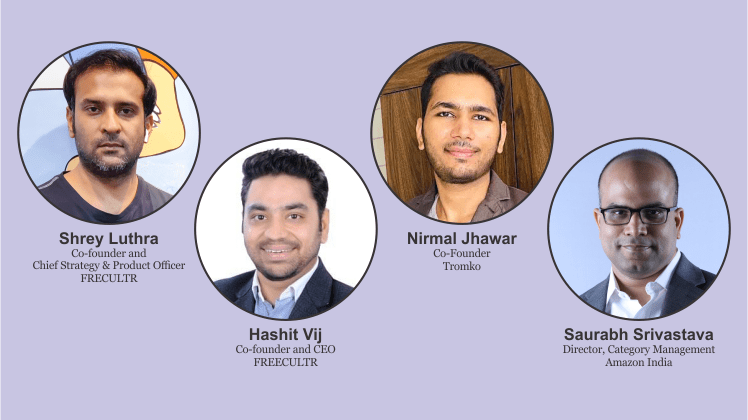
Particularly in the apparel category, since most people are still working from home and are spending the maximum of their time inside their houses, sleepwear and innerwear categories are growing in terms of demand and sales. While we have been mostly talking about the surge in lingerie market since last year, the men’s innerwear category is now booming with innovation and sustainability at the leading position. Innerwear is no longer a basic need but has evolved to offer comfort, intimacy and has basically become an extension of a person’s personality and today’s young consumers are looking more for innovative innerwear by brands that embrace relatable aesthetics, body positivity and authenticity. Shrey Luthra, Co-founder and Chief Strategy & Product Officer, FRECULTR, avers, “Historically, the men’s innerwear market has been a very rudimentary clothing category with little to no product innovation and lack of variety and options. From a consumer buying perspective, it’s been an afterthought with no considerable attention given to what one buys and from whom. There are some traditional, national and international brands that believe in consumer purchase on price bracket basis and thus known large brands treat this category as a basket product till date. Unfortunately they do not offer any technology-oriented products and the market is evolving, wherein the new age consumer is now looking for options that are comfortable, skin-friendly, breathable and solve their daily innerwear problems. The current situation has huge potential to fill in the gaps, where FREECULTR provides a solution to all these issues by understanding the psychology of the new age consumer.”
According to Grand View Research, the global men’s underwear market size was valued at US $ 29.41 billion in 2018 and is expected to register a CAGR of 5.3 percent from 2019 to 2025, on the back of factors like increasing awareness about health, best fit and personal hygiene coupled with growing millennial population.
What’s shaping the industry?
The men’s innerwear segment is on a growth trajectory ever since the pandemic, courtesy the factors like increasing availability of a wide range of products and designs suitable for various purposes including sports, regularwear and functionalwear among others, increasing awareness about health, personal hygiene coupled with growing millennial population, etc. Furthermore, improving fashion trends, increasing disposable income and changing consumer lifestyle and preferences are expected to boost the market growth. Nirmal Jhawar, Co-Founder, Tromko, asserts, “Oddly enough, for many years, men’s innerwear was viewed as a commodity that was necessary but not particularly important. While shirts for men were seamlessly tailor-made, when it came to innerwear, neither did they take a keen interest nor did the market provide enough options. However, the innerwear industry in 2021 has gone above and beyond to break the monotony, retain the position of quality innerwear as an essential and produce styles that you can’t resist to flaunt. Innerwear today is about intimacy, security, comfort and fashion. With evolved designs and technology in the category, a shift in the market has been created which ultimately leads to a new era of innovation.”
Furthermore, the change in buying pattern and the factors that command these buying decisions have changed and so, today, consumers look at not the face of the brand but the value that it has to offer. Hashit Vij, Co-founder and CEO, FREECULTR, agrees, “The new age consumer looks for ingredients first, before even making a decision on their purchase. At FREECULTR, we ensure that we provide quality innovative products, able and prompt customer support at every stage of the buying and consumption process. We ship out products in premium utility packaging, which helps us add value to the product proposition. This value addition is very much loved by the new age consumer and we get a lot of appreciation for the same.”

What really sells?
Brands in the category today are tapping the evolved demands of the consumers of today by proceeding to do away with traditional styles. Innovative and newer brands are coming up with comfortable and stylish innerwear, albeit now, with sustainability in mind. Since innerwear is no longer viewed just as another piece of garment people hardly pay attention to, functionality and eco-friendliness are becoming important aspects, both for customers and brands. And so, there has been the entry of newer and better and more innovative brands offering men’s innerwear now. While the majors in the segment in the likes of Lux, Amul, Rupa, etc., have been in the category and even ruling it for years together now, the newer brands like FREECULTR, XYXX, Tailor & Circus, Tromko, etc., are experimenting with their product categories to survive and even thrive in the market. Shrey Luthra maintains, “Customers today are most definitely seeking enhanced comfort in their apparels. A challenge that they face, though, is a lack of knowledge and practical communication. Differentiating quality from the run-of-the-mill garment is a task that’s important for a brand. When we were developing the product, we had to pay special focus on developing the right blend along with the right process and communicate the technical aspects of our garments in the most consumer-friendly manner. We understand what the customer is looking for and help them through discovery at every stage. Understanding the consumer psychology is very important and thus we introduced the multifunctional garments as per what the consumers’ ask and their needs.”
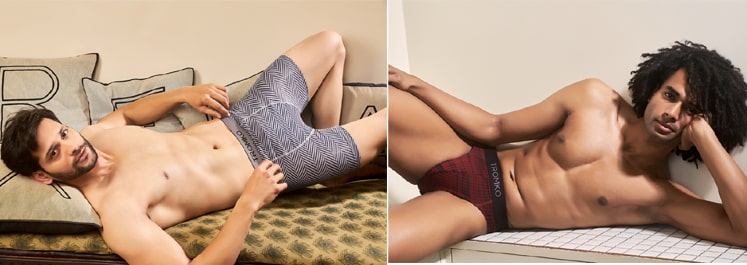
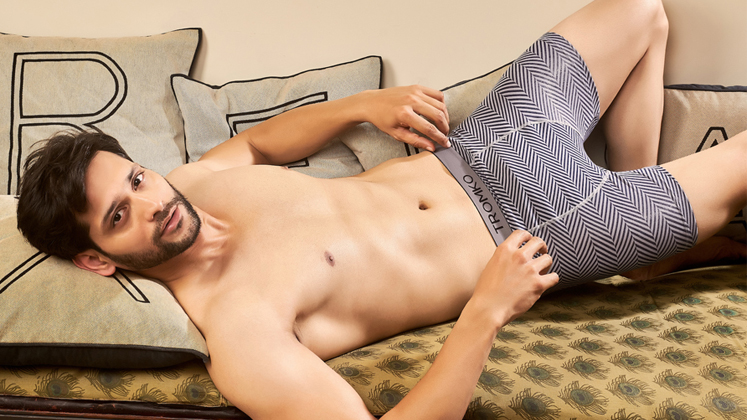
Besides innovation, conscious brands and even consumers have also begun to explore innerwear ranges which are eco-friendly. A report published by PWC indicated that 21 percent of the respondents to a survey were willing to shell out an additional 5 percent on sustainable fashion and this includes innerwear. Nirmal Jhawar says, “The consumer of today has a new sense of appreciation for innovation and technology and prioritises comfort first. Also, with the wave of sustainability hitting every nook and corner of the world, the men’s innerwear industry has soaked everything that the change has to offer. Brands like Tromko have begun to consciously explore new fabrics, refine their methods of production and focus on their wastage standards to work towards eco-friendliness. This push for innovation, change and increased responsibility is now a necessity and Tromko surely stands for it.” Tromko manufactures and sells activewear for men and women and innerwear for men, which include merchandise like trunks, briefs, and boxer briefs that are stylish and most importantly, comfortable. The brand’s innerwear micro-modal material is made of renewably grown beachwood trees, which provides softness of silk and the breathability of cotton. While the average ticket size for Tromko’s innerwear range is approximately Rs. 400 and it yields sales of around 30,000 units per month, for FREECULTR, the average ticket size falls at around Rs. 1350 where 50-60 per cent of the total product portfolio comprises of men’s innerwear right now.
Not only for brands – both established and start-ups – innerwear category is yielding great sales numbers for even e-commerce marketplaces. Van Heusen is planning to expand the Van Heusen Innerwear Exclusive Brand Outlet (EBO) network to around 400 stores over the next 2-3 years, from the current 45. Lux which is a dominant player in the men’s innerwear segment is also accelerating its growth driver via new expansions. Rupa too registered an annual turnover of Rs. 1,26,121.68 lakh in FY 21-22, with 33.97 percent Y-o-Y growth and the brand is expecting to keep up the momentum and maintain strong revenue growth in the coming years.
Amazon Fashion has observed more than 60 per cent growth in sales in the men’s innerwear segment on its platform since last year. Saurabh Srivastava, Director and Head, Amazon Fashion India, elaborates, “Over the last few years, the innerwear market in India has witnessed steady growth. At Amazon Fashion, we have been witnessing customers shop for essential clothing such as innerwear for men, women and kids too. Functionality and sustainable fabrics are now becoming important aspects for brands and customers alike in the innerwear segment as they are more aware and choose to make informed buying decisions, particularly millennials and Gen Z shoppers. Innerwear brands are moving away from traditional styles and are innovating their products keeping in mind comfort and style preferences of customers. Our men’s innerwear segment portfolio comprises of products from top 30+ brands which is a mix of regular and high-end labels like Jockey, Levi’s, Lux Cozi, Rupa, Van Heusen, Park Avenue, FCUK, Dixcy Scott, Dollar and Citizen Innerwear, among others across price points starting from Rs. 90 up to Rs. 2,000. With an aim to offer affordable and accessible products, we continue to expand our innerwear category, partnering with newer brands and sellers in this segment to further cater to all the demands from our customers. We remain committed as always to ensuring the safety of our customers and we believe e-commerce is the best way to deliver a wider selection of products while upholding the tenets of safety and social distancing.”
The inside out of this product category
The expansion of innerwear market came with consumers demanding multifunctional intimates and so it became important for fibre and fabric manufacturers also to change their methods with changing demands. Increasing concern regarding the fabric used for manufacturing underwear is one of the major factors driving the market. Millennials are driving the demand in the men’s underwear market as they are more receptive to new and different products than other generations. High demand for new and innovative products in terms of colour, fabric, print and style among millennials is creating opportunities for the manufacturers. Companies are focusing on R&D to make products suitable for all shapes and sizes. Innovation in advanced tailoring along with new fabric types such as modal, viscose or merino wool which help reduce moisture and regulate temperature, is driving the market competition. Shrey Luthra asserts, “We have two signature blends that we use in all our garments – Bamboo Rich Blend and Nano Micro Modal. These are both ethically made/sustainably sourced from fibres with natural/ processed anti-microbial, anti-odour and sweat absorption properties, a combination of features that makes our innerwear one of the most comfortable in the market. Our signature treatments also make our garments truly moisture-wicking, fade-resistant and shape-holding. The blends we make are not only comfortable (suitable for Indian climatic conditions) but they are sustainable as well which differentiates us from domestic and global brands. At FREECULTR, we believe sustainability is not just the need of the hour, but also our responsibility to provide each and every product irrespective of its category that should not consume more than required natural resources. Sustainability is in the DNA of our brand ethos and from product to packaging, we calculate the carbon credits that we save in an initiative to save our Mother Earth. Very soon our consumers will feel proud when their purchase will show the impact index on how much they have contributed in terms of prevention of CO2, harmful chemicals and their contribution towards water conservation.”
Tromko’s innerwear line features Tro Fit which is the brand’s exclusive technology that brings together the perfect fit, new-age designs and hi-tech fabrics all fused together.
A comfort zone? Or not?
While the business recovery across most categories looks encouraging, retailers continue to maintain cautious optimism in lieu of an impending third wave. As for innerwear category, though the pandemic affected the segment in ways brands least expected, the demand grew after the lockdown restrictions eased after the first wave and the pivot strategies by these brands helped them stay afloat and relevant, during the ongoing crisis. “With an inelastic demand for innerwear, we always see a demand for our products in the market. Adaptation of new technologies, stitching methods, fabrics, designs and functionalities will surely lead the way forward in this field,” maintains Nirmal Jhawar.
Furthermore, D2C too came as a saviour for brands in a number of retail categories and connecting with the end user definitely helped brands stay up-to-date on what they needed and desired for, which ultimately helped them stay relevant.



 Bharat Tex Special Report 2026