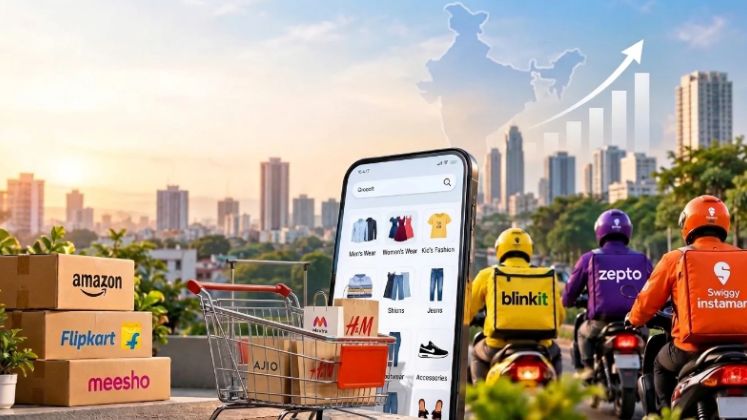
India’s Q-commerce sector is projected to require around 75 million sq. ft. of urban logistics space by 2030, comprising 42 million sq. ft. for dark stores and 33 million sq. ft. for larger mother hubs, according to a report by CBRE South Asia.
The number of dark stores is expected to increase from approximately 7,800 in 2026 to more than 12,000 by 2030. The sector currently occupies around 27 million sq. ft. across more than 100 cities, with 65–70% of dark stores concentrated in the top eight markets.
Q-commerce related warehousing demand recorded a compound annual growth rate (CAGR) of 81% between 2021 and 2025. Annual space take-up increased from 3.1 million sq. ft. in 2024 to 4.3 million sq. ft. in 2025, accounting for 4–5% of total logistics leasing across India during the period.
Delhi-NCR, Mumbai and Bengaluru accounted for nearly 60% of Q-commerce leasing between 2021 and the first half of 2026, with respective shares of 21%, 20% and 17%. Hyderabad accounted for 16%, followed by Chennai at 11%.
Operators are also expanding into emerging markets, including Jaipur, Lucknow, Surat, Coimbatore and Nagpur, as Q-commerce networks extend beyond major metropolitan areas.
Mother hubs measuring 100,000–125,000 sq. ft. typically serve 30–50 dark stores, supporting inventory distribution across local fulfilment networks.
High rental costs, space constraints and zoning regulations could encourage operators to adopt shared and purpose-built fulfillment infrastructure to manage their real estate requirements.