
We live in a world fraught with a surfeit of choices and opinions. Navigating our way through that becomes a little easier when we see a friend or somebody akin to our choices recommending a product or better yet, sporting it. In India, we are a society that is close knit in all its decisions, and that includes shopping. This norm has given rise to an industry trying to fill the void digitally – social commerce.
Mobile phone penetration is expected to increase from 65 per cent to 90 per cent by 2022 while the number of internet users are projected to be more than 850 million by 2022 from 450 million now. Not only do these numbers seem promising to any prospective business looking to harness the power of this digital revolution, a report by Facebook and BCG suggests that of the US $ 70 billion Indian fashion market today, about US $ 7-9 billion is already digitally influenced. The country is in the midst of a digital transformation and a majority of suburban and rural population is acquainted with the e-commerce market.
Retail players like Zara are becoming online since the digital market is poised to grow exponentially in the future. The influence of this market is likely to multiply by nearly four times to reach US $ 30 billion by 2020, a staggering number which will constitute 60-70 per cent of the total branded apparel market, according to the report.
What belies social commerce?
According to Wikipedia, social commerce ‘is a subset of e-commerce that involves social media, online media that supports social interaction, and user contributions to assist online buying and selling of products and services. More succinctly, social commerce is the use of social network(s) in the context of e-commerce transactions’. A broad term, social commerce has a gamut of apps and innovations coming up each day to service some unforeseen gap in the market.
Popular consulting firm Zinnov estimates that about US $ 8-9 billion worth of products are being sold socially today in India and the commerce volume is expected to grow at 40-50 per cent CAGR from 2017-22.
Not only has this sector become a hotbed for start-ups to which consumers’ affinity is growing, it also has the latest to welcome esteemed investors. Many home-grown start-ups like Mall91, Dealshare, BulBul.tv and Meesho have garnered attention as well as market share. Each of these apps are leveraging the market which has become increasingly dependent on its peers to shop for even the simplest of items, recommendations coming from within the community.
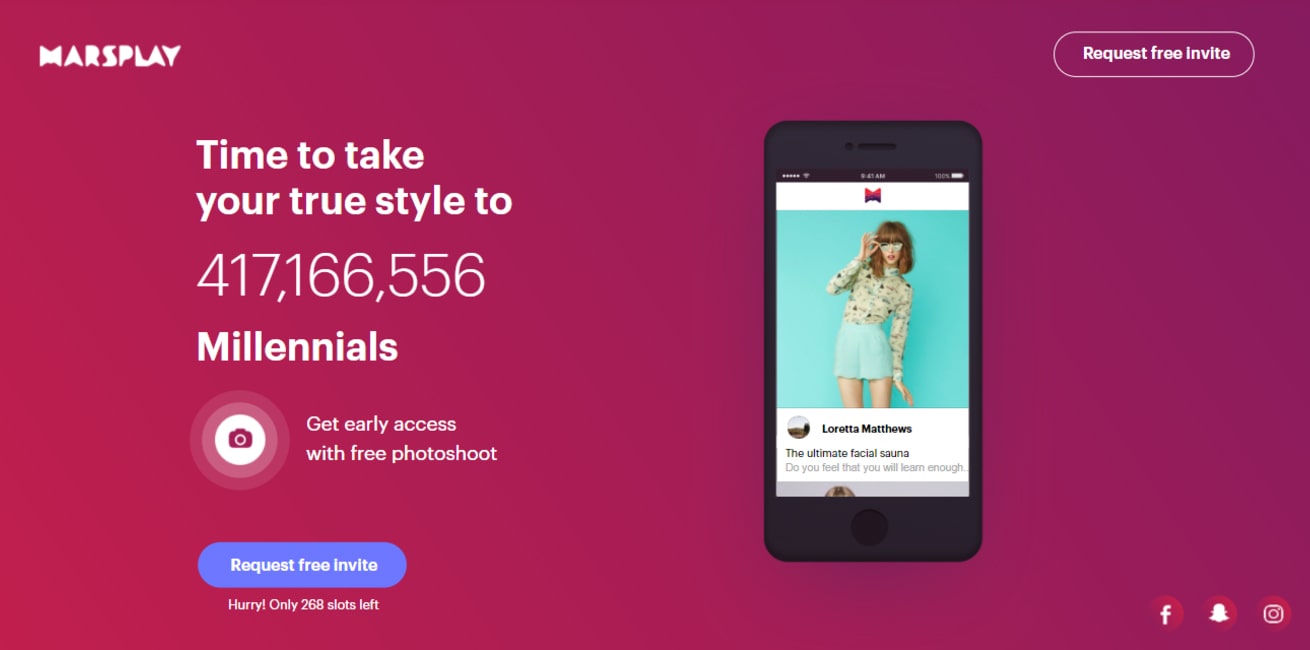
Another name ready to join the ranks is Marsplay. The company prides itself in pioneering a unique subset of social commerce in India, i.e., community-led commerce. It entails users drawing inspiration in the stipulated categories from one another through a common platform instead of relying on ruthless promotions by brands or incentive-led individuals.
Marsplay is revolutionising fashion shopping, by moving it away from catalogues to a personalised, curated, visual feed of fashion trends from an individual’s circle of acquaintances and local community. The community fully captures local and personal aesthetic influences to give users a more relevant shopping experience. What makes Marsplay unique is a shopper’s ability to purchase everything in their feed with a single tap, but more importantly, it ensures that the fashion aesthetic works uniquely for the Indian shoppers.
“Communities are sustained online but form deeper bonds offline. This holds especially true for high-passion categories such as fashion, which is why we started with an offline-online hybrid approach, revolving around our Creator’s Studio. The end result is a zero churn in our community of fashion influencers. The world follows fashion from the ramps of NY and Milan. India follows the fashion aesthetic of the adjoining large towns, with a smattering of influences from their favourite soaps and movies. The cliche of a diverse India has never been more real than in fashion, where the dominant aesthetic and choices change every 50 miles, making it impossible for a ‘big brand’ to shine. And so, their lookbooks don’t come from Pinterest or Instagram, but perforce, from their local college and high street,” avers Misbah Ashraf, Co-founder and CEO of Marsplay, speaking on how since the inception of the app, it has already developed a community of over 50,000 active monthly users.
The 2017 start-up has focused on being interest-oriented rather than region-oriented. “We don’t see our products as Tier-1, Tier-2 or Tier-3 products. We see anyone who wants to look beautiful and confident are our target audience. Currently, 15-24 age group females from top 15 cities of India are using our products,” Misbah adds. The app is an ingenious way for people to connect on a digital platform whose approach strikes home with every user as they are influenced not by the surreal community of top-notch fashionistas in the country, but rather by the familiar faces.
Inception of a unique proposition
Commerce goes hand-in-hand with discovery and fashion inspiration is as much dependent on product design as on the product expectations.
“We believe that inspiration is nothing if it can’t be fulfilled – therefore, our only focus is not commerce, but to enable users to purchase or fulfil every product/look/inspiration. People are brands. If in offline retail, users start with brands, online users start with and buy into an individual influencer first, and then buy their fashion inspirations. We understand this most basic form of human behaviour and have built Marsplay to be people-first rather than a profit-run organisation,” asserts Ayush Shukla, Co-founder and COO of Marsplay.
“Fashion isn’t a one-way street; it’s a conversation, with a constant feedback loop and back and forth of ideas and inspirations. Fashion enthusiasts don’t just buy products, they buy into a set of ideas around them, and those ideas start with the community, which is why we designed Marsplay to prioritise the community. Instead of inspiring consumers to make impulse purchases, the app is built for frictionless and easy transactions only when a user likes something,” further explains Ayush.
The surge of investments by ace VCs
EkAnek Networks, the influencer marketing and network start-up, saw a seed funding of US $ 10 million put in by Sequoia Capital, Lightspeed and Matrix Partners. While, Bulbul.tv, a pioneer in live commerce in India, is all set to raise US $ 14.7 million in its latest round of funding.
In addition to the 2,50,000 downloads of Marsplay by ardent users, investors have recognised the huge potential of this community-led platform. Marsplay has raised a pre-series A round of funding, led by Venture Highway with participation from Alvin Tse from Xiaomi and Jonathan Lau, Partner, Cadorna Ventures. Existing angels including the personal offices of Shailesh Rao, a partner with TPG Growth, and Nikhil Mohta, Director, ICICI Ventures also followed on in this round. Marsplay’s seed round was led by Amit Agrawal, former YouTube India Head; Vivekananda Hallekere, CEO, Bounce and Shamir Karkal, Founder, Simple.com, among others.
“Marsplay’s approach towards solving the problem of ‘what to buy’ and ‘what to wear’ is unique and works well because it is able to integrate the social validation of the purchase decisions into the buying experience. The future of online shopping is social. And while that’s hard to crack perfectly, I am super confident of the team’s potential to make it happen,” says Vishal Sharma, VP – Product, Google. He serves as an advisor to the company.
“Fashion-led product discovery has been shifting away from e-commerce websites to social networks, however, the discovery to purchase process is still disconnected. More consumers are now seeking inspiration for fashion trends from people who are more relatable than celebrity influencers. In Marsplay, we have found a single platform that provides users with a seamless discovery of fashion trends and the ability to purchase their chosen products with a single click. We are excited to partner with the Marsplay team, as they build out community-driven fashion commerce in India,” said Samir Sood, Founder, Venture Highway, the primary investor in the company.
Competition and the road ahead
Currently, in India, there are no significant players in direct competition in the community-led fashion discovery segment. However, both Instagram and Facebook are key marketing channels for fashion, and as such, represent a potential competition.
Internationally, a few apps have attempted to solve the problem of discovery, such as Pinterest, 21Buttons. Other initiatives like Amazon Spark have also attempted to integrate social and commerce. However, all of these platforms seem to be missing some key consumer issues and the smooth transition from discovery to purchase enabled by Marsplay.
A potent threat could be bigger platforms such as Mogu or Little Red Book, both of which have achieved unicorn status and are based out of China. For them, launching in India seems to be a viable option, although both countries represent uniquely diverse markets and consumers.
Marsplay is a company not focused on turning profit yet; they started out to build something unique in the market and already have 5,000 steady influencers on the platform. “Our aim is to build a fashion and beauty destination on the internet. We started on a mission to create a platform where fashion is about what it really is — the people, and not just the brands. A platform where you don’t see products, but people you connect with sharing what they genuinely love,” affirms Ashraf.
Case Study: Back-end nitty-gritties
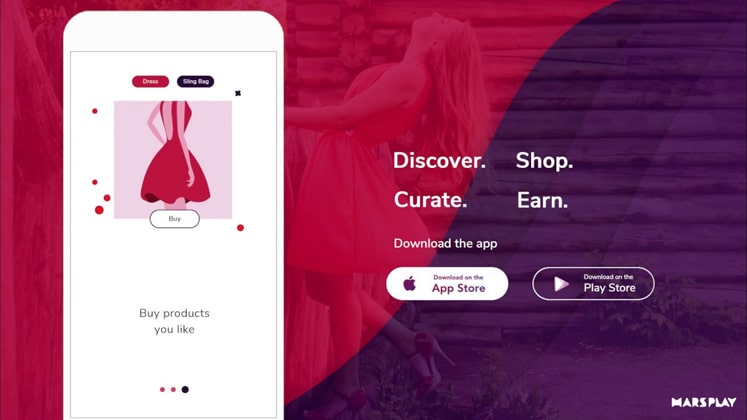
Founded by Misbah Ashraf and Ayush Shukla, the Delhi-based social commerce or rather community-led commerce platform, Marsplay is focused on building a community of fashion mongers who help each other out in product discovery in this segment.
The app does not encourage celebrity influencers but has creators uploading the content that can be in pictorial or video format to inspire the consumers. When an individual scrolls through their feed, they end up getting well-versed with the ongoing trends in fashion and beauty in their local community. Every post carries along with it tagged products that the influencer uses to create the look. A single tap leads the consumer to the specific e-commerce marketplace that sells the item they liked. The company links their back-end to these marketplaces that manage the supply.
“The idea is that the thousands of brands that are sold on the biggest sites like Myntra, do not get enough exposure to be recognised by users as they aren’t able to shell out big money to market themselves on the platform. This is an area Marsplay is helpful in,” says Ayush.
The company does not hold any inventory and neither does it intend to do so in the future. One of the perks of not holding inventory is that they are not faced with any returns. The company gives a part of the revenue they make from these sales to the creator whose post influenced the purchase. They are also focused on collecting data related to consumer behaviour that can be helpful to retailers in India looking to expand their market.