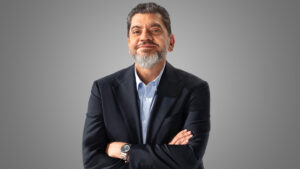
US $ One billion Indian conglomerate, Vardhman Group having 22 manufacturing facilities in five states across India producing yarns, grey and processed fabrics, sewing threads and also garments, has been present in Bangladesh for the past 25 years mainly in yarns. A true visionary, the company sensing the dynamism of the Bangladesh industry, setup its own office in the country two years ago to penetrate deeper into the market and has since seen year-on-year growth of 25-30%. “For the Bangladesh market our core thrust products are solid dyed and stretch fabrics,” informs Kulbir Kundu, Country Manager of Vardhman, BD in an exclusive interaction with Team Apparel Online.
Bangladesh, primarily still being a manufacturing base for basic garments, there are many core products which are always in demand and form the foundation of business in the country. “The qualities running in this market till now are mostly regular qualities in cotton which are not seasonal, and which can be used throughout the year irrespective of the changing trends. But gradually the market is graduating to more fashionable items as the margins are becoming lesser in basics and fetching a good price in volumes is difficult,” says Kundu.
Vardhman, known for its product innovations, is always upfront investing in the latest technology and to support R&D the company has a design studio in India which develops collections twice a year for presentation to its clients for selection. While some clients directly select from their collections, most big international brands have design studios and give their own designs to replicate. Working with brands like H&M, S. Oliver, C&A, M&S, Uniqlo and GAP, a majority of the business runs through nominations, a major factor for the growth of both its volumes and the overall business in the country. Kundu, who has recently shifted to Bangladesh after handling the direct exports of the company in India, firmly believes that having an office locally in Bangladesh has helped the company to provide immediate solutions and better services to the garment manufacturers along with the added advantage of being able to target more clients on a regular basis.
“Having a production capacity of 115 million metres per annum of solid and yarn dyed fabric combined together, the major share in the business for Bangladesh market is solid dyed fabrics as yarn dyed fabrics produced by local mills are easily available in the market at much cheaper costs, though we are also trying to enter yarn dyed market,” says Kundu.
Current product strength for the company is stretch fabrics as they are now increasingly being used in menswear and special finishes, offering good quality and volumes in reasonable time riding on backward integration of company. “With global trends in favour of the use of stretch fabric in menswear, as opposed to earlier times when it was only used in the women’s wear segment, the company’s stretch range includes stretch slub, and other design-oriented fabrics with different washings and in varied shades including neon colours, is being selected for bottoms for both ladies and menswear,” informs Kundu.
Vardhman, moving ahead of many of its competitors from India, is geared to offer products that are not basic regular qualities but are on the ‘higher’ side even for the middle segment garment manufacturers in the country. “Already doing good amounts of stretch/non-stretch dyed fabric, we also provide liquid-ammonia facilities to our clients. We have upgraded the qualities of some of the products that are considered by manufacturers here as regular core products, to a higher level increasing their lifespan. We are also offering different kinds of finishes to keep pace with trends,” adds Kundu.
Generating US $ 5 to 6 million worth of business per month, the Bangladesh operations of Vardhman is certainly adding to the growth of the company as well as aiding the expansion of our overall fabric business. “We earlier were producing around 85 million metres per annum, which we have increased to 115 million metres. As the new country head, I would like to maintain and continue to grow the operations and in the next 2 years we should see a growth of 20 to 25% year-on-year,” concludes Kundu.