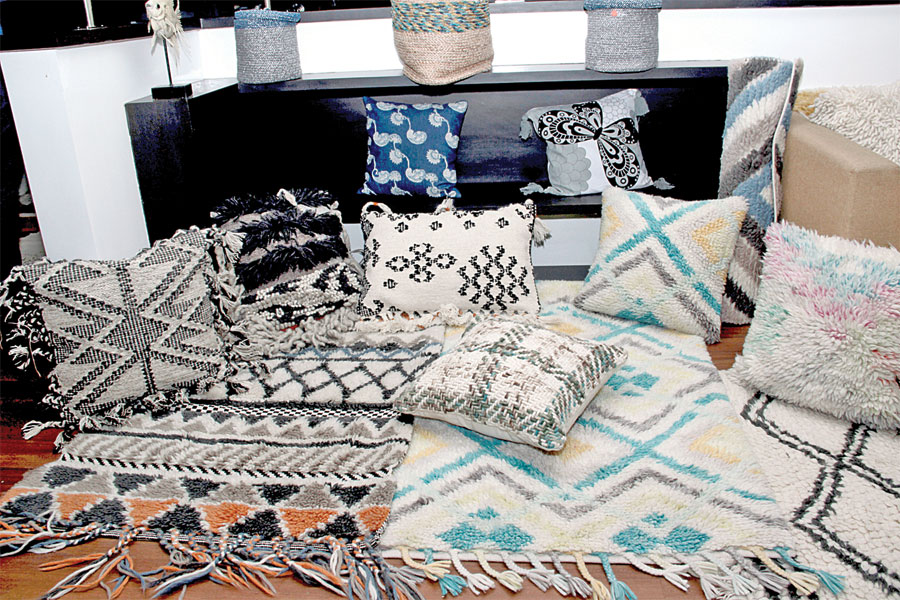
With business booming, mainly in the export of blankets and made-ups, Panipat-based home furnishing companies are confident about their future growth. Be it a million dollar company, a medium-sized company, or a small player, there is demand for their existing product categories, and they are optimistic of renewed growth with the revival of the US market. Though poor infrastructure, lack of training initiatives, and high interest rates continue to create bottlenecks, companies are gearing up fast, with an increasing focus on product development, expanding their production capabilities. Apparel Online was in Panipat recently where the team met several players and heads of trade associations to understand the pulse of the city, where more than 4,000 firms are engaged in export of home furnishing items worth US $ 1 billion (Rs. 6,000 crore) annually.
Though each and every company is making at least 4-5 products, currently blankets are their top exporting item. Unlike rugs, which see demand plummet when the trend begins to veer toward floorings (tiles etc.), blankets do not have to deal with such rotations in trends as there are no alternatives for them, not even quilts. Export of rugs and made-ups follow close behind blankets, but some players claim that there is demand for all products, and that they offer the entire range of home furnishings. “Panipat can’t be specified for a particular product as the city is making almost all categories of made-ups,” says Sumeet Nath, Managing Partner, Raj Overseas. The company, which is doing an annual turnover of
US $ 50 million, has positioned itself as a one-stop source for buyers of home furnishings.
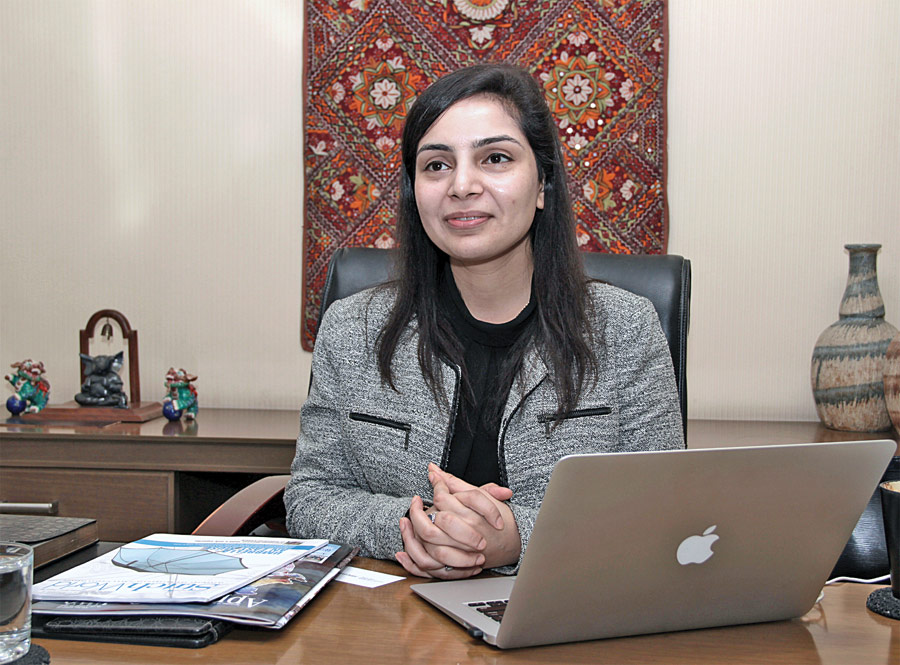
In fact, many companies are offering a comprehensive range of products, which gives them an advantage over their competitors. Abhiasmi International (Paliwal Group) has an extensive range, of which floor coverings comprise 55 per cent, while stitched products (cushions, curtains, beddings), decorative accessories, and kitchen/dining linen comprise the rest, and are a fast growing line. This strategy is based on the premise that buyers looking for a particular look/theme do not have to source products from multiple suppliers. “Our strength is that we can make many product categories. As the market environment is becoming more and more challenging, buyers too are looking for vendors with whom they can consolidate their businesses,” says Asmita Dwivedi Paliwal, Director of the company.
Most companies are growing their business through their existing product-line, but are also exploring newer markets, and focusing on product development and upgradation of their production facilities. As majority of Panipat companies cater to the US, revival of the country’s market is pushing them towards further capacity building and expansion. Prem Vij, Chairman, Harisons & Harlaj Ltd., a company that specializes in bathmats and has an annual turnover of US $ 16.66 million (Rs. 100 crore), is expecting 20 per cent growth this year. But according to Vij, who is also President of The Panipat Exporters Association, the city has still not come up to the level it had reached prior to the recession.
Diamond Exports, headed by Ramesh Verma, supplies bathmats and made-ups to importers and wholesalers, doing a turnover of US $ 2.5 million (Rs. 15 crore), which it plans to double in the next two years. The company is investing US $ 1 million (Rs. 5 to 6 crore) in setting up a new factory spread across 5,000 sq. metres, which will become operational in a year’s time. “Sentiments are quite positive as foreign buyers are more confident about political stability in India. Europe is a slower market but home furnishing is growing there, and we have new customers in the US, New Zealand and Australia. As made-ups are finding good space in many international markets, we will focus on them,” says Verma, who is also head of three textile associations/bodies.
With buyers like M&H besides other small and big retailers of the US, Australia and France, Anunay Enterprises is expanding and upgrading its facilities, and in the next 6 months it plans to add digital printing, laser cutting, etc. for which it will invest nearly one million dollar (Rs. 3.5 crore). “In made-ups, printing is our forte and we will expand and strengthen it more. We will focus more on product development for which we will set up a new design studio with 3 new designers,” shares Ashok Kapur, MD of the company, who is anticipating 30 per cent growth this year.
Sumeet Nath of Raj Overseas reveals that they have an open budget for product development with 2 designers in the US and 22 in India. The design team has been divided into two sections: one is for regular customers and the other for new customers, with a focus on R&D. The company is setting up its eighth factory, which will be fully operational by August 2015. According to Nath, it will be the first of its kind as it will be based on the eco-friendly, sustainable environment concept. It will run on 100 per cent solar energy (with a capacity of 125 KV), and will have water harvesting and LED lighting. The factory will supply various products mainly to West Elm, US. “We registered 25 per cent growth in the last 5 years, added many new lines and expanded the profile of our goods as the future looks pretty attractive,” he says.
Abhiasmi International has 50 people in its product development team with a strong focus on creativity. “We are investing for more understanding of our customers by expanding our product design capabilities,” says Asmita. The company has 12 units, and is consolidating some of the smaller ones besides expanding capacities. Phase one of this process will be completed by the month-end, while the second phase will be completed in the next 3 years. The company saw growth of 15 per cent in 2014, and is anticipating 18 per cent growth in the current fiscal.
Both big and medium-sized companies are concerned regarding compliance and certifications such as BSCI, Oeko Tex and ISO, besides CSR activities. One of the factories of Anunay Enterprises is audited by M&H. Raj Overseas claims to be the world’s first home furnishing factory to have a fair trade certificate, and one of its factories provides family health care policy for the workers. Diamond Exports spends almost Rs. 3-4 lakh annually on the education of its employees’ children; and Abhiasmi has initiatives like giving cycles to its employees.
The pro-active approach of the industry to move with changing needs of global market is a positive sign of the recognition to grow in a consistent and sustainable manner, and the things have to improve.