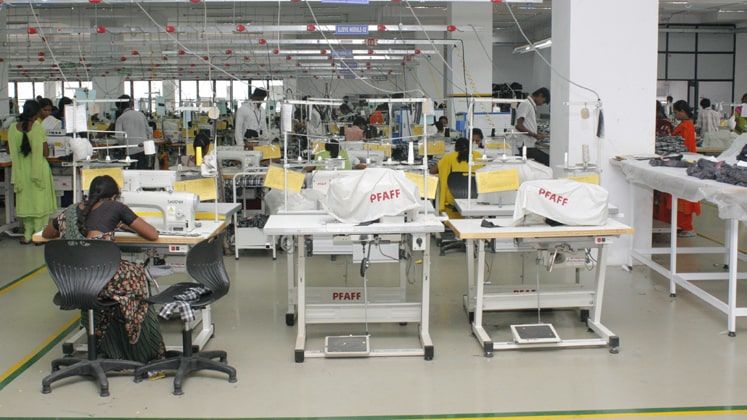
With growing orders, tension for some exporters is also increasing, as they don’t have enough labour to execute these orders on time. What’s more, in the coming weeks, labour shortage is expected to increase even further, thanks to the various State Governments who have not taken any steps to attract workers who went back to their hometowns a few months ago! Karnataka, Tamil Nadu, Haryana, Punjab, Rajasthan, Gujarat and Maharashtra are major states that have garment manufacturing units and are largely dependent on migrant workforce. Though the industry is making some efforts, this is a difficult task which requires collective efforts by both the Government and the industry.
Apparel Resources approached senior officials of labour departments of all the above-mentioned states in this regard, but none of them replied. And all the exporters we spoke to shared the same view that their respective State Government has not taken any initiative to bring back the migrant workers. Currently, one of the biggest challenges is the fear of a second wave of COVID-19, which, if turns true, will again lead to factory closures, in turn, sending workers back to their villages all over again. Also, while factories need workers today, workers are worried as to whether the recovery would sustain and whether their jobs would be secure. Having said that, the good thing is that the railway services across India are resuming, and that’s the biggest mode of transportation for migrant workers.
Rahul Mehta, Chief Mentor, CMAI, told Apparel Resources, “It is unlikely that the Governments, State or Central, can do much in this regard. The only thing they can do is assure the workers that lockdowns will not be repeated. But this is unlikely to happen, as the virus is still spreading and numbers are climbing.”
At the same time, few exporters opine that even the Government efforts can’t do much in this regard, as over the years, the process of workers going back to their hometowns and then returning to work has become quite natural, and as recently in April and May, nobody cared for workers, now workers don’t seem to be in the mood to follow any instructions. Apart from that, there are multiple other reasons that leave apparel manufacturers as well as the Governments helpless, and hence, workers are not much willing to come back to work.
AEPC and NAEC have associated with the film actor Sonu Sood to bring back the workers. This is the only step collectively taken by any trade bodies across India.
As far as individual efforts by apparel manufacturers are concerned, arranging labour from nearby villages has proved to be a fruitful tool for many factories in Delhi-NCR. For example, Noida-based factories have arranged buses for areas like Modinagar, Hapur, Pilkhuwa, Dadri, etc.
Offering high wages to workers and increased payments to contractors is another step taken by many garment manufacturers, and some of them have benefitted too. “The workers who used to take Rs. 10,000 per month in January and February 2020 are now getting Rs. 11,000-12,000 for the same work. Similarly, we are paying 10-15 per cent extra on an average to those contractors who arrange workers,” said Davinder Sandhu, MD, Davinder Sandhu Impex, Ludhiana. He further added that despite these efforts, his company has been unable to get enough workers, so he is forced to push the delivery further to 15 days to 1 month.
Working in export as well domestic markets, Davinder Sandhu Impex is a well-known company of Ludhiana.
Few Ludhiana-based garment manufacturers also informed that workers from Himachal Pradesh are not coming back to even Punjab while both the states share a long border. This is mainly due to the State Governments’ unwillingness.
The subcontract is also a major way out for many garment manufacturers especially in domestic markets, as they are not much rigid about compliance. While higher charges of subcontracting are also an issue, there is no other option left.
While few other factories also offered high wages to their workers, it has not proved much fruitful for them. There are several reasons for the same like labour-source states such as Bihar and Odisha are also facing huge negative impact of the flood, which is also a reason that workforce is not willing to leave their home states as of now. A Ludhiana-based factory owner who offered high wages to his workers told Apparel Resources, on the request of anonymity, that many workers are not willing to come back due to the upcoming elections in Bihar. “They told us categorically that they will come back only in December, as there will be elections in October and Chhath Puja in November. Offering higher salaries or any other perks and benefits is not working at the moment,” he added.
Many workers are still afraid of the growing pace of coronavirus in metro cities and prefer to stay in their villages.
At the same time, another section of the industry feels that there are neither any orders at the moment nor a positive indication about the same. Such factories have sufficient workers and don’t require any labour for at least next 2 months. Assem Singla, General Secretary, Garment Exporters Association of Rajasthan (GEAR), Jaipur, confirmed the same, “We don’t see any shortage of labour, as orders are not there. The situation is going to remain the same even in the coming months.”
Looking at this scenario, it is right to say that factories having reasonably good orders have some shortage of labour unlike those who don’t have any orders. As some of the units are closed or have fewer orders in most of the industrial areas or clusters, the labour of those factories have shifted to other factories; this way, there won’t be any shortage later despite having orders.
Ramandeep Singh, MD, Boutique International, Gurugram, agreed, “There is labour shortage, but it is not a major challenge. A number of workers having comparatively fewer resources have come back anyhow, as they need work. There are less chances that they will go back now even for elections or any festival, etc. Overall, the labour availability is improving day by day.” He added that the further situation depends on the scale of order bookings also. At the same time, Government policies and the overall environment will also play a major role in this regard.
Boutique International is working with good clients and has reasonably good orders currently.
In this scenario of India’s apparel manufacturing industry, Bengaluru is comparatively benefitting, as the city has developed local labour over the years. Many factories have shifted to the nearby villages or the areas where workers are available. Apart from this, there was not even any other solution for Bengaluru-based garment manufacturers.
The seasonality nature of apparel export is something that every stakeholder of this business is very much familiar with. In the last decade, various initiatives by Governments regarding skill development, in-house training activities of garment factories have helped a lot to have enough trained workforce. Though COVID-19 was an unprecedented disaster, industry and the Government must work together to maintain an ecosystem that whenever there are orders, factories as well as workers should not suffer. Factories have to be more empathetic and supportive towards workers. In the long run, factories have to increase their efforts to make workers more loyal and professional.






 Bharat Tex Special Report 2026